
Biodiversity
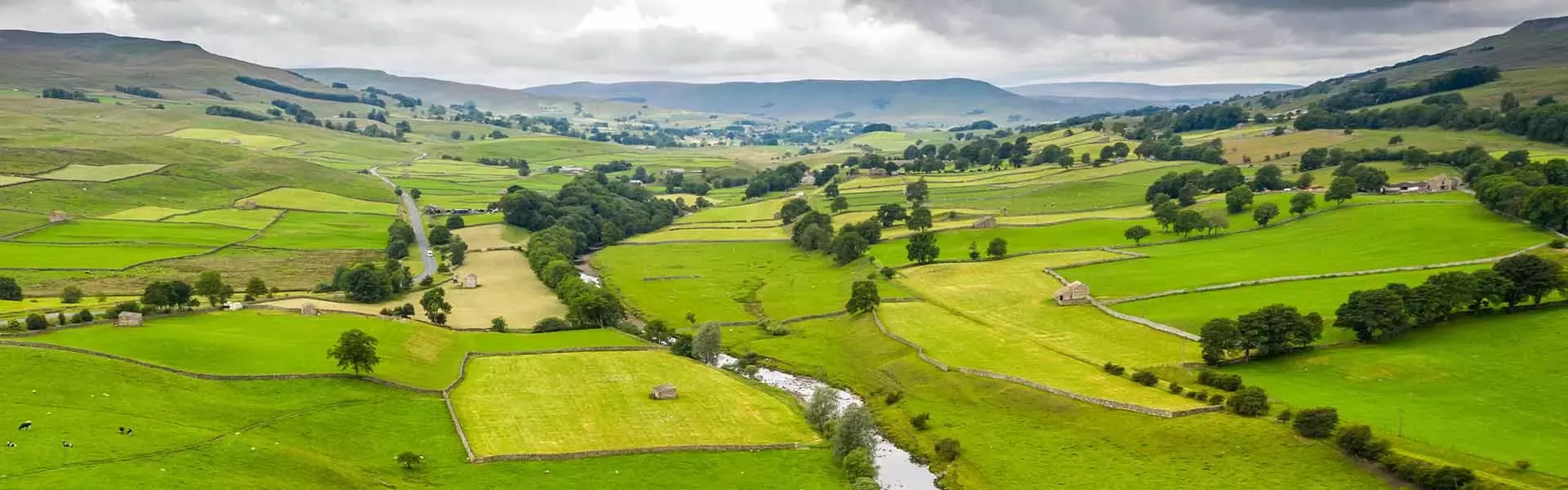
Within our suply chains, we can take targeted actions to help avoid and reduce our impacts on biodiversity, while supporting restoration and regeneration. Through our actions to scale regenerative agriculture practices, support deforestation-free sourcing, advance responsible sourcing and implement landscape initiatives, we aim to help support potential benefits for ecosystems, biodiversity outcomes and support the long-term health of the landscapes from which we source our ingredients.
Our biodiversity action is embedded in our Roots of Net Zero (pdf, 14Mb), integrated climate and nature strategy and transition plan, our Nestlé Agriculture Framework (pdf, 19MB), and our approaches to forests, responsible sourcing and water.
Biodiversity loss is among the greatest challenges facing our business and the planet. Tackling the main drivers of biodiversity loss (i.e., changes in land and sea use, overexploitation of natural resources, climate change, pollution and invasive species) is central to the initiatives and programs we have rolled out in the farms and landscapes where we source our ingredients.
Through our programs and initiatives, we aim to help support the conservation, restoration and regeneration of biodiversity across agricultural and sourcing landscapes. This includes promoting diverse farming systems, enhancing habitats, protecting ecosystems and improving the management of natural resources to help maintain biodiversity and ecosystem services over time.

Key terms explained
Net zero
In 2019, we announced our ambition to reach net zero GHG emissions by 2050 at the latest. In 2026, we updated our timebound plan, the Nestlé Roots of Net Zero (pdf, 14Mb), which underpins our Group’s climate strategy and acts as our transition plan aligned with a 1.5°C pathway as validated by the Science Based Targets initiative (SBTi). We will balance any remaining emissions through high-quality nature-based solutions, such as agroforestry, silvopasture and the restoration of forests and peatland. Read more about net zero.
Regenerative agriculture
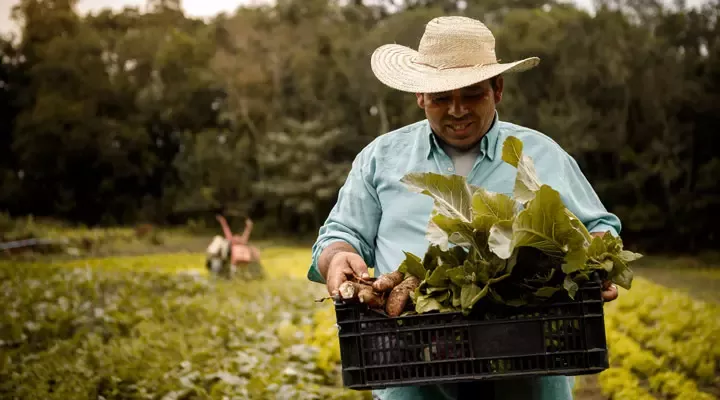
In line with the Sustainable Agriculture Initiative Platform, Nestlé defines regenerative agriculture as an approach to farming which aims to conserve and restore natural resources, primarily soil, as well as water and biodiversity, while capturing carbon in soils and plant biomass, and to support farmers’ livelihoods. Examples of regenerative agriculture practices include reduced tillage and agroforestry. More information is available in our Nestlé Agriculture Framework (pdf, 19Mb). Read more about regenerative agriculture.
Responsible sourcing
For Nestlé, responsible sourcing means improving the traceability of our ingredients and monitoring how they are produced. This involves applying our environmental and human rights requirements - detailed in our Responsible Sourcing Core Requirements (pdf, 2Mb) - at the different stages of our supply chain. Examples of these requirements include that land and resources of Indigenous Peoples and local communities are respected, and that no deforestation and no conversion of forests and other ecosystems occur in our supply chain. Read more about responsible sourcing.
Net zero
In 2019, we announced our ambition to reach net zero GHG emissions by 2050 at the latest. In 2026, we updated our timebound plan, the Nestlé Roots of Net Zero (pdf, 14Mb), which underpins our Group’s climate strategy and acts as our transition plan aligned with a 1.5°C pathway as validated by the Science Based Targets initiative (SBTi). We will balance any remaining emissions through high-quality nature-based solutions, such as agroforestry, silvopasture and the restoration of forests and peatland. Read more about net zero.
Regenerative agriculture
In line with the Sustainable Agriculture Initiative Platform, Nestlé defines regenerative agriculture as an approach to farming which aims to conserve and restore natural resources, primarily soil, as well as water and biodiversity, while capturing carbon in soils and plant biomass, and to support farmers’ livelihoods. Examples of regenerative agriculture practices include reduced tillage and agroforestry. More information is available in our Nestlé Agriculture Framework (pdf, 19Mb). Read more about regenerative agriculture.
Responsible sourcing
For Nestlé, responsible sourcing means improving the traceability of our ingredients and monitoring how they are produced. This involves applying our environmental and human rights requirements - detailed in our Responsible Sourcing Core Requirements (pdf, 2Mb) - at the different stages of our supply chain. Examples of these requirements include that land and resources of Indigenous Peoples and local communities are respected, and that no deforestation and no conversion of forests and other ecosystems occur in our supply chain. Read more about responsible sourcing.
Deforestation-Free
Deforestation-free means that commodities in scope were assessed as produced on land that has not been subject to deforestation or conversion after a specific cut-off date that varies by commodity, but no later than December 31, 2020. Commodities accounted as deforestation-free include in part commodities subject to the requirements of the EU Deforestation Regulation. However, the scope of disclosed metric goes beyond these jurisdiction-specific mandatory requirements as part of Nestlé’s global approach on deforestation. Read more about deforestation.
Deforestation-free means that commodities in scope were assessed as produced on land that has not been subject to deforestation or conversion after a specific cut-off date that varies by commodity, but no later than December 31, 2020. Commodities accounted as deforestation-free include in part commodities subject to the requirements of the EU Deforestation Regulation. However, the scope of disclosed metric goes beyond these jurisdiction-specific mandatory requirements as part of Nestlé’s global approach on deforestation. Read more about deforestation.
Ecosystem services
Ecosystem services are the benefits humans obtain from ecosystems, including provisioning, regulating, supporting, and cultural services (e.g., food provisioning, fresh water, climate regulation, air and water purification, and pollination).
Ecosystem services are the benefits humans obtain from ecosystems, including provisioning, regulating, supporting, and cultural services (e.g., food provisioning, fresh water, climate regulation, air and water purification, and pollination).
Landscape initiative
On-the-ground multi-stakeholder programs to set common goals, take collective action while reconciling different interests, and monitor progress towards improving social, environmental and economic outcomes at a landscape scale, within the wider geographical area surrounding the farmland used to produce our agricultural raw materials.
On-the-ground multi-stakeholder programs to set common goals, take collective action while reconciling different interests, and monitor progress towards improving social, environmental and economic outcomes at a landscape scale, within the wider geographical area surrounding the farmland used to produce our agricultural raw materials.
Our progress
20.7
%
Learn more about our plans on this target.
8773352
* There has been a change in the key ingredients scope from 2026 onwards. The new scope is: cereals and grains; cocoa; coconut; dairy (derivatives and fresh milk); hazelnuts; green coffee; meat, poultry and eggs; soy; spices; sugar; vegetables; and vegetable fat oils (including palm oil).
** This performance number differs from the one available in our Non-Financial Statement 2025 due to a change in the methodology during the first half of 2026. Now we consider ingredients volumes converted back to their original fresh state, instead of their processed form.
*** The Global Restoration Program was formerly known as the Global Reforestation Program. Learn more in the Environmental Disclosures section of our 2025 Non-Financial Statement (pdf, 16Mb).
Our work on natural ecosystems
Healthy ecosystems are essential for biodiversity as they provide critical habitat for species and help sustain the ecosystem services on which our business depend.
For more than 15 years, we have worked to avoid and reduce biodiversity impacts linked to deforestation and ecosystem conversion in our supply chains. Alongside these efforts, we support initiatives intended to support ecosystems restoration across sourcing landscapes including agricultural ecosystems, forests and peatlands.
We work with Indigenous People and local communities (IP&LCs) in critical sourcing regions, recognizing their important role in stewarding ecosystems. We have implemented long-term conservation and restoration projects within our supply chains, which help to improve livelihoods in key ecosystems, respecting the rights of IP&LCs.
Read more about Deforestation.
Learning from the birds
The presence of birds is a good indicator that populations of other animals are likely to be doing well, that water is clean, and that soils and forests are healthy. By monitoring birds, we can tell if existing farm practices are promoting biodiversity or if further investments are required in a given landscape.
Our work in our coffee supply chain provides a good example. Nespresso has been working with Cornell University since 2019 to measure and quantify the biodiversity impact of our farming interventions - beginning with agroforestry in Colombia.
Read more about biodiversity programs supported by Nespresso.
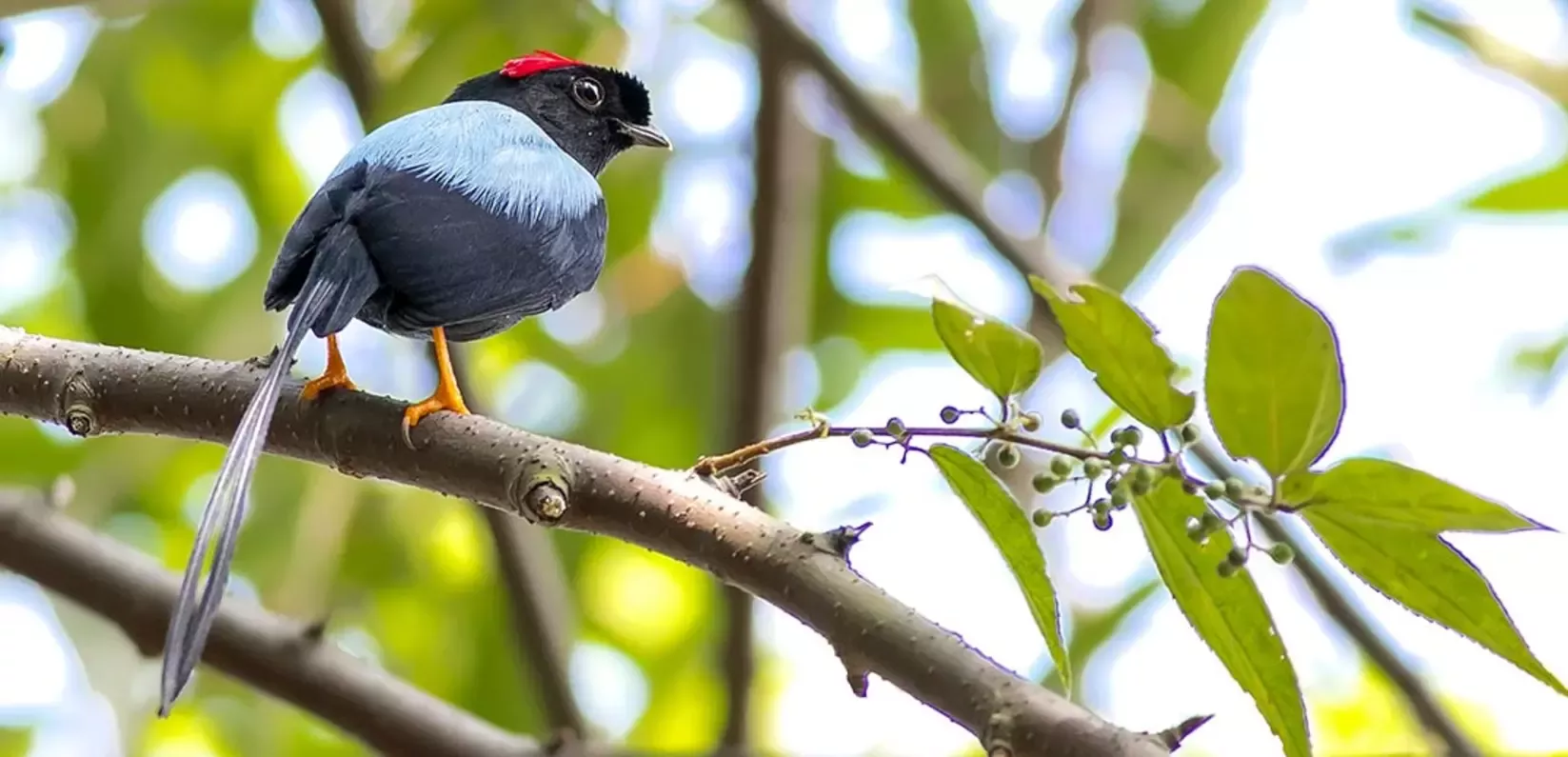
Long-tailed Manakin by Guillermo Saborio Vega / Macaulay Library.
Download our performance against our KPIs in the Non-Financial Statement Appendix 4: Environment - Biodiversity and ecosystems (pdf, 16Mb).