
Creating Shared Value at Nestlé: Our approach towards 2030
How we do business
At Nestlé, Creating Shared Value is the foundation of how we operate. Our portfolio of brands - from food and beverages to medical nutrition to petcare - reflects our purpose: we unlock the power of food and beverages to enhance quality of life for everyone, today and for generations to come.
In today's world, companies like Nestlé are expected to lead with integrity and vision. We embrace this role, continuously evolving to meet our consumers' expectations while delivering value to all our stakeholders.

WATCH: Our senior leaders lay out our CSV 2030 approach
Our strategy towards 2030
-
People, families & pets - Supporting people and pets to enjoy tasty and balanced diets
-
People & planet - Driving the adoption of regenerative agriculture practices at scale
- Reducing greenhouse gas emissions
- Progressing on packaging circularity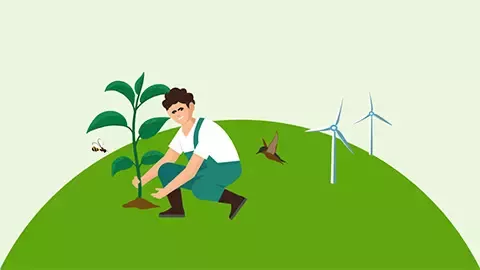
-
People in communities - Supporting decent livelihoods for those working in our supply chain
- Supporting young people with training and skills development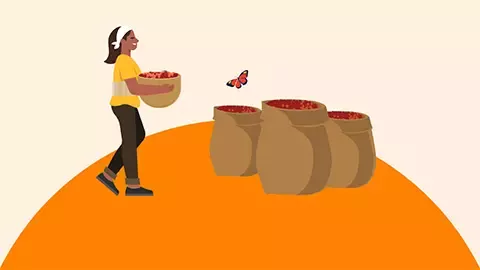
Key terms explained
Regenerative agriculture
In line with the Sustainable Agriculture Initiative Platform, Nestlé defines regenerative agriculture as an approach to farming, which aims to conserve and restore natural resources, primarily soil, as well as water and biodiversity, while capturing carbon in soils and plant biomass and to support farmers' livelihoods. Examples of regenerative agriculture practices include reduced tillage and agroforestry. More information is available in our Nestlé Agriculture Framework (pdf, 19Mb). Read more about regenerative agriculture.
Regenerative agriculture
In line with the Sustainable Agriculture Initiative Platform, Nestlé defines regenerative agriculture as an approach to farming, which aims to conserve and restore natural resources, primarily soil, as well as water and biodiversity, while capturing carbon in soils and plant biomass and to support farmers' livelihoods. Examples of regenerative agriculture practices include reduced tillage and agroforestry. More information is available in our Nestlé Agriculture Framework (pdf, 19Mb). Read more about regenerative agriculture.
People, families and pets
Many people want to eat well, but struggle to do so. Life is getting more expensive and more complicated, so for many families eating well is getting harder. We want to help.
Our ambition
We believe that the well-being of people, families and pets is foundational to a thriving society - and our long-term growth. Our aim is to help our consumers enjoy tasty and balanced diets that meet their nutritional needs and lifestyle goals, in a personalized and affordable way.
As food and nutrition evolves, Nestlé Research and Development provides the scientific foundations for our innovations from food safety to nutrition and health research, translating scientific discoveries into products and services, continually redefining the boundaries of nutrition science and dietary research.
Our impact
Our Nutrition, Health and Wellness strategy is guided by our purpose to unlock the power of food and beverages for everyone, today and for future generations, our strategy starts with the individuals, families and pets we serve. Their expectations are evolving rapidly: people increasingly want diets that are healthy, tasty, affordable and made with familiar, simple ingredients, while also fitting their diverse lifestyles and cultural preferences. To meet these needs, we draw on our global footprint, scientific expertise and broad portfolio. Science is at the core of our approach. We continuously innovate and reformulate our food, beverages and specialized nutrition products so that they taste great, contribute to daily nutritional needs and remain widely affordable.
135.4
billion
Learn more in the Social Disclosures section of our 2025 Non-Financial Statement (pdf, 16Mb).
Setting high nutritional standards, we need to engage with consumers, customers, industry, regulators and civil society. We need to work together for real impact.
Find out more about nutrition in Nestlé.
People and planet
By working to strengthen the long-term resilience of our business and implementing actions intended to create measurable positive outcomes for people, communities and the planet, we focus on the areas where we can drive change. We outline the essence of our work in these areas in strategies that underpin Nestlé’s intention to advance regenerative food systems at scale.
In the face of climate change, our actions on sustainability address two main challenges - both reducing our footprint on the environment, while also building resilience in food supply chains and our business.
Key terms explained
Advancing regenerative food systems at scale
Nestlé’s intention to advance regenerative food systems at scale means:
Advancing regenerative food systems at scale
Nestlé’s intention to advance regenerative food systems at scale means:
- Advancing: by raising Nestlé's voice and using its influence to drive progress, in collaboration with others.
- Regenerative food systems: that go beyond reducing harm to actively restoring ecological systems, while at the same time strengthening the social, economic and human rights foundations that food production depends on, so that food systems can sustain nature, people and livelihoods over the long term.
- At scale: because the planet, communities and individuals need global, systems-level change.
Read more about regenerative food systems.
Our ambition
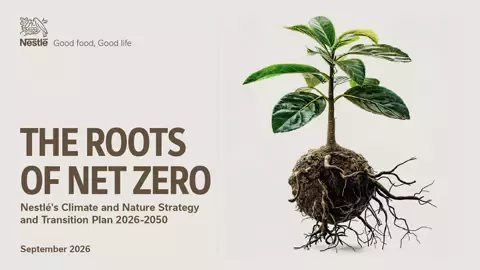
We continue to pursue our ambition to achieve net zero by 2050 and have a clear roadmap. Nestlé’s path to net zero is grounded in our dependence on nature and farmers. By integrating climate, nature, and people.
Through our actions, we are working to help building resilient sourcing systems which we expect can secure supply, reduce risk, strengthen natural capital, and create long-term value for farmers, consumers, and our business.
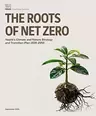
Our Climate and Nature Strategy and Transition Plan 2026-2050 published in September 2026 replaces and strengthens our previous Net Zero Roadmap published in 2020.
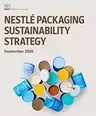
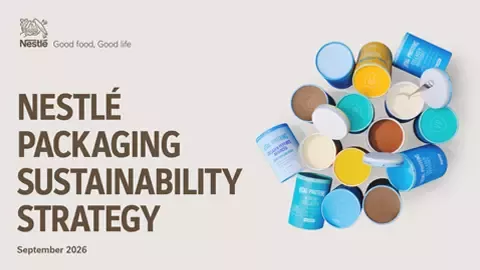
We are also proactively addressing packaging. Our work is described in our Packaging Sustainability Strategy published in September 2026 and we are guided by a vision where packaging does not end up in landfills or as litter. While preserving food safety and quality, packaging must also become more circular and have a lower environmental impact.
We are working towards a circular economy for packaging through three priorities: less packaging, better packaging and better systems.
Key terms explained
Net zero
In 2019, we announced our ambition to reach net zero GHG emissions by 2050 at the latest. In 2026, we updated our timebound plan, the Nestle Roots of Net Zero (pdf, 14Mb), which underpins our Group’s climate and nature strategy and acts as our transition plan aligned with a 1.5°C pathway as validated by the Science Based Targets initiative (SBTi). We will balance any remaining emissions through high-quality nature-based solutions, such as agroforestry, silvopasture and the restoration of forests and peatland. Read more about net zero.
Net zero
In 2019, we announced our ambition to reach net zero GHG emissions by 2050 at the latest. In 2026, we updated our timebound plan, the Nestle Roots of Net Zero (pdf, 14Mb), which underpins our Group’s climate and nature strategy and acts as our transition plan aligned with a 1.5°C pathway as validated by the Science Based Targets initiative (SBTi). We will balance any remaining emissions through high-quality nature-based solutions, such as agroforestry, silvopasture and the restoration of forests and peatland. Read more about net zero.
Our strategic priorities
We are working to build resilience in our supply chains, while addressing our environmental footprint.
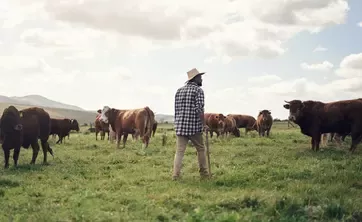
We aim to lead the transition towards regenerative agriculture as the norm for farming for the future. By using practices that help improve soil health, integrate agroforestry, support biodiversity, manage water availability and quality, and reduce fossil- fuel use, these approaches contribute to our aim of reaching net zero by 2050 and are showing promising early evidence of supporting farmers in achieving stable yields, even during adverse weather events.
Transitioning to regenerative agriculture and reducing our GHG emissions:
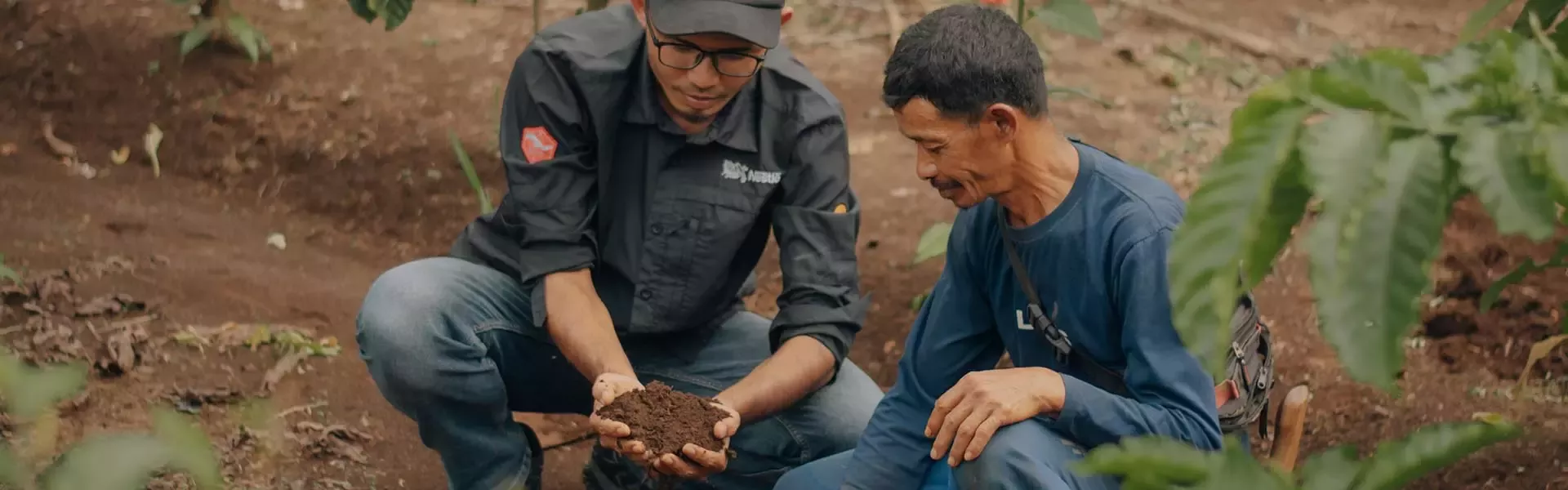
- Promote and scale up practices that aim to improve soil health.
- Focus on livestock management and feed solutions.
- Support ecosystem services that promote biodiversity on farms and in sourcing landscapes.
- Build farmer resilience through technical training, knowledge sharing and financial models that help farmers transition to regenerative agriculture.
Managing water resources:
- Work on reducing water use in our factories.
- Continue our actions to improve water availability and water quality in our agricultural supply chains and improve watershed health.
Pursuing packaging circularity:
- We aim to use less packaging by
- Eliminating unnecessary packaging, reducing virgin plastics and integrating more recycled content.
- Investing in innovative reuse and refill solutions, supporting the creation of conditions needed to scale these models.
- We design better packaging to be ready for recycling systems, and collaborate with others to develop alternative materials and solutions.
- We also seek better systems by
- Engaging in collection, sorting and recycling systems.
- Supporting governments to accelerate infrastructure development and establish effective Extended Producer Responsibility (EPR) schemes.
- Help build waste management systems through our Plastic Recovery and Recycling Plan.
- Rethinking our own behaviors, and helping partners and consumers rethink theirs.
Learn more in our Packaging Sustainability Strategy (pdf, 12Mb).
Key terms explained
Healthy soils
Soil health is defined as the continued capacity of soil to function as a vital living ecosystem that sustains plants, animals and humans. Healthy soils support clean air and water, bountiful crops and forests, productive grazing lands, diverse wildlife, and beautiful landscapes.
Ecosystem services
Ecosystem services are the benefits humans obtain from ecosystems, including provisioning, regulating, supporting, and cultural services (e.g., food provisioning, fresh water, climate regulation, air and water purification, and pollination).
Healthy soils
Soil health is defined as the continued capacity of soil to function as a vital living ecosystem that sustains plants, animals and humans. Healthy soils support clean air and water, bountiful crops and forests, productive grazing lands, diverse wildlife, and beautiful landscapes.
Ecosystem services
Ecosystem services are the benefits humans obtain from ecosystems, including provisioning, regulating, supporting, and cultural services (e.g., food provisioning, fresh water, climate regulation, air and water purification, and pollination).
Our impact
Our Roots of Net Zero integrated climate and nature strategy and transition plan (pdf, 14Mb) is focused on strengthening supply chain resilience by scaling up regenerative agriculture and reducing our GHG emissions. Through regenerative agriculture, we are already seeing evidence of improved and stable crop yields, improved livelihoods, and reduced emissions.
Some of the promising results in our key commodities include:
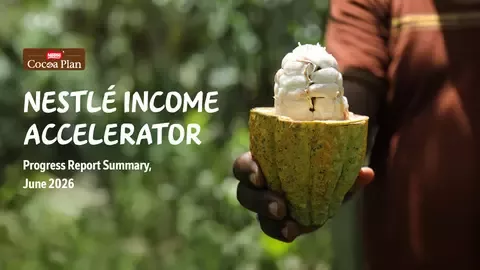
- 4% higher cocoa yields and +14% of households earning a Living Income participating in the Nestlé Income Accelerator program (pdf, 2Mb).
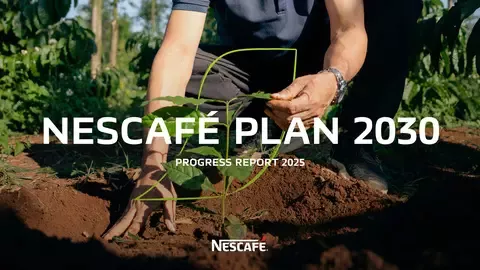
- 18.3% reduction in greenhouse gas (GHG) emissions from Nescafé green coffee compared with its 2018 baseline through the Nescafé Plan (pdf, 7Mb).
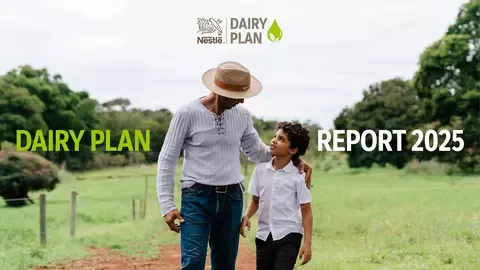
- 26% net reduction of GHG emissions in our dairy value chain achieved in 2025. We work with over 200 suppliers and more than 130 000 dairy farmers across more than 40 countries to build roadmaps to reduce emissions as part of our Dairy Plan (pdf, 13Mb).
Key terms explained
Living income
'Living income' defines the net income a household needs to earn in order to enable all members of the household to afford a dignified and decent standard of living, including basic needs (food, water, housing, education, health care, transportation, clothing, other essential needs and a provision for unexpected events). Read more about living income.
Living income
'Living income' defines the net income a household needs to earn in order to enable all members of the household to afford a dignified and decent standard of living, including basic needs (food, water, housing, education, health care, transportation, clothing, other essential needs and a provision for unexpected events). Read more about living income.
People in communities
Supporting the people who work for us, and with us, and the communities where they live is core to our Creating Shared Value strategy.
Our ambition
Our work in communities will prioritize meaningful impact, ensuring we are deeply rooted in the communities where we source and manufacture our products, respecting and promoting human rights.
Looking to the future, we are also committed to help build the skills and capabilities young people need to thrive in the new economies we see emerging, focusing on employability, agripreneurship and entrepreneurship.
1 In scope for this KPI are Nestlé's 14 key ingredients: cereals and grains; cocoa; coconut; green coffee; dairy (derivatives and fresh milk); fish and seafood; hazelnuts; meat, poultry and eggs; palm oil; pulp and paper; soy; spices; sugar; and vegetables.
Learn more in the Social Disclosures section of our 2025 Non-Financial Statement (pdf, 16Mb).
Key terms explained
Green Coffee
Green coffee is the raw and unroasted beans of the coffee plant.
Responsible sourcing
For Nestlé, responsible sourcing means improving the traceability of our ingredients and monitoring how they are produced. This involves applying our environmental and human rights requirements - detailed in our Responsible Sourcing Core Requirements (pdf, 2Mb) - at the different stages of our supply chain. Examples of these requirements include that land and resources of Indigenous Peoples and local communities are respected and that no deforestation and no conversion of forests and other ecosystems occur in our supply chain. Read more about responsible sourcing.
Green Coffee
Green coffee is the raw and unroasted beans of the coffee plant.
Responsible sourcing
For Nestlé, responsible sourcing means improving the traceability of our ingredients and monitoring how they are produced. This involves applying our environmental and human rights requirements - detailed in our Responsible Sourcing Core Requirements (pdf, 2Mb) - at the different stages of our supply chain. Examples of these requirements include that land and resources of Indigenous Peoples and local communities are respected and that no deforestation and no conversion of forests and other ecosystems occur in our supply chain. Read more about responsible sourcing.
Our strategic priorities
We are supporting decent livelihoods and access to economic opportunities across our value chain - from promoting human rights to expanding training and skills development for young people.
Improving livelihoods in our supply chains:
- Expand our income accelerator program.
- Work with our direct suppliers to ensure adequate Human Rights and Environmental Due Diligence systems are in place.
- Continue our work to address the root causes of child labor risks.
Upskilling young people for the food system of the future:
- Renew our focus on agripreneurship, entrepreneurship and employability, building on the strong foundations of our Nestlé Needs YOUth initiative.
- Build core employability skills and capabilities young people need to thrive in the new economies we see emerging.
- Work with farmers organizations and others to empower more young people to become agripreneurs.
- Work with young people to co-create future food solutions, focusing on innovation and digital skills.
Our impact
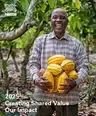
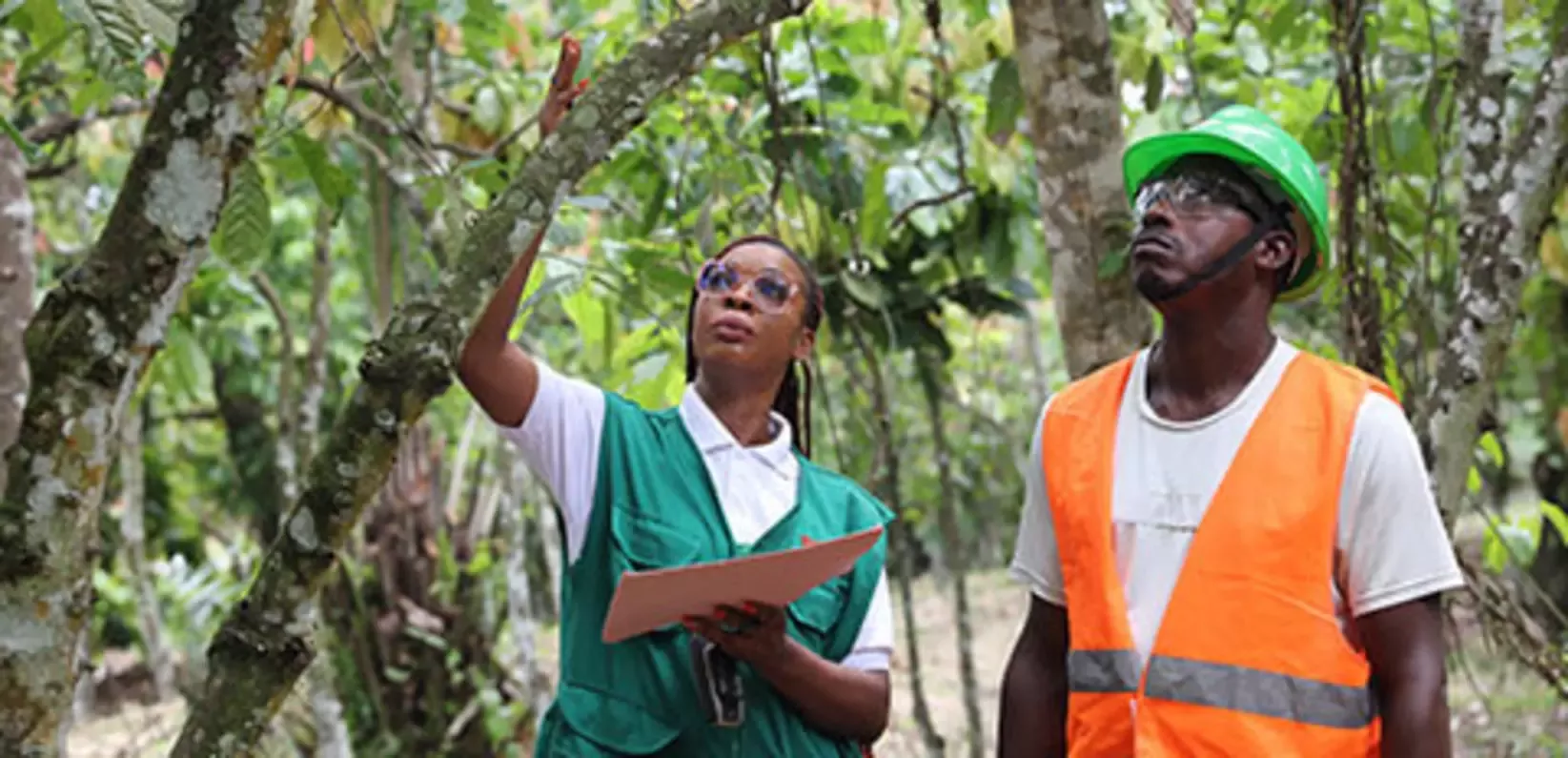
The challenges ahead are greater than any one company can solve alone. That's why we collaborate with farmers, suppliers, scientists, governments and industry peers - because transforming food systems takes collective action, bold partnerships and shared ambition. With strategic initiatives, like the Income Accelerator (pdf, 2Mb) with cocoa farming families, we are already delivering measurable impacts for the farmers, their families and their communities.
46.5
%
96.2
%
178821
45000
1 In scope for this KPI are Nestlé’s 14 key ingredients: cereals and grains; cocoa; coconut; green coffee; dairy (derivatives and fresh milk); fish and seafood; hazelnuts; meat, poultry and eggs; palm oil; pulp and paper; soy; spices; sugar; and vegetables. This performance number differs from the one available in our Non-Financial Statement 2025 due to a change in the methodology during the first half of 2026. Now we consider ingredients volumes converted back to their original fresh state, instead of their processed form.
Learn more in the Environmental Disclosures section of our 2025 Non-Financial Statement (pdf, 16Mb).
2 Learn more in the Social Disclosures section of our 2025 Non-Financial Statement (pdf, 16Mb).
3 Learn more in the Income Accelerator Program progress report (pdf, 2Mb).