
Long-term forest conservation and restoration
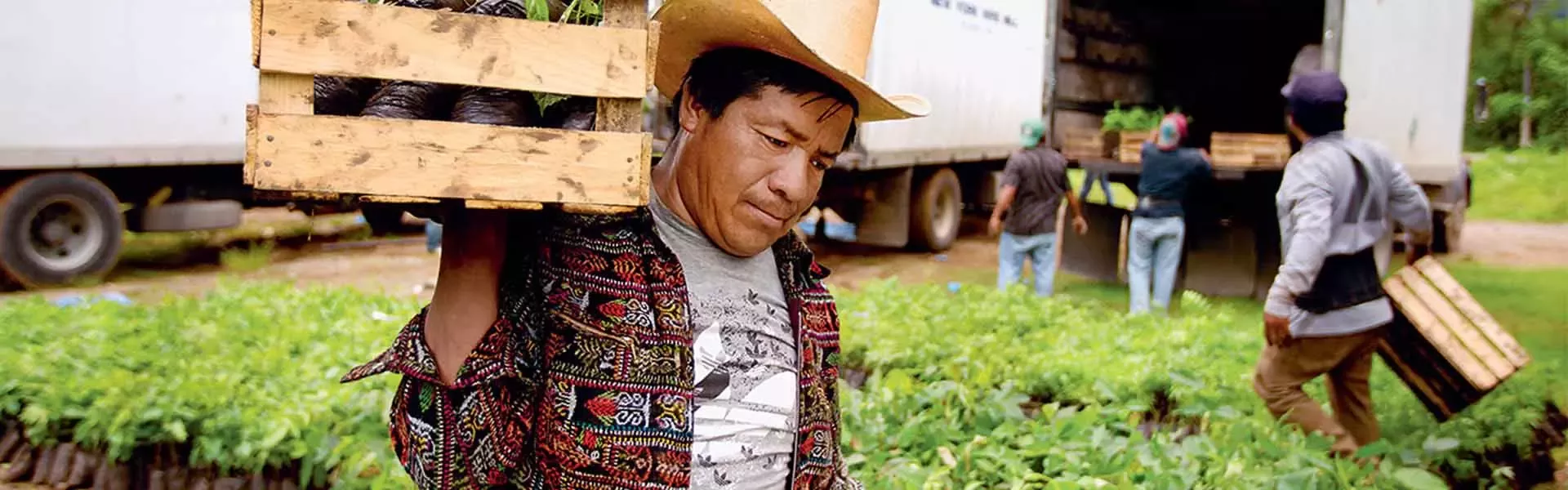
We are taking action to help conserve forests, restore degraded forests and ecosystems, and strengthen community resilience.
Through our Global Restoration Program we implement reforestation and regeneration projects in our supply chain and sourcing landscapes, working with partners, including on the rights of Indigenous Peoples and local communities
Our progress
8773352
* The Global Restoration Program was formerly known as the Global Reforestation Program. Learn more in the Environmental Disclosures section of our 2025 Non-Financial Statement (pdf, 16Mb).
Promoting forest conservation and restoration
We buy our key ingredients from farmers and suppliers, encouraging and promoting the uptake of long-term forest conservation and restoration.
We work to:
- Obtain commitments from suppliers to identify and conserve standing forests
- Recognize and respect the land rights of Indigenous Peoples and local communities
- Use satellite data to map our forest footprint and future risk areas
- Invest in forest conservation and restoration projects connected to our supply chains and sourcing landscapes
- Support farmers' and communities' livelihoods, trough premiums and sourcing preferences linked to conservation and restoration
- Co-invest in regenerative agriculture practices like agroforestry and intercropping
- Partner with industry-wide coalitions to help conserve high-value ecosystems
Key terms explained
Regenerative agriculture
In line with the Sustainable Agriculture Initiative Platform, Nestlé defines regenerative agriculture as an approach to farming which aims to conserve and restore natural resources, primarily soil, as well as water and biodiversity, while capturing carbon in soils and plant biomass, and to support farmers’ livelihoods. Examples of regenerative agriculture practices include reduced tillage and agroforestry. More information is available in our Nestlé Agriculture Framework (pdf, 19Mb). Read more about regenerative agriculture.
Regenerative agriculture
In line with the Sustainable Agriculture Initiative Platform, Nestlé defines regenerative agriculture as an approach to farming which aims to conserve and restore natural resources, primarily soil, as well as water and biodiversity, while capturing carbon in soils and plant biomass, and to support farmers’ livelihoods. Examples of regenerative agriculture practices include reduced tillage and agroforestry. More information is available in our Nestlé Agriculture Framework (pdf, 19Mb). Read more about regenerative agriculture.
Just transition
Just transition refers to a framework aimed at making the shift towards a regenerative food system as fair and inclusive as possible, creating decent work opportunities, and minimizing negative impacts on farmers, workers and communities. It encompasses a range of actions aimed at mitigating the negative social and economic impact of climate and agriculture action, while maximizing the benefits for all stakeholders, especially those most vulnerable (e.g., farmers, women, migrant workers), for example through building resilience, improving livelihoods and promoting human rights. It requires anticipating, preventing, and addressing the social and economic risks associated with climate and agricultural transitions, while supporting the fair sharing of benefits; such as, improved resilience, productivity and income opportunities, particularly with smallholder farmers, workers, women and migrant workers who may be disproportionately affected. Read more about just transition.
Just transition refers to a framework aimed at making the shift towards a regenerative food system as fair and inclusive as possible, creating decent work opportunities, and minimizing negative impacts on farmers, workers and communities. It encompasses a range of actions aimed at mitigating the negative social and economic impact of climate and agriculture action, while maximizing the benefits for all stakeholders, especially those most vulnerable (e.g., farmers, women, migrant workers), for example through building resilience, improving livelihoods and promoting human rights. It requires anticipating, preventing, and addressing the social and economic risks associated with climate and agricultural transitions, while supporting the fair sharing of benefits; such as, improved resilience, productivity and income opportunities, particularly with smallholder farmers, workers, women and migrant workers who may be disproportionately affected. Read more about just transition.
Living income
JLiving income' defines the net income a household needs to earn in order to enable all members of the household to afford a dignified and decent standard of living, including basic needs (food, water, housing, education, health care, transportation, clothing, other essential needs and a provision for unexpected events). Read more about living income.
Proactively helping to prevent deforestation
We are encouraging farmers and suppliers to adopt regenerative agriculture practices, methods of farming which work in harmony with forest conservation. We anticipate where we need to focus efforts on conservation, rather than react to issues, by identifying future risks to forests, peatlands and customary land rights near our supply chains. We then engage our direct suppliers to take preventative actions where needed.
Land rights
Recognizing and respecting the land rights of Indigenous Peoples and local communities (IP&LCs) is one of Nestlé's 10 salient human rights issues. Not only is respecting rights central to a just transition, but IP&LCs are also central to managing forest conservation. Therefore, it is critical that our approach puts IP&LCs' rights front and center.
We are working to find ways to integrate further protection for tenure-based land rights into our approach. In 2023, we published our IP&LCs' land rights action plan.
Livelihoods
Poverty can contribute to deforestation, so supporting ways to improve livelihoods is an important part of our efforts. It is also a way that we can contribute to a just transition.
To help preserve forests, smallholder farmers and their communities need to be incentivized and empowered to improve agricultural practices, and to contribute to conservation and restoration. These farmers sometimes face specific challenges, such as low yields or aging trees, and may clear forests to grow more crops, feed their family or earn more. The world's future challenge is to produce more food on less land, so it is critical these farmers are included in, and can benefit from, regenerative agriculture practices.
We promote training in regenerative agriculture practices to help these farmers improve their yields, and support opportunities for increased income. We are also helping farmers transition to new practices with a range of financial mechanisms, including co-investment, incentives, premiums, cost-sharing arrangements and risk-sharing models.
Incomes
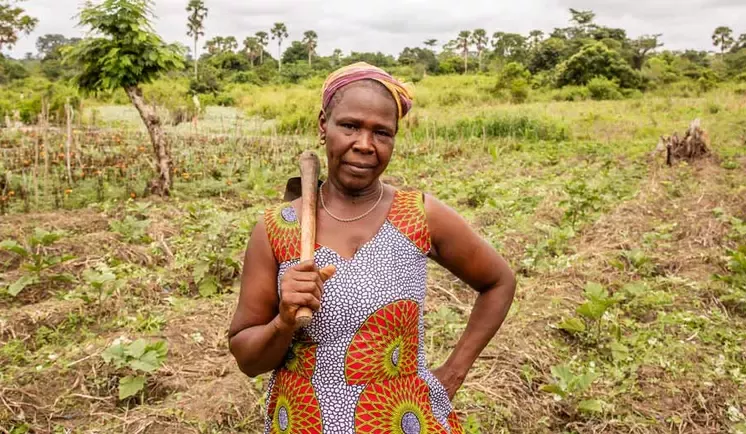
We have launched an income accelerator program in Côte d'Ivoire, through the Nestlé Cocoa Plan. The program aims to tackle child labor risks by incentivizing and supporting change in cocoa farming households and by helping them towards securing a living income. It does this through a cash incentive, directly paid to the cocoa-farming family through mobile money. The program includes an incentive for undertaking agroforestry activities, and planting forest and fruit trees. Read more in our latest progress report (pdf, 800Kb).
Our Global Restoration Program
We manage our reforestation and restoration activities through our Global Restoration Program. Since 2021, we have been working with our partners to develop and implement large-scale carbon removal projects across different geographical zones including Asia, Africa, Latin America, Europe and Oceania.
Projects within this program include growing trees to help restore natural forest landscapes, introducing agroforestry systems for suitable crops (such as cocoa and coffee) and supporting other natural ecosystem restoration activities.
In addition to the carbon removal benefits, these projects are expected to support co-benefits such as helping to improve soil health and water conservation, restoring degraded lands, contributing to biodiversity, mitigating climate change and supporting local livelihoods and the rights of IP&LCs.
To monitor that planted trees survive and thrive, we follow a 20-year or longer project cycle for every project, which includes country- and project-level assessments and stakeholder engagement. This ensures each project and location is carefully selected, and that long-term impact monitoring is in place. For each project, verification or certification processes help support the implementation and application of a robust set of carbon best practice principles (pdf, 253Kb).
We are partnering with global tree-planting experts such as One Tree Planted and PUR Projet, as well as carbon accounting partners, including NatureCO and South Pole. The Nestlé Scope 3 and Sourcing Landscape Removals Framework I (pdf, 1Mb) allows us to identify which nature-based solutions to invest in and to implement in collaboration with our partners and suppliers along our value chain.
The Global Restoration Program planted over eight million trees by the end of 2025.Adjusting our initial target to focus on quality and impact, by 2030, we aim to plant and grow 80-85 million trees as part of our Global Restoration Program (GRP) to help advance towards our net zero target while promoting measurable impacts on sourcing landscapes and local communities.
Read more about our plans on this target (pdf, 14Mb).

Key terms explained
Net zero
In 2019, we announced our ambition to reach net zero GHG emissions by 2050 at the latest. In 2026, we updated our timebound plan, the Nestlé Roots of Net Zero (pdf, 14Mb), which underpins our Group's climate and nature strategy and acts as our transition plan aligned with a 1.5°C pathway as validated by the Science Based Targets initiative (SBTi). We will balance any remaining emissions through high-quality nature-based solutions, such as agroforestry, silvopasture and the restoration of forests and peatland. Read more about net zero.
Nature-based solutions
Nature-based solutions (NbS) are strategies that use natural processes and ecosystems to address societal challenges, benefiting people, climate and nature at the same time. Nature-based solutions are actions aiming to conserve, manage, and restore natural and modified ecosystems, such as agroforestry, soil management and peatland and forest restoration.
Net zero
In 2019, we announced our ambition to reach net zero GHG emissions by 2050 at the latest. In 2026, we updated our timebound plan, the Nestlé Roots of Net Zero (pdf, 14Mb), which underpins our Group's climate and nature strategy and acts as our transition plan aligned with a 1.5°C pathway as validated by the Science Based Targets initiative (SBTi). We will balance any remaining emissions through high-quality nature-based solutions, such as agroforestry, silvopasture and the restoration of forests and peatland. Read more about net zero.
Nature-based solutions
Nature-based solutions (NbS) are strategies that use natural processes and ecosystems to address societal challenges, benefiting people, climate and nature at the same time. Nature-based solutions are actions aiming to conserve, manage, and restore natural and modified ecosystems, such as agroforestry, soil management and peatland and forest restoration.