

Why invest in Nestlé

- Achieving efficiencies
- Investing in key brands and growth platforms
- Driving market share gains
- Delivering profitable growth
- A shared vision focused on long-term, sustainable value creation
- Board members with diverse, highly relevant and complementary skills
- Management with deep industry and company knowledge
- Creating long-term value for society and our shareholders
- Helping advance regenerative food systems at scale
- Enhancing quality of life for people, family and pets with accessible, nutritious and sustainable food
Our Strengths


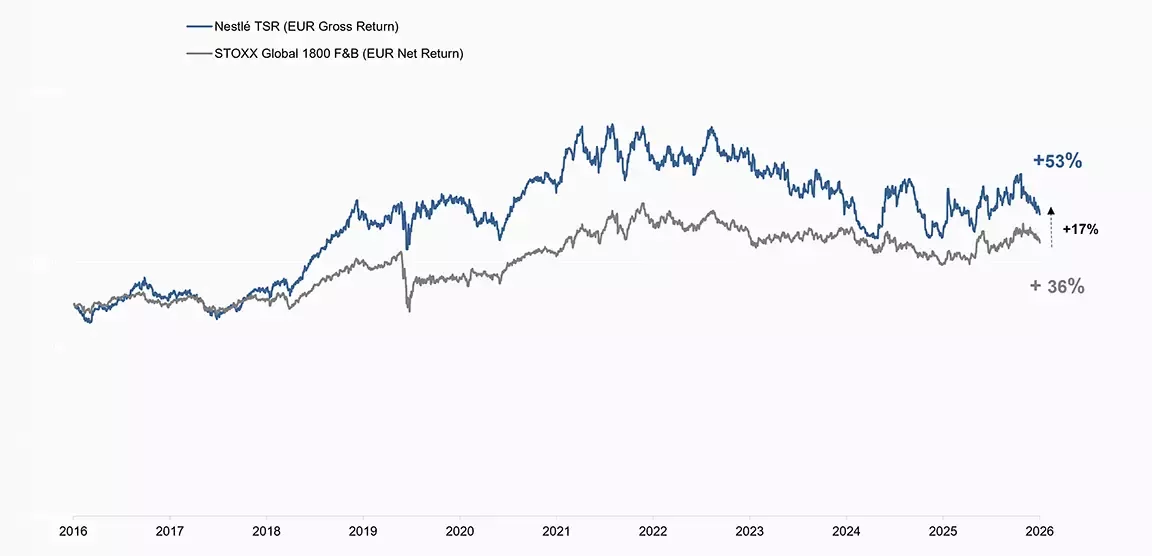
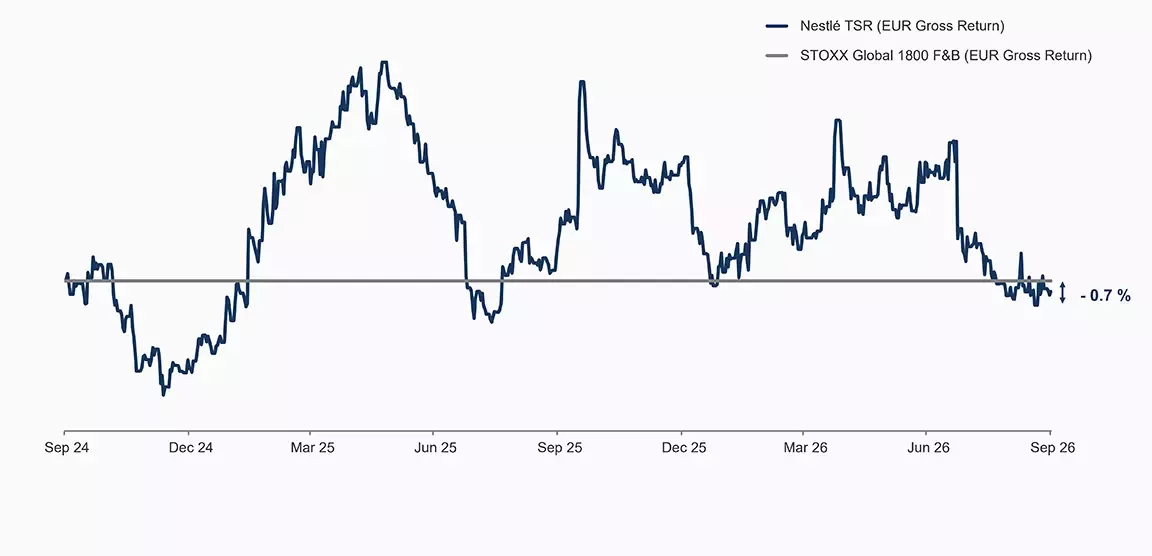
Shareholder returns


Corporate, social and environmental responsibility
Creating Shared Value (CSV) has always been fundamental to the way we do business. We have long believed that our company can only be successful in the long term by creating value both for our shareholders and for society. For decades, our activities and products have aimed to make a positive difference to society and foster Nestlé’s ongoing success..
This focus on shared value is more important than ever. Nestlé is fully committed to helping accelerate the transformation toward equitable, net-zero emission and nature-positive food systems that can nourish the world.
Key terms explained
Net zero
In 2019, we announced our ambition to reach net zero GHG emissions by 2050 at the latest. In 2026, we updated our timebound plan, the Nestlé Roots of Net Zero (pdf, 14Mb), which underpins our Group's climate and nature strategy and acts as our transition plan aligned with a 1.5°C pathway as validated by the Science Based Targets initiative (SBTi). We will balance any remaining emissions through high-quality nature-based solutions, such as agroforestry, silvopasture and the restoration of forests and peatland. Read more about net zero.
Regenerative food system
A regenerative food system is one that goes beyond reducing harm to actively restoring ecological systems, while at the same time strengthening the social, economic and human rights foundations that food production depends on - so that food systems can sustain nature, people and livelihoods over the long term.
