Environmental, social, and governance (ESG) and sustainability

Business benefit and positive societal impact must be mutually reinforcing. This is the core of our Creating Shared Value approach to business. Our company can only be successful in the long term if we create value for all stakeholders.
Key performance indicators
24.5
%
96.9
%
20.7
%
28
%
48.2
%
135.4
billion
Our Non-Financial Statement 2025 (pdf, 18Mb) was independently assured by Ernst & Young Ltd (EY). They have provided limited assurance on select environmental, social and governance, KPIs , which can be found in Independent assurance (pdf, 18Mb)
Our Reporting Scope and Methodology for ESG KPIs (pdf, 18Mb) document provides details and definitions.
Nestlé’s Non-Financial Statement 2025 has been produced with reference to the Global Reporting Initiative (GRI) and the Sustainability Accounting Standards Board (SASB) Standard for the Processed Foods sector which can be found here: GRI and SASB Index (pdf, 18Mb)
1 Net reductions (%) of GHG emissions versus 2018 baseline includes removals from inside Nestlé’s value chains and sourcing landscapes (pending the publication of the SBTi guidance on neutralization).
2 This performance number differs from the one available in our Non-Financial Statement 2025 due to a change in the methodology during the first half of 2026. Now we consider ingredients volumes converted back to their original fresh state, instead of their processed form.
3 This performance number differs from the one available in our Non-Financial Statement 2025 due to a change in the methodology during the first half of 2026. Now we consider ingredients volumes converted back to their original fresh state, instead of their processed form. There has been a change in the key ingredients scope from 2026 onwards. The new scope is: cereals and grains; cocoa; coconut; dairy (derivatives and fresh milk); green coffee; hazelnuts; meat, poultry and eggs; soy;spices; sugar; vegetables; and vegetable fat oils (including palm oil)
Key terms explained
Deforestation-free
Deforestation-free means that commodities in scope were assessed as produced on land that has not been subject to deforestation or conversion after a specific cut-off date that varies by commodity, but no later than December 31, 2020. Commodities accounted as deforestation-free include in part commodities subject to the requirements of the EU Deforestation Regulation. However, the scope of the disclosed metric goes beyond these jurisdiction-specific mandatory requirements as part of Nestlé's global approach on deforestation. Read more about deforestation.
Net zero
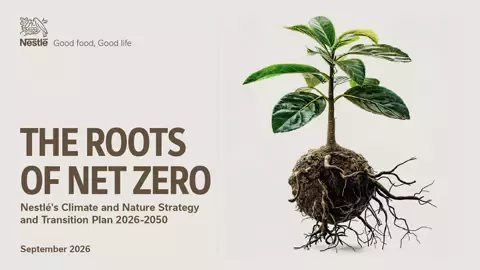
In 2019, we announced our ambition to reach net zero GHG emissions by 2050 at the latest. In 2026, we updated our timebound plan, the Nestlé Roots of Net Zero (pdf, 14Mb), which underpins our Group's climate and nature strategy and acts as our transition plan aligned with a 1.5°C pathway as validated by the Science Based Targets initiative (SBTi). We will balance any remaining emissions through high-quality nature-based solutions, such as agroforestry, silvopasture and the restoration of forests and peatland. Read more about net zero.
Regenerative food system
A regenerative food system is one that goes beyond reducing harm to actively restoring ecological systems, while at the same time strengthening the social, economic and human rights foundations that food production depends on - so that food systems can sustain nature, people and livelihoods over the long term.
Virgin plastic
Plastic that has not been previously used or subjected to processing other than for its original production. It includes fossil and bio-based plastics.
Deforestation-free
Deforestation-free means that commodities in scope were assessed as produced on land that has not been subject to deforestation or conversion after a specific cut-off date that varies by commodity, but no later than December 31, 2020. Commodities accounted as deforestation-free include in part commodities subject to the requirements of the EU Deforestation Regulation. However, the scope of the disclosed metric goes beyond these jurisdiction-specific mandatory requirements as part of Nestlé's global approach on deforestation. Read more about deforestation.
Net zero
In 2019, we announced our ambition to reach net zero GHG emissions by 2050 at the latest. In 2026, we updated our timebound plan, the Nestlé Roots of Net Zero (pdf, 14Mb), which underpins our Group's climate and nature strategy and acts as our transition plan aligned with a 1.5°C pathway as validated by the Science Based Targets initiative (SBTi). We will balance any remaining emissions through high-quality nature-based solutions, such as agroforestry, silvopasture and the restoration of forests and peatland. Read more about net zero.
Regenerative food system
A regenerative food system is one that goes beyond reducing harm to actively restoring ecological systems, while at the same time strengthening the social, economic and human rights foundations that food production depends on - so that food systems can sustain nature, people and livelihoods over the long term.
Virgin plastic
Plastic that has not been previously used or subjected to processing other than for its original production. It includes fossil and bio-based plastics.
Downloads
Our key action areas
-
Nutrition We are offering foods that are more nutritious and with natural ingredients.Read more
-
Our road to net zero We are using our size, scale and reach to tackle climate change and make a big difference. We are transforming our business and using our resources to inspire change.Read more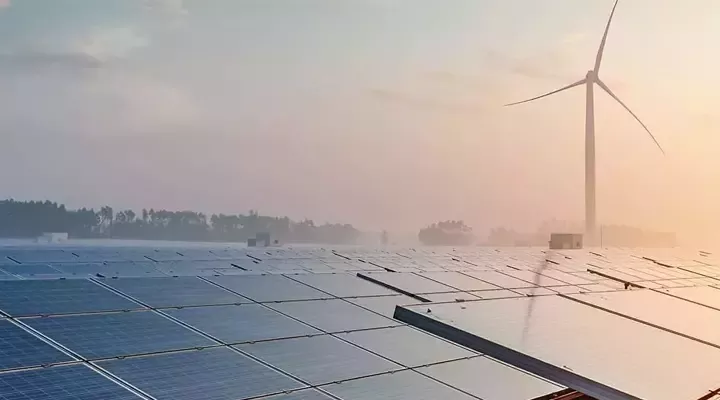
-
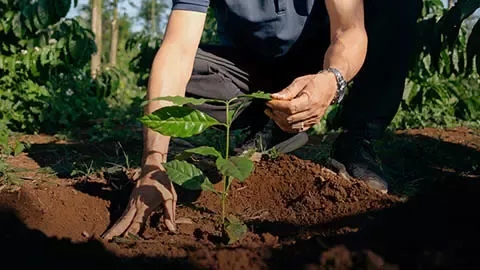
Regenerative agriculture Agriculture can play a unique role in delivering emissions reductions and addressing nature loss.Read more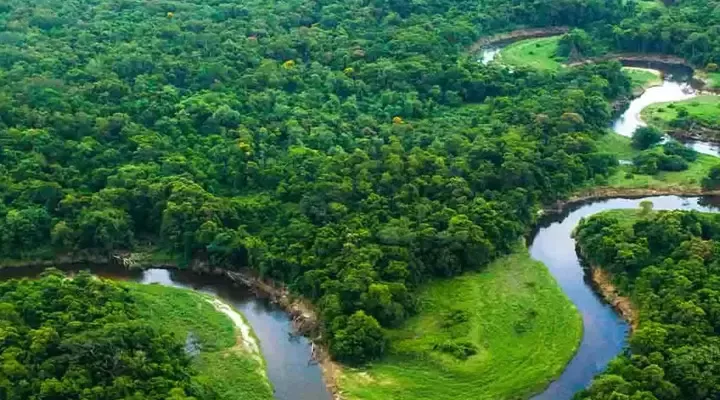
-
Packaging and circularity Our vision is that none of our packaging ends up in landfill or as litter.Read more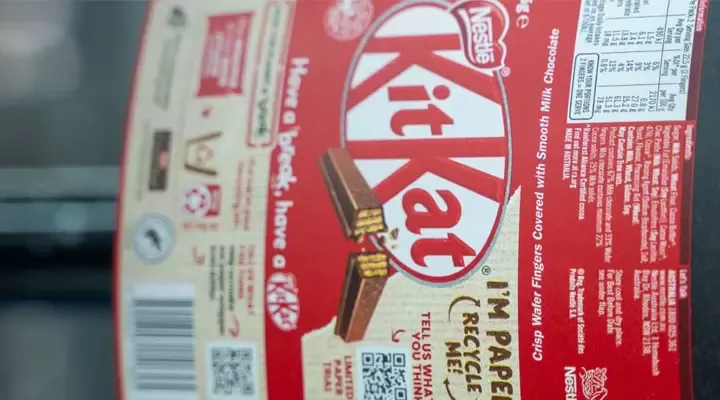
-
Diversity, equity and inclusion Providing decent employment and equal opportunities.Read more
-
Performance and reporting Our progress and data points.Read more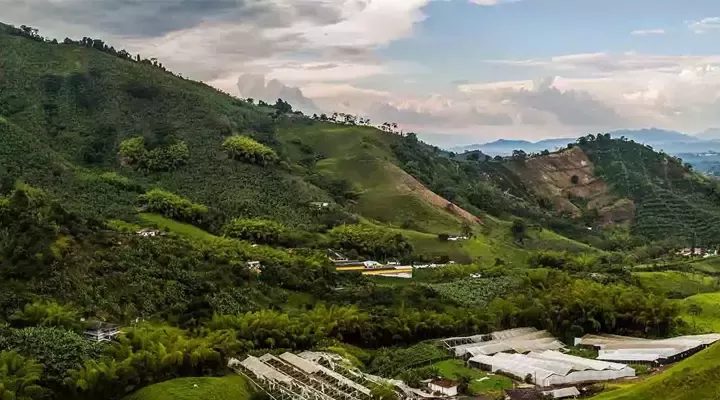

Generation Regeneration
Creating Shared Value (CSV) is at the heart of Nestlé’s approach to achieving our purpose: to unlock the power of food and beverages to enhance quality of life for everyone, today and for generations to come. We have sought to build our business approach on decisions that are not just good for us and our shareholders, but for society and the planet as well.
Climate change and environmental threats such as the degradation of forests, land, soil and waterways are impacting farmers and communities. These threats put farmer livelihoods at risk and jeopardize the accessibility and availability of quality food.
That's why we are taking action to advance regenerative food systems at scale. We are embarking on a journey toward regeneration; to help protect, renew and restore the environment, improve the livelihoods of farmers and enhance the resilience and well-being of communities and our consumers.