
Nature

We recognize how deeply connected food systems are to the planet’s resources and our future.
The ingredients we use for our products origin from natural resources. That’s why playing our part through climate and nature actions and supporting a just transition for communities is important for people, the planet, and our business. To help conserve and restore the farmland and landscapes our food system depends on, we aim, among other actions, to source half of our key ingredients from farmers adopting regenerative agriculture practices by 2030.**
Learn more about our plans on this target (pdf, 14Mb).
Key terms explained
Regenerative agriculture
In line with the Sustainable Agriculture Initiative Platform, Nestlé defines regenerative agriculture as an approach to farming which aims to conserve and restore natural resources, primarily soil, as well as water and biodiversity, while capturing carbon in soils and plant biomass, and to support farmers’ livelihoods. Examples of regenerative agriculture practices include reduced tillage and agroforestry. More information is available in our Nestlé Agriculture Framework (pdf, 19Mb). Read more about regenerative agriculture.
Deforestation-free
Deforestation-free means that commodities in scope were assessed as produced on land that has not been subject to deforestation or conversion after a specific cut-off date that varies by commodity, but no later than December 31, 2020. Commodities accounted as deforestation-free include in part commodities subject to the requirements of the EU Deforestation Regulation. However, the scope of disclosed metric goes beyond these jurisdiction-specific mandatory requirements as part of Nestlé’s global approach on deforestation. Read more about deforestation.
Just transition
Just transition refers to a framework aimed at making the shift towards regenerative food systems at scale as fair and inclusive as possible, creating decent work opportunities and minimizing negative impacts on farmers, workers, and communities. It encompasses a range of actions aimed at mitigating the negative social and economic impact of climate and agriculture action, while maximizing the benefits for all stakeholders, especially those most vulnerable (e.g., farmers, women, migrant workers), for example through building resilience, improving livelihoods and promoting human rights. It requires anticipating, preventing, and addressing the social and economic risks associated with climate and agricultural transitions, while supporting the fair sharing of benefits; such as, improved resilience, productivity, and income opportunities, particularly with smallholder farmers, workers, women, and migrant workers who may be disproportionately affected.
Regenerative agriculture
In line with the Sustainable Agriculture Initiative Platform, Nestlé defines regenerative agriculture as an approach to farming which aims to conserve and restore natural resources, primarily soil, as well as water and biodiversity, while capturing carbon in soils and plant biomass, and to support farmers’ livelihoods. Examples of regenerative agriculture practices include reduced tillage and agroforestry. More information is available in our Nestlé Agriculture Framework (pdf, 19Mb). Read more about regenerative agriculture.
Deforestation-free
Deforestation-free means that commodities in scope were assessed as produced on land that has not been subject to deforestation or conversion after a specific cut-off date that varies by commodity, but no later than December 31, 2020. Commodities accounted as deforestation-free include in part commodities subject to the requirements of the EU Deforestation Regulation. However, the scope of disclosed metric goes beyond these jurisdiction-specific mandatory requirements as part of Nestlé’s global approach on deforestation. Read more about deforestation.
Just transition
Just transition refers to a framework aimed at making the shift towards regenerative food systems at scale as fair and inclusive as possible, creating decent work opportunities and minimizing negative impacts on farmers, workers, and communities. It encompasses a range of actions aimed at mitigating the negative social and economic impact of climate and agriculture action, while maximizing the benefits for all stakeholders, especially those most vulnerable (e.g., farmers, women, migrant workers), for example through building resilience, improving livelihoods and promoting human rights. It requires anticipating, preventing, and addressing the social and economic risks associated with climate and agricultural transitions, while supporting the fair sharing of benefits; such as, improved resilience, productivity, and income opportunities, particularly with smallholder farmers, workers, women, and migrant workers who may be disproportionately affected.
Our progress
96.9
%
20.7
%
* This performance number differs from the one available in our Non-Financial Statement 2025 due to a change in the methodology during the first half of 2026. Now we consider ingredients volumes converted back to their original fresh state, instead of their processed form.
** There has been a change in the key ingredients scope from 2026 onwards. The new scope is: cereals and grains; cocoa; coconut; dairy (derivatives and fresh milk); hazelnuts; green coffee; meat, poultry and eggs; soy; spices; sugar; vegetables; and vegetable fat oils (including palm oil).
Learn more in the Environmental Disclosures section of our 2025 Non-Financial Statement (pdf, 16Mb).
SDG contributions

Discover how our efforts support the United Nations 2030 Agenda for Sustainable Development.
Discover our actions

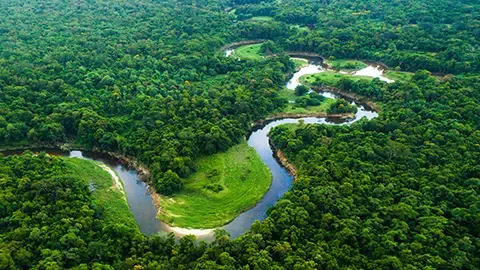

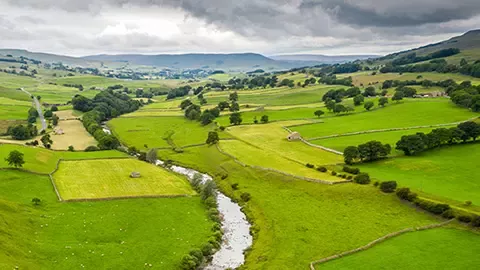

One thing I’ve come to appreciate is the relationship between high-quality coffees, ecosystems and communities. Biodiversity supports the ecological services that all of us ultimately depend on.

Access nature-related performance data
Download our performance against our KPIs in the Non-Financial Statement Appendix 4: Environment - Biodiversity and ecosystems (pdf, 16Mb).