Key definitions
Throughout the Sustainability section we use a number of key terms that help explain our priorities, commitments and actions. The definitions below provide clear, practical explanations to support understanding and transparency.
A-E
Advancing regenerative food systems at scale
Nestlé’s intention to advance regenerative food systems at scale means:
- Advancing: by raising Nestlé's voice and using its influence to drive progress, in collaboration with others.
- Regenerative food systems: that go beyond reducing harm to actively restoring ecological systems, while at the same time strengthening the social, economic and human rights foundations that food production depends on, so that food systems can sustain nature, people and livelihoods over the long term.
- At scale: because the planet, communities and individuals need global, systems-level change.
Read more about regenerative food systems.
Best-before (or date of minimum durability)
Means the date which signifies the end of the period under any stated storage conditions during which the product will remain fully marketable and will retain any specific qualities for which tacit or express claims have been made. However, beyond the date the food may still be perfectly satisfactory1.
Biodegradable
Material that can be broken down by micro organisms into natural substances such as carbon dioxide, water, and biomass, under specific environmental conditions; biodegradability depends on the conditions and time frame and does not necessarily occur in the natural environment.
Blue water
Blue water refers to fresh surface water and groundwater resources (e.g. rivers, lakes, and aquifers) that are abstracted, consumed or discharged as part of an organization's activities and value chain.
Carbon capture and storage (CCS)
Technology that captures carbon dioxide from a smokestack or flue, such as in a coal-fired power plant or a cement factory, and then sequesters that carbon dioxide underground. Processes that capture carbon dioxide and use it to produce commercial products are known as carbon capture and use.
Circularity
Reflecting the circular economy principles defined by the Ellen MacArthur Foundation, circularity is about designing out waste and pollution, keeping materials in use at their highest value and regenerating nature.
Climate-smart farming
Climate-smart farming is an integrated approach to managing landscapes (cropland, livestock, forests and fisheries) that addresses the interlinked challenges of food security and climate change. A holistic approach, its objective is to enhance food security and promote sustainability while addressing climate change issues.
Compostable
A material is considered compostable (whether suitable for home or industrial composting) when, through microbial activity, its biodegradable components break down to form compost as well as naturally occurring gases and water under both aerobic and anaerobic conditions.
Deforestation-free
Deforestation-free means that commodities in scope were assessed as produced on land that has not been subject to deforestation or conversion after a specific cut-off date that varies by commodity, but no later than December 31, 2020. Commodities accounted as deforestation-free include in part commodities subject to the requirements of the EU Deforestation Regulation. However, the scope of the disclosed metric goes beyond these jurisdiction-specific mandatory requirements as part of Nestlé's global approach on deforestation. Read more about deforestation.
Designed for Recycling (D4R)
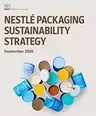
Refers to packaging materials and formats which are compliant with our Negative List and aligned with the Golden Design Rules, which can be found within our Rules of Packaging Sustainability.
Ecological connectivity
Ecological connectivity can be defined as the degree of connection between the various natural environments present within a landscape, in terms of their components, spatial distribution and ecological functions.
Ecosystem services
Ecosystem services are the benefits humans obtain from ecosystems, including provisioning, regulating, supporting and cultural services (e.g. food provisioning, fresh water, climate regulation, air and water purification, and pollination).
Energy attribute certificates (EACs)
Contractual instruments that convey information (attributes) about a unit of energy, including the resource used to create the energy and the GHG emissions associated with its production and use. EAC is a generic term that includes all types of contractual instruments that convey rights to attributes from various types of energy (e.g. gas, electrical, thermal). Renewable energy certificates (REC) are an example of EAC, used for electricity suppliers and consumers, that convey one megawatt-hour of electricity generated from renewable sources.
F-J
Food loss
The decrease in edible food mass throughout the part of the supply chain that specifically leads to edible food for human consumption. Food losses take place at production, post-harvest and processing stages in the food supply chain2.
Food Surplus
Surplus food refers to edible food products, ingredients, or partly processed items that remain unsold or unused due to factors like specification mismatches, production or labeling errors, supply-demand imbalances, or date-marking restrictions. Surplus food may be redistributed if it is safe for human consumption and complies with local safety and information rules3.
Food waste
The decrease in the quantity or quality of food resulting from decisions and actions by retailers, food service providers and consumers4.
Future best cost solutions
Future best cost solutions are pipeline opportunities not yet secured that are expected to close remaining roadmap gaps at optimized cost, leveraging future market conditions, innovation, and scale efficiencies.
Good agricultural practices
Farm-level and post-farm practices ensuring efficient agricultural production aligned with environmental, social and economic performance objectives.
Green buffer
A green buffer is a designated area of vegetation strategically placed to create a living barrier between different land uses.
Green coffee
Green coffee is the raw and unroasted beans of the coffee plant.
Green tariffs
A green tariff is an electricity pricing structure where the supplier commits to matching electricity usage with energy generated from renewable sources.
Greenhouse gas (GHG) emissions
Greenhouse gases (GHGs) absorb energy, slowing down its rate of escape back to space, leading to planetary warming. Different GHGs effect this warming at different rates (see Global Warming Potential (GWP)). GHGs include carbon dioxide (CO2), methane (CH4), nitrous oxide (N2O) and fluorinated gases.
Greenhouse Gas Performance System (GPS)
Nestlé's internal accounting tool integrating data from across the business and the value chain and using it to calculate the most accurate representation of our corporate footprint aligned with GHG Protocol standards. Used to measure, track, manage and report GHG emissions performance.
Healthy soils
Soil health is defined as the continued capacity of soil to function as a vital living ecosystem that sustains plants, animals and humans. Healthy soils support clean air and water, bountiful crops and forests, productive grazing lands, diverse wildlife and beautiful landscapes.
High Carbon Stocks area
A High Carbon Stocks (HCS) area refers to a region or land area that contains a significant amount of carbon stored in its vegetation and soil. These areas are typically characterized by dense forests or vegetation that play a crucial role in carbon sequestration and mitigating climate change. Identifying and protecting HCS areas is important for preserving biodiversity, maintaining ecosystem services and reducing greenhouse gas (GHG) emissions.
Just transition
Just transition refers to a framework aimed at making the shift towards regenerative food systems at scale as fair and inclusive as possible, creating decent work opportunities and minimizing negative impacts on farmers, workers and communities. It encompasses a range of actions aimed at mitigating the negative social and economic impact of climate and agriculture action, while maximizing the benefits for all stakeholders, especially those most vulnerable (e.g. farmers, women, migrant workers), for example, through building resilience, improving livelihoods and promoting human rights. It requires anticipating, preventing and addressing the social and economic risks associated with climate and agricultural transitions, while supporting the fair sharing of benefits, such as improved resilience, productivity and income opportunities, particularly with smallholder farmers, workers, women and migrant workers who may be disproportionately affected. Read more about just transition.
K-N
Landscape initiative
On-the-ground multi-stakeholder programs to set common goals, take collective action while reconciling different interests and monitor progress towards improving social, environmental and economic outcomes at a landscape scale, within the wider geographical area surrounding the farmland used to produce our agricultural raw materials.
Living income
'Living income' defines the net income a household needs to earn in order to enable all members of the household to afford a dignified and decent standard of living, including basic needs (food, water, housing, education, health care, transportation, clothing, other essential needs and a provision for unexpected events). Read more about living income.
Nature-based solutions
Nature-based solutions (NbS) are strategies that use natural processes and ecosystems to address societal challenges, benefiting people, climate and nature at the same time. Nature-based solutions are actions aiming to conserve, manage, and restore natural and modified ecosystems, such as agroforestry, soil management and peatland and forest restoration.
Net zero
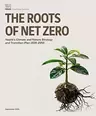
In 2019, we announced our ambition to reach net zero GHG emissions by 2050 at the latest. In 2026, we updated our timebound plan, the Nestlé Roots of Net Zero (pdf, 14Mb), which underpins our Group's climate and nature strategy and acts as our transition plan aligned with a 1.5°C pathway as validated by the Science Based Targets initiative (SBTi). We will balance any remaining emissions through high-quality nature-based solutions, such as agroforestry, silvopasture and the restoration of forests and peatland. Read more about net zero.
O-R
Power purchase agreements (PPAs)
Long-term contracts in which a buyer agrees to purchase electricity from a generator at a pre-agreed price and volume over a defined period, often to secure renewable energy supply.
Primary packaging
Packaging conceived so as to constitute a sales unit to the final user or consumer at the point of purchase.
Recyclable
As defined in the Ellen MacArthur Foundation definitions, a packaging or packaging component is recyclable if it is successfully post-consumer collected, sorted and recycled with a recycling rate of 30% in multiple regions, collectively representing more than 400 million inhabitants.
Regenerative agriculture
In line with the Sustainable Agriculture Initiative Platform, Nestlé defines regenerative agriculture as an approach to farming, which aims to conserve and restore natural resources, primarily soil, as well as water and biodiversity, while capturing carbon in soils and plant biomass and to support farmers' livelihoods. Examples of regenerative agriculture practices include reduced tillage and agroforestry. More information is available in our Nestlé Agriculture Framework (pdf, 19Mb). Read more about regenerative agriculture.
Regenerative food system
A regenerative food system is one that goes beyond reducing harm to actively restoring ecological systems, while at the same time strengthening the social, economic and human rights foundations that food production depends on, so that food systems can sustain nature, people and livelihoods over the long term. Read more about regenerative food systems.
Regenerative landscapes
A land-management system that is inclusive, combining conservation and ecosystem restoration; driven by measurable outcomes in soil, water, biodiversity, climate and livelihoods; works to restore degraded lands and design landscapes to be resilient to environmental change; and delivers ecosystem services to communities and neighboring agricultural producing lands.
Responsible recruitment
Responsible recruitment is recruitment carried out in a manner that respects and protects workers' rights, is free from fees charged to workers, and prevents exploitation, forced labor, and human trafficking.
Responsible sourcing
For Nestlé, responsible sourcing means improving the traceability of our ingredients and monitoring how they are produced. This involves applying our environmental and human rights requirements - detailed in our Responsible Sourcing Core Requirements (pdf, 2Mb) - at the different stages of our supply chain. Examples of these requirements include that land and resources of Indigenous Peoples and local communities are respected and that no deforestation and no conversion of forests and other ecosystems occur in our supply chain. Read more about responsible sourcing.
Reusable
Following ISO 18603, reusable is the characteristic of a product or packaging that has been conceived and designed to accomplish within its lifecycle a certain number of trips, rotations or uses for the same purpose for which it was conceived. The weight of reusable packaging is defined by the total weight of reusable packaging, divided by the number of expected rotations over the entire life of the package.
S-V
Secondary packaging
Packaging conceived so as to constitute at the point of purchase a grouping of a certain number of sales units.
Silvo-pastoral systems
Silvo-pastoral systems are when trees, hedgerows and agricultural/horticultural crops and/or livestock are produced on the same piece of land, providing co-benefits such as additional sources of farm income, carbon sequestration in trees and soil organic matter, protection against wind erosion, improved water management and provision of habitats for beneficial insects, pollinators, birds and other species.
Social safeguarding
Social safeguarding is a process for protecting people from being harmed by interventions - such as those put in place by a landscape initiative - intended to do good. It includes understanding how people might be at risk, what could be done to mitigate that and how to check that this is happening in practice.
Supply shed
A supply shed is a group of farms or suppliers in a specifically defined geography (for example, part of an agricultural cooperative) that Nestlé sources an ingredient or multiple ingredients from. This is, for example, the approach in case of a regenerative agriculture project on a cereal farm supplying a silo that Nestlé sources from but for which we don't have traceability to farm level.
Tertiary packaging
Packaging conceived so as to facilitate handling and transport of a number of sales units or grouped packaging in order to prevent physical handling and transport damage. Tertiary packaging does not include road, rail, ship and air containers.
Use-by Date (or expiration-date)
Means the date which signifies the end of the estimated period under any stated storage conditions, after which the product probably will not have the quality attributes normally expected by the consumers. After this date, the food should not be regarded as marketable5.
Virgin plastic
Plastic that has not been previously used or subjected to processing other than for its original production. It includes fossil and bio-based plastics.
W-Z
Water-resilient value chain
A water-resilient value chain is designed to reduce exposure to water risks and enhance the resilience of the ecosystems and communities it depends on.
Watershed health
Watershed health refers to the condition and functioning of a watershed so it can sustainably provide clean water, support ecosystems and remain resilient to external pressures.
Water stewardship
Water stewardship for Nestlé means taking a holistic approach to water use across our operations and supply chains, including:
- Managing water resources in and around our sites, with actions tailored to local watershed needs and risks.
- Supporting the right to water, including access to safe water, sanitation, and hygiene (WASH) for workers and communities surrounding our factories.
- Supporting environmental outcomes through projects designed to help improve water quality, strengthen local water resilience, and support biodiversity.
- Delivering transparent, third-party verified results through certification (e.g. AWS), public reporting, and independent performance measurement (such as the Volumetric Water Benefit Accounting methodology).
- Engaging in collaborative action with stakeholders, including local communities, farmers, NGOs, and public authorities, to address shared water challenges and drive systemic change.
1 Codex Alimentarius, General Standard for the Labelling of Prepackaged Foods (CODEX STAN 1-1985, Rev. 1-1991).
2 Gustavsson, J., Cederberg, C., Sonesson, U., van Otterdijk, R., & Meybeck, A. (2011). Global food losses and food waste: extent, causes and prevention. International Congress: Save Food!
3 European Commission Notice - EU Guidelines on Food Donation C/2017/6872
4 Gustavsson, J., Cederberg, C., Sonesson, U., van Otterdijk, R., & Meybeck, A. (2011). Global food losses and food waste: extent, causes and prevention. International Congress: Save Food!
5 Codex Alimentarius Commission. General Standard for the Labelling of Prepackaged Foods (CODEX STAN 1-1985, Rev. 1-1991).