Water management in our operations
Water is fundamental to our direct operations, a vital resource for everyone and central to our efforts to Creating Shared Value. The need to improve water use in our factories was further highlighted by recent droughts around the globe.
We have implemented programs to continuously improve water use efficiency in our factories.
Our approach to water management must be local and context based. We use various sets of publicly available data from four independent sources to evaluate the water stress at our factory locations. Each Nestlé site receives a score, allowing us to prioritize locations and actions.
Our context-based approach involves a three-step roadmap from local to wider catchment level: regulatory compliance as a minimum, followed by continuous efforts on water resources management, and then collective action across landscapes.
We perform regular assessments of local water resources and water use inside and outside our factories, including possible future risks. We also engage with stakeholders and monitor external research findings.
Our progress
96.1
Million cubic meters
2.9
Million cubic meters
Learn more in the Environmental Disclosures section of our 2025 Non-Financial Statement (pdf, 18Mb).
How we optimize water use in our operations
We constantly seek to improve water use efficiency in our factories, monitoring water withdrawals and water quality in all locations. Recycling and reusing water wherever feasible are a priority across our different sites, each of which has unique water requirements. We closely monitor the quality of the water we discharge. This due diligence approach helps support regulatory compliance and identify, prevent and mitigate potential negative impacts on surrounding ecosystems and communities.
Our digital compliance assessment and monitoring tool provides further assurance that our factories meet our own stringent environmental standards, Nestlé Environmental Requirements (NER).
Monitoring water use with real-time insights
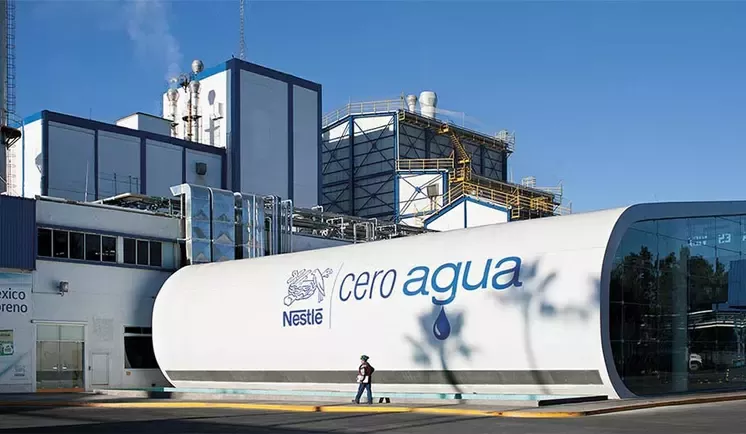
We aim to improve water use efficiency. Since 2019, we have been using Aquassay technology in our bottled-water factories to monitor water from the source through to discharge. The technology helps factory managers highlight areas for improvement in real time.
Collaborating with the Alliance for Water Stewardship for high water efficiency standards
The Alliance for Water Stewardship (AWS) Standard is the first global standard for measuring water stewardship activities across social, environmental and economic criteria. The AWS Standard helps sites adopt best practices to address the shared water challenges of a watershed. It also helps support water stewardship actions with communities, suppliers and local stakeholder.
We contribute in parallel to the work of the AWS Board of Trustees.
Alliance for Water Stewardship certification
The AWS certification process is rigorous and provides third-party verification for our water stewardship work. It enables broader, improved collaboration among local stakeholders. It promotes water- use practices intended to support watershed health and may provide social and economic benefits to local communities.
AWS certification also leads to a stronger understanding of local water challenges and more meaningful collective actions to address them - all vital to water resource management.
By the end of 2025, the total number of Nestlé Waters & Premium Beverages AWS - certified sites was 39. Learn more in the Environmental Disclosures section of our 2025 Non-Financial Statement (pdf, 18Mb).

Key terms explained
Water stewardship
Water stewardship for Nestlé means taking a holistic approach to water use across our operations and supply chains, including:
- Managing water resources in and around our sites, with actions tailored to local watershed needs and risks.
- Supporting the right to water, including access to safe water, sanitation, and hygiene (WASH) for workers and communities surrounding our factories.
- Supporting environmental outcomes through projects designed to help improve water quality, strengthen local water resilience, and support biodiversity.
- Delivering transparent, third-party verified results through certification (e.g. AWS), public reporting, and independent performance measurement (such as the Volumetric Water Benefit Accounting methodology).
- Engaging in collaborative action with stakeholders, including local communities, farmers, NGOs, and public authorities, to address shared water challenges and drive systemic change.