

It takes about five minutes to drink a cup of coffee. It takes months - and a whole host of experts - to make it.
Miles away from your kitchen, the story starts with an agronomist studying the growing conditions and a farmer carefully cultivating and tending their plants. It continues with the roaster perfecting temperature and timing for those beans. And it ends with a taster making sure every batch hits the mark - all before it reaches your cup.
Meet four of the many people shaping how you enjoy your drink.
The agronomist
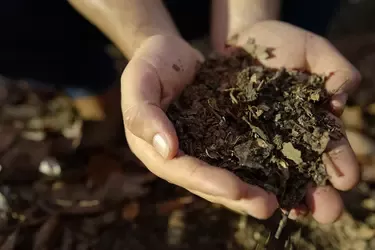
Before, during and after a coffee plant's life, Donnel Tiedra is a man with his hands in the soil. As one of Nestlé's agronomists in the Philippines, part of his job is understanding the unique growing conditions of each coffee farm. He knows the best yields and highest-quality beans come from coffee plants receiving the right nutrients from healthy soils. Achieving this, however, is something that takes time.
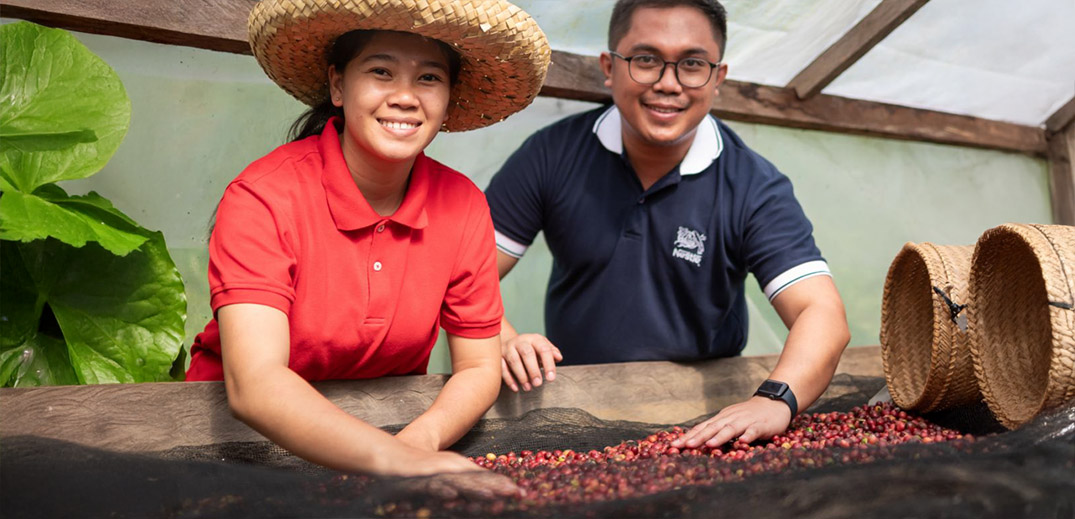
"Every time a farmer harvests, the plant absorbs important nutrients from the soil. If we don't put these back, this will affect the next harvest," Donnel says.
Through the Nescafé Plan, Nestlé aims to ensure consumers can enjoy their cup of coffee now and for years to come by adopting regenerative agriculture practices that boost productivity and resilience while minimizing environmental impact.
Donnel is one of more than 1 600 field staff and agronomists (pdf, 7Mb) working with growers to put this approach into practice. He trains them to farm with efficient methods such as agroforestry, cover cropping and intercropping that help improve soil health and support the crop's long-term sustainability.
By providing farmers with technical support, he helps them reduce their reliance on additional inputs and improve resilience in the face of climate change. The result is more consistent, higher-quality yields.
"We at Nestlé recognize that the best way to keep our promise of Good food, Good life is to equip our farmers with the best knowledge in agriculture," he adds.
The farmer
"For me, coffee represents a signature from my family," says Rafael Bortolini, a farmer proud to continue his family's coffee farming legacy in Brazil.
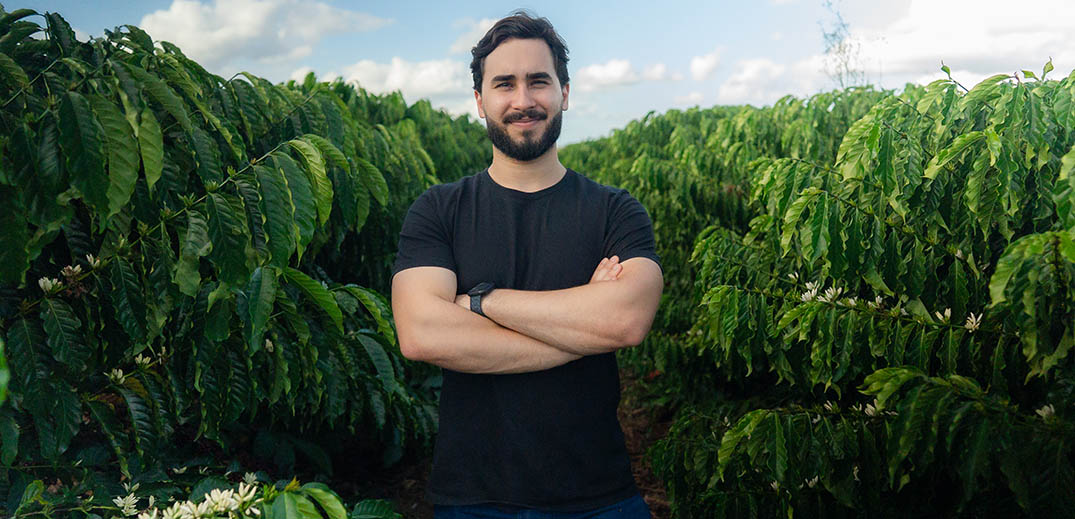
As a fourth-generation farmer, he is working with Nestlé to combine the traditions and techniques learnt from his father with modern technologies. This includes using drones to map the land and following regenerative agriculture practices such as introducing natural windbreaks to protect the coffee plants.
In this way, he is improving the farm's productivity, balancing its impact on the environment and helping improve the quality of work for his employees. Coffee is both culturally and economically important to Brazil, and farmers like Rafael are helping shape the future of the crop.
The roaster
On the other side of the world is David Guest, factory manager at one of the world's largest coffee factories, Tutbury in the UK. David and colleagues across Nestlé's factories oversee the conversion of green coffee beans into the brown hues we are much more familiar with.
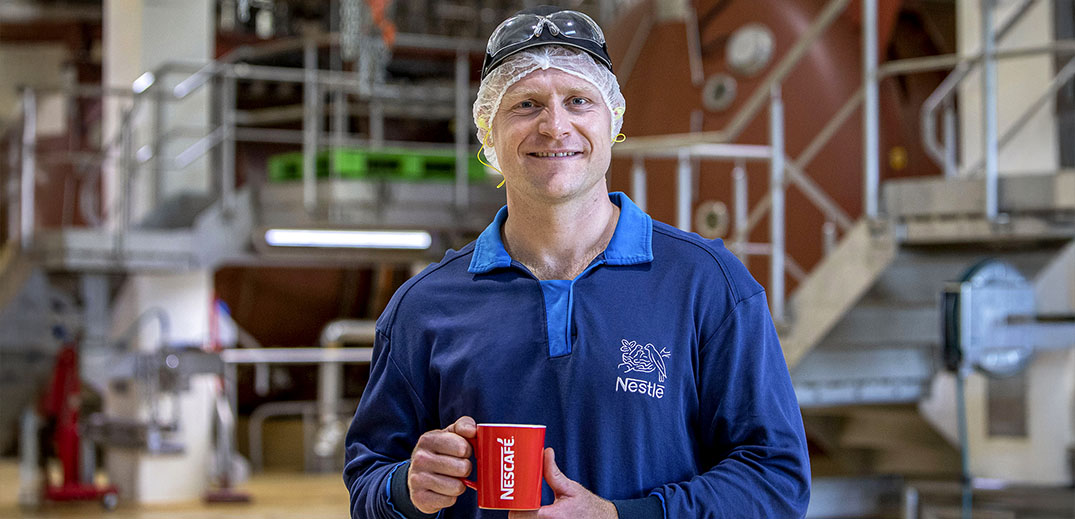
This involves a precise roasting process, where temperatures and duration are tailored by batch to bring out the best in the beans and develop their flavors.
Initially, the beans are dried before roasting - a delicate process that involves balancing heat and speed. Too quick or too hot, and the beans can burn. Once dried, the beans go through a browning stage in which amino acids and sugars begin to react with one another, turning the beans a darker color.
The heat from the drying process eventually results in an exothermic reaction in the coffee bean, causing it to crack. During this process - known as the development stage - aroma compounds are developed. Adjusting the time in this phase influences the different flavor profiles and roast intensities.
Finally, David and his team transfer the roasted beans to a cooler tray to ensure they cool quickly and don't continue to cook, spoiling the roast.
"I don't think people realize just how much goes into making coffee. Not just the complexity of the technology, but the pride and the passion of everybody here," David says.
The taster
Hai Nhi has a job that might make every coffee lover jealous: she gets to taste the result of all the hard work and expertise that came before her.

As a taster at Nestlé's Tri An roastery in Đồng Nai, Vietnam, Nhi ensures consistency and quality across every batch. Strict quality control must be applied to measure flavor and aroma, and assess traits like acidity and body.
"The taster's role is to maintain quality consistency before delivering to the consumer," she says.
She will look out for specific flavor notes and aftertaste. Slurping loudly from a spoon is not bad manners - it's a requirement of the job to help aerate the flavors. "You will feel either a thin or thick body, and the aroma spreads to your mouth and nose."
Quality, craft and precision
From the soil in Donnel's hands to Nhi's spoon, these are just some of the checkpoints in a chain of expertise that runs long before it reaches your cup.
And it is a chain that Nestlé continues to invest in, from the Nescafé Plan' and the Nespresso Sustainable Quality Plan, to ongoing innovation in how coffee is roasted, blended and packaged to help preserve flavor and reduce environmental impact.
So, your five-minute coffee break is really months of work and expertise condensed into a single cup.
Key takeaways
- Coffee production involves months of specialized expertise across multiple countries before reaching the consumer, including agronomy, roasting and quality tasting.
- Four people behind your cup illustrate the process: agronomist Donnel Tiedra manages soil health and helps spread regenerative agriculture practices, farmer Rafael Bortolini combines tradition with modern techniques, David Guest oversees precision roasting, and Hai Nhi leads quality-control tasting.
- Nestlé continues to invest in coffee sustainability and innovation, from the Nescafé Plan to advances in roasting, blending and packaging.
Regenerative agriculture
In line with the Sustainable Agriculture Initiative Platform, Nestlé defines regenerative agriculture as an approach to farming which aims to conserve and restore natural resources, primarily soil, as well as water and biodiversity, while capturing carbon in soils and plant biomass, and to support farmers’ livelihoods. Examples of regenerative agriculture practices include reduced tillage and agroforestry. More information is available in our Nestlé Agriculture Framework (pdf, 20Mb). Read more about regenerative agriculture.
Resilience
As defined by the United Nations Food and Agriculture Organization (FAO), resilience is the ability to prevent disasters and crises as well as to anticipate, absorb, accommodate or recover from them in a timely, efficient and sustainable manner. This includes protecting, restoring and improving livelihoods in the face of threats that impact agriculture, nutrition, food security and food safety.