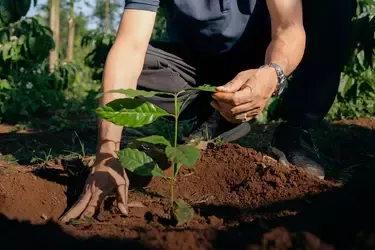


Whether your caffeine fix of choice is a macchiato or a cold brew, most conversations about good coffee tend to focus on the bean or the roast. I would start much earlier than that - in the ground.
Soil is a complex, living system, and its health directly affects the crops grown in it. Which is why degraded soil is not an abstract problem - it is a direct threat to supply continuity, farmer livelihoods and the quality of what ends up in your cup.
We believe that good food ultimately comes from good soil. However, the soil in many of the world's great coffee-growing regions is under pressure. Years of intensive farming of a crop ultimately best suited to cooler, cloud forest environments have left many soils depleted. They lack the organic matter needed to support microbial networks, regulate nutrient uptake and retain water, all of which are essential for healthy, resilient plant growth.
Replenishing our soils and evolving our crops
This degradation is showing up in yield variability, reduced resilience to climate shocks, and rising input costs and interventions. UNESCO warns that 90% of the world's soils will be degraded by 2050 if current trends continue. The UN estimates that around 3.2 billion people live in areas affected by land degradation, which can contribute to migration pressures and undermine community stability.
But we know that things can be done differently. In countries such as Vietnam - the world's second-largest coffee producer - we are working with farmers through the Nescafé Plan to introduce regenerative agriculture practices. This could involve intercropping with other trees to provide shade, an additional source of income and support biodiversity, or creating ground cover and mulching to help replenish nutrients and avoid erosion. As part of the Nescafé Plan, in 2025, Nestlé agronomists and field experts trained more than 100 000 farmers across 15 countries in regenerative agriculture practices.
We are also working with local scientists to develop and distribute coffee plantlets that sustain yields as our climate changes. For example, our longstanding partnership with the Western Highlands Agriculture and Forestry Science Institute (WASI) in Vietnam focuses on helping farmers replace aging plants with new, specially bred, more disease-resilient and improved-yielding plantlets.
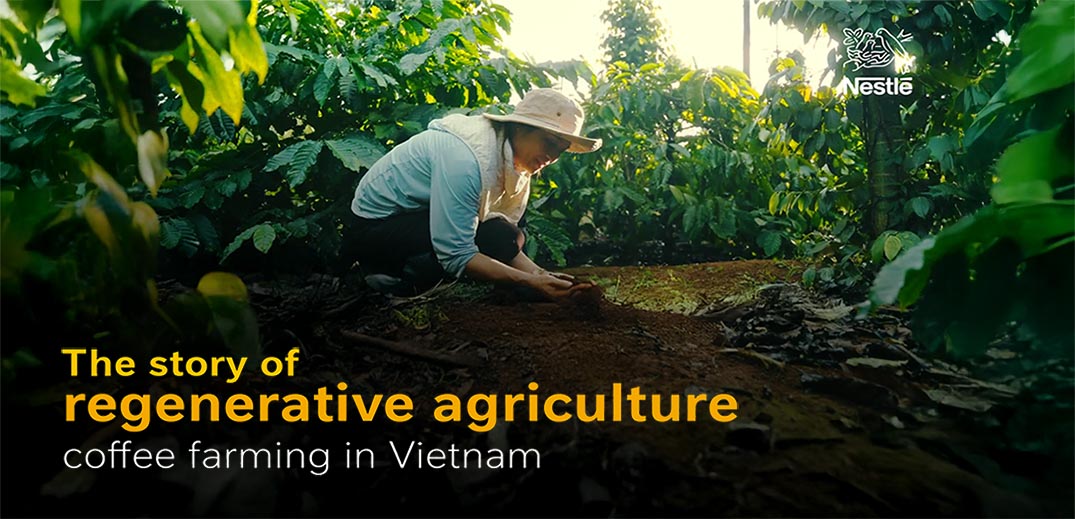
Filmed in Vietnam, this documentary highlights how Nestlé works alongside coffee farmers to improve soil health, support biodiversity, and build resilience through regenerative agriculture practices
Bigger yields, greater resilience
The data shows the impact of these more fertile soils on helping to improve yields and the quality of beans. Regenerative agriculture practices can improve farmers' income through increased productivity, optimized cost and diversified income through livestock or additional crops. In Vietnam, some farmers have seen their incomes increase substantially since introducing regenerative practices. And this is one of the key underlying principles of the Nescafé Plan - recognizing that farmer resilience and business resilience are entwined.
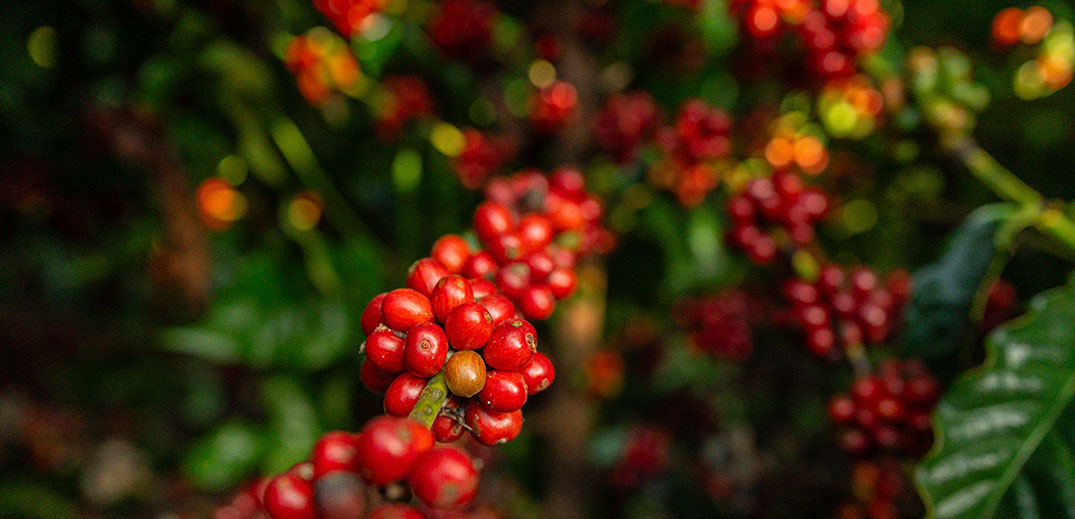
When we teach and enable more regenerative agriculture practices such as cover cropping, mulching, reducing fertilizer and chemical use, as well as smarter irrigation, we support the biological systems in our soil that help productive, resilient farming to continue.
In addition, over 400 000 hectares of coffee farms are covered by the Nescafé Plan globally, with greenhouse gas emissions from green coffee grown in this way reduced by 18.3% compared with 2018.
Regenerative agriculture at scale
A supply chain built on degraded soil is set to fail. But a farmer whose land is improving year-on-year, who invests in their plants and reliably produces strong, quality yields, is an asset to our business. We contribute to Nestlé's Regenerative Agriculture ambitions, aiming to source 50% of key ingredients from farmers adopting regenerative agriculture practices by 2030. We have already exceeded this target, reaching 53% of green coffee from farmers adopting regenerative agriculture practices in 2025.
Farming in a way that looks after the soil is not a distant ambition. The science already exists, the practices already work, and the economic and environmental arguments align. This is how we build the future of the coffee supply chain - from the ground up.
Regenerative agriculture
In line with the Sustainable Agriculture Initiative Platform, Nestlé defines regenerative agriculture as an approach to farming which aims to conserve and restore natural resources, primarily soil, as well as water and biodiversity, while capturing carbon in soils and plant biomass, and to support farmers’ livelihoods. Examples of regenerative agriculture practices include reduced tillage and agroforestry. More information is available in our Nestlé Agriculture Framework (pdf, 20Mb). Read more about regenerative agriculture.
Resilience
As defined by the United Nations Food and Agriculture Organization (FAO), resilience is the ability to prevent disasters and crises as well as to anticipate, absorb, accommodate or recover from them in a timely, efficient and sustainable manner. This includes protecting, restoring and improving livelihoods in the face of threats that impact agriculture, nutrition, food security and food safety.