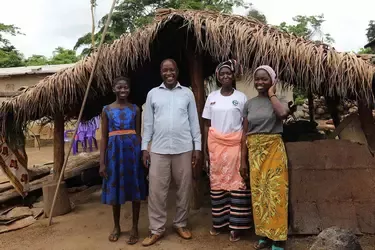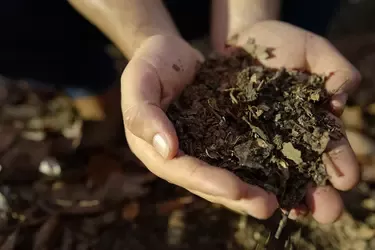


In Vietnam, the convergence of inherited farmer knowledge, cutting-edge science and the reach of the Nescafé Plan 2030 is transforming one of the world’s great coffee regions into a compelling proof point for regenerative agriculture at scale.
In Dak Lak Province, Vietnam, you can instantly spot the thriving coffee farms from those that are tired. The soil between the coffee rows on one plot is bare and compacted, while on the next, grass grows freely, shade trees filter the light, and the air buzzes with insects. That difference is what the future of coffee depends on.
Pham Phu Ngoc, Agricultural Sustainable Development Manager in Nestlé Vietnam, knows exactly what he's looking for. "When you go to the field, you can identify healthy soil because it is covered by the cover crop or mulching. And, secondly, a lot of earthworms will be visible. Also in the air, we have a lot of butterfly, bugs. That is a very good indication the soil is in good condition."
Healthy soil is the foundation of a resilient farm. It retains water during dry spells, drains efficiently in heavy rain, sequesters carbon and supports the biodiversity that keeps a crop naturally strong. For coffee farmers in a region experiencing increasingly unpredictable weather, it is also a form of insurance, the difference between a harvest that weathers a difficult season and one that doesn't.
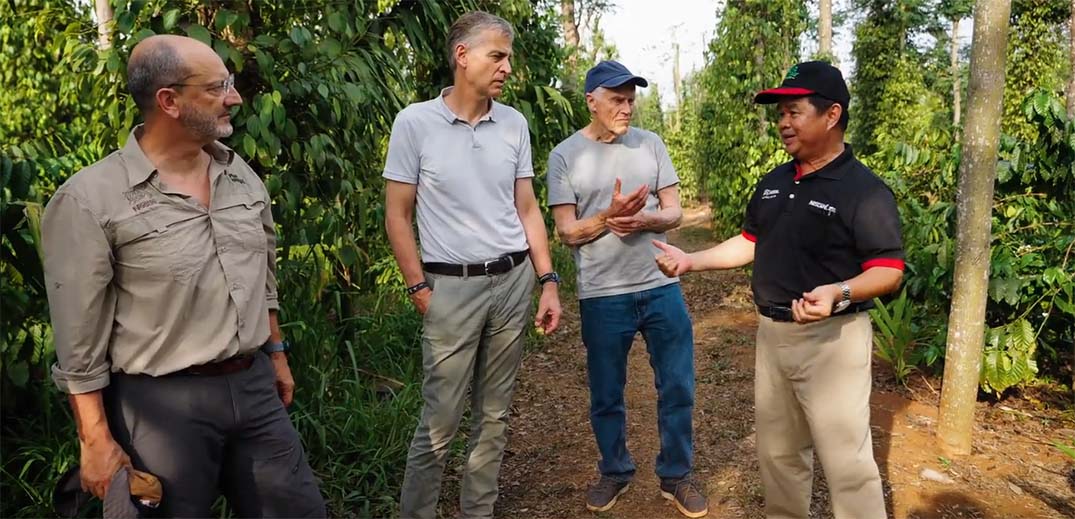
Filmed in Vietnam, this documentary highlights how Nestlé works alongside coffee farmers to improve soil health, support biodiversity, and build resilience through regenerative agriculture practices
Coffee at a crossroads
Vietnam is the world's largest producer of robusta coffee and the second-largest coffee exporter overall. The country's Central Highlands - and Dak Lak Province at their heart - account for the majority of a national crop that generated more than USD 3.5 billion in export revenue in the first four months of 2026.
Over the past four decades, Vietnam's coffee sector has grown to become one of the most significant in the world, a transformation that required enormous agricultural ambition. At the same time, the climate that the world’s coffee farmers have worked with for generations is changing. A warming planet concentrates water in the atmosphere, and it comes down harder - flash floods and drought, in alternating and increasingly unpredictable cycles. Today, the focus is increasingly on ensuring that coffee production remains resilient for the future.
Coffee is a delicate crop: robusta thrives at 22–28°C; push it much beyond that and yield and quality both suffer. By 2050, climate scientists project that the area of land globally suitable for coffee cultivation could shrink by as much as half.
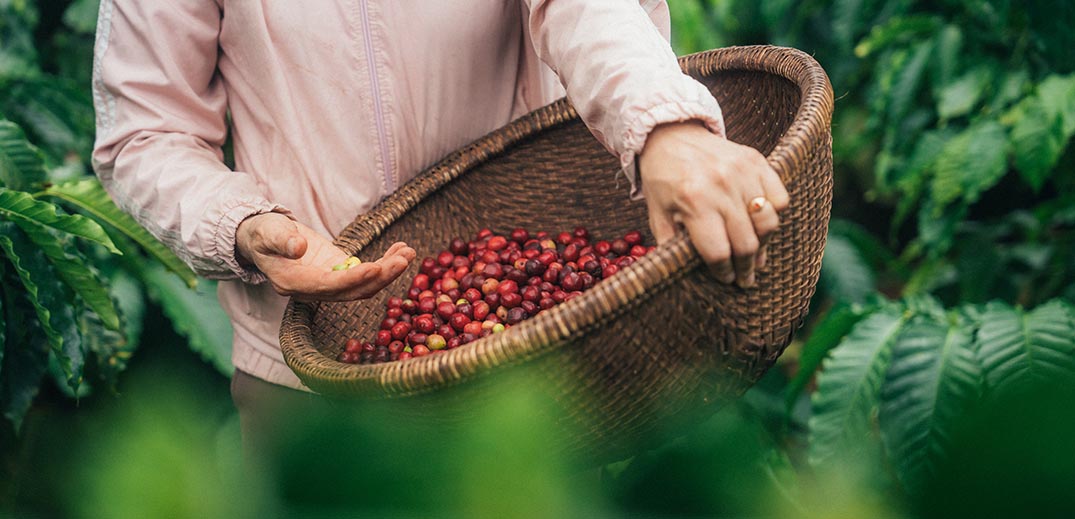
The collision between surging demand and a shrinking, destabilized supply base is one of the defining agricultural challenges of the next 25 years. And it is playing out, right now, on one-hectare smallholdings in Dak Lak.
Paul Hawken, author of Regeneration: Ending the Climate Crisis in One Generation, says the impact of global warming on farmers is incremental. "It’s not overnight… and it keeps changing. Regenerative agriculture is giving farmers a way to start to deal with the externalities that they cannot control - heat, too much water, too little water."
"It gives them ways to build resiliency back into the soil, which gives the plant resiliency, so that their harvests are not devastated by rain or drought. So regenerative agriculture is extremely important for Nestlé and the farmers."
What regenerative agriculture actually means
At its core, regenerative agriculture is about soil - and the recognition that healthy soil is the foundation of everything. Beneath every coffee tree lies one of the most complex ecosystems on Earth, a living system of billions of microorganisms that determine how well a plant grows, how resilient it is to stress and, ultimately, how good the coffee tastes. Nurture the soil, and the rest follows.
Regenerative agriculture rebuilds soil organic matter, restores microbial life, boosts water retention and sequesters carbon - all essential for improving the resilience of crops, farmers' livelihoods and the coffee supply chain.
"It's really about the source of all nutrients that go up a tree into the coffee berry, into the bean," says Paul. "A friend of mine said, 'When you're standing on the ground, you’re standing on the roof of another world,' and that is absolutely true."
There is, he argues, no middle ground between degenerative and regenerative. You are either drawing down life in the soil or building it back.
Where the proof lives: Dak Lak
Walk through the coffee smallholdings in Dak Lak, and the difference between farms is visible. One plot is bare between its coffee rows, weeded clean, the soil exposed and compacted. The neighboring plot has grass growing between the trees, a canopy of shade trees filtering the light, the soil beneath them loose and dark, and butterflies abound. The first farm is managed using conventional modern techniques; the second is a Nescafé Plan farm.
"This farmer follows our recommendation," says Pham Phu Ngoc, pointing to the difference.
The practices creating that difference are neither expensive nor exotic. They are, in most cases, a formalization of what generations of farmers in this region have long understood - combined with science that explains why they work.
Nestlé employs a team of 1 600 field staff and agronomists who work with farmers in countries across the globe to help spread understanding of regenerative practices and provide tailored, practical expertise. "Some farmers believe that when they join the Nescafé Plan, they have to follow strict rules. But when they see the farmer next door earns more money, they want to know," Ngoc continues.
"We learned about regenerative agriculture through the Nescafé Plan," says farmer Nguyen Thi Lan. "Not only here - we've also traveled to other regions to learn and bring back the best aspects. What does 'better' mean? How to plant rationally and efficiently, how to reduce costs, how to improve family finances."
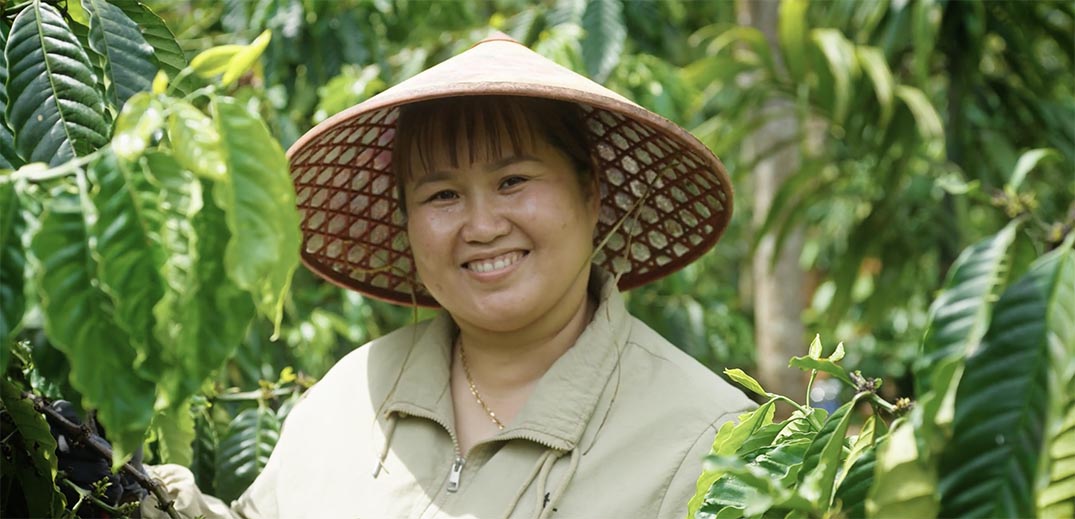
Young farmer Nguyen Thi Lan on her family's coffee farm in Dak Lak
Take the grass. For years, "we regularly weeded the land to keep it clean," says Nescafé Plan farmer Mai Thi Nhung.
"People were afraid that leaving grass will compete for nutrients with the crops. But later, when people learned that letting grass grow in the orchards makes the trees better, they gradually understood."
The science backs the instinct. Grass left to grow between coffee rows becomes humus when mowed - a layer of organic fertilizer that feeds the soil's microbial life, improves water retention, helps to prevent soil erosion and reduces the need for synthetic inputs. "Leaving grass creates a loose, porous soil," Mai Thi Nhung explains. "The fertilizer you use is reduced. It lowers your costs. It also reduces the labor for weeding. That brings many benefits."
Intercropping - planting shade trees and companion crops between coffee rows - replicates the forest canopy in which coffee evolved. It regulates temperature, supports biodiversity, provides natural pest control and generates diverse income streams for farmers. In Dak Lak, fruit trees and black pepper vines grow among the coffee, providing farmers with diversified revenue.
"Coffee comes from the tropical forest, where nature has developed for thousands of years, and we have no issue with the coffee," says Pham. "So, we put the coffee back in biodiversity. We keep the coffee in very natural conditions - then we limit the need for any chemical application."
The results are measurable and significant. In 2025, 5 000 smallholder farmers were reached with conditional financial incentive pilot initiatives to support the transition to regenerative agriculture practices across Côte d’Ivoire, Indonesia, Mexico, Honduras and Colombia. In the Philippines, where the same approach has been running, yields have more than doubled, according to Pascal Chapot, Nestlé's Head of Sustainable Agriculture. "That’s a tremendous impact. Productivity, additional income, wealth created that goes into farmers’ pockets," he says.
"One of the critical success factors in the projects we run is the quality and closeness of the technical support that we bring to farmers. We need to bring support, which is localized, tailored to the local conditions, to the local infrastructure. How to bring that support proportionally to the number of farmers we need to address — this is probably one of the key challenges."
The lab behind the land
A 30-minute drive from the coffee fields of Dak Lak, in the town of Buon Ma Thuot, the Western Highlands Agriculture and Forestry Science Institute (WASI) houses one of the most important laboratories in Vietnamese coffee science. It is here that the cellular future of the crop is being shaped.
Jeroen Dijkman, Head of the Nestlé Institute of Agricultural Sciences, knows the work going on at the tissue culture lab inside out. The shelves are lined with small plants - seedlings propagated from elite mother plants, designed to carry the best characteristics of Vietnamese robusta forward into the next generation.
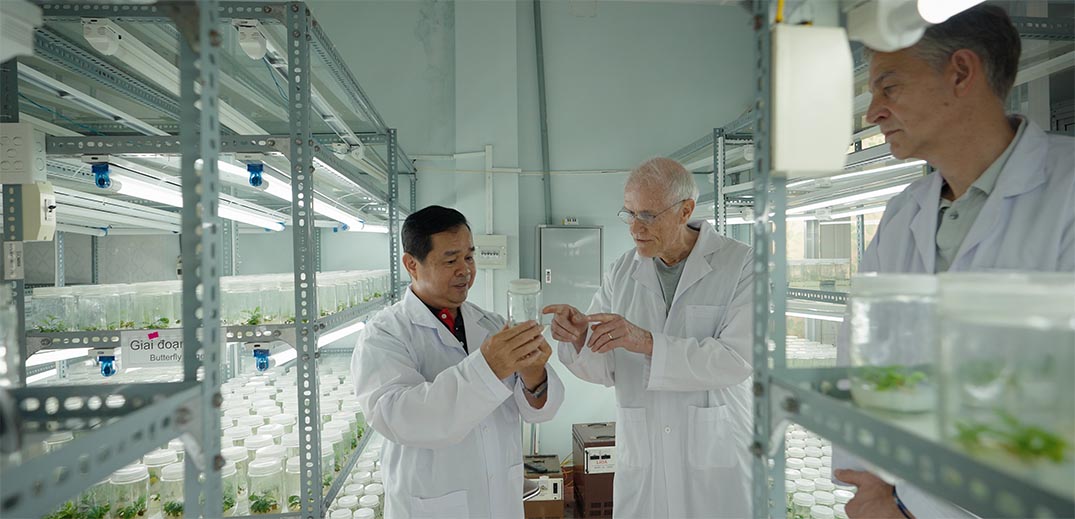
Jeroen Dijkman, Pham Phu Ngoc and Paul Hawken at the WASI
"Our collaboration with WASI is based on mutual learning,” Jeroen explains. “We brought in the technique of tissue culture to WASI. And WASI has been telling us: what works in their environment, what doesn't work, what we can improve. The exchange has also been on testing - breeding new varieties that are more climate-resilient, disease-tolerant, producing better on fewer inputs, for the benefit of farmers in Vietnam.”
The significance of this goes beyond agronomy. One of the biggest barriers to farm renewal in Dak Lak is that aging coffee trees - most Vietnamese robusta plants are now 15 to 20 years old - will need replacing in the next decade, but farmers fear the income gap during the transition. Better plantlets, adapted to local conditions, reduce the risk, shortening this gap. WASI and Nestlé are together trying to make the economics of renewal work for smallholder farmers.
Since 2010, the Nescafé Plan has distributed around 335 million coffee plantlets to farmers across its origin countries.
The next generation of coffee farmers
Something else is changing in Dak Lak, less visible in the data but no less important: young people are flying the flag for green coffee. Young farmers like Nguyen Thi Lan, who is combining the traditions of generations of farmers with the science of regenerative agriculture.
And young people are being educated about the importance of regenerative agriculture through the Nescafé Surreal Interns program - an initiative that brings young Vietnamese professionals onto coffee farms for hands-on training. It has introduced young people to a world most of them had never seen.
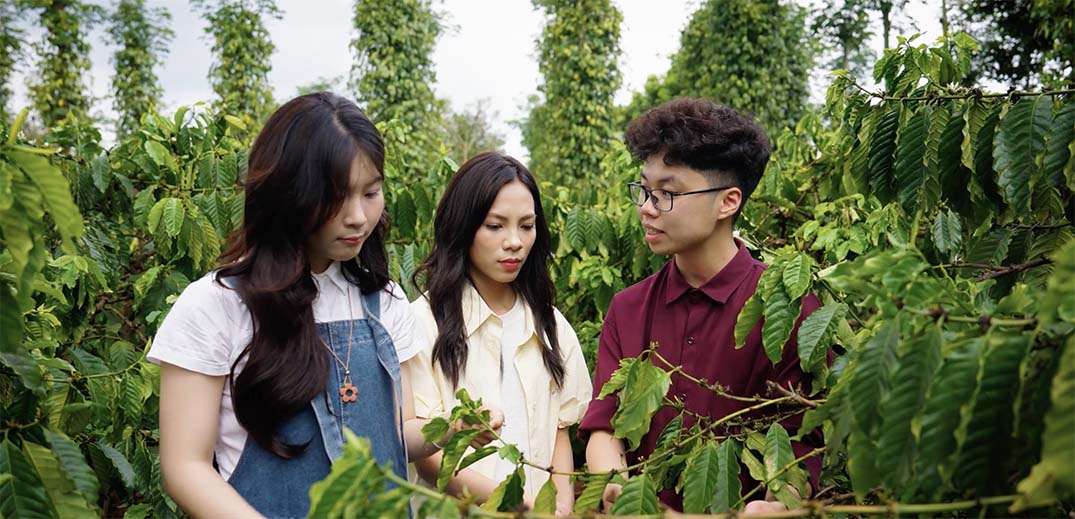
Nescafé Surreal Interns visiting the Nescafé farm in Vietnam
"For me, coffee isn't just a passion - it's my job, my field of study, it's everything in my life," says Pham Minh Long Hai, one of the Nescafé Surreal Interns. "Through the Nescafé Plan, I had the opportunity to stand in the middle of a coffee plantation for the first time."
Vuong Thi Cam Tu, also on the Nescafé Surreal Interns program, arrived with textbook knowledge and left with something different. "Before I participated, I understood regenerative agriculture theoretically, and it was quite difficult. But, after the 10-day program, I realized regenerative agriculture isn’t that difficult - it's just that we haven't understood it correctly. I feel I have been immersed in a culture people don’t know about: of coffee growers in Vietnam who have learned from each other how to intercrop, irrigate properly, pick and select, and understand the incredible complexity of coffee."
Scaling for the future
The Nescafé Plan launched in Vietnam in 2011, laying the groundwork for the Nescafé Plan 2030, announced in 2022. Backed by a commitment of CHF 1 billion, the plan set clear targets: sourcing 20% of all Nescafé coffee from farms adopting regenerative agriculture practices by 2025; 50% by 2030.
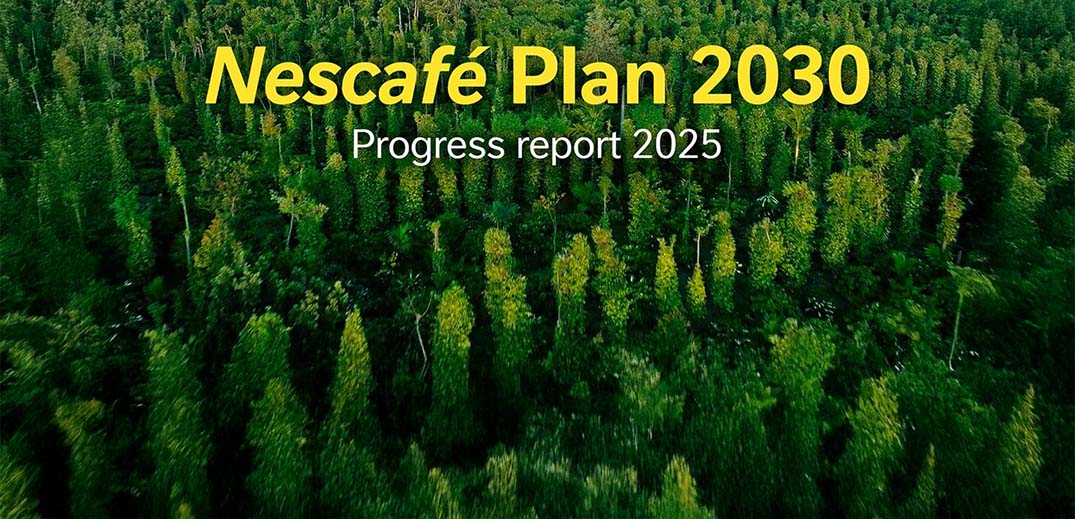
According to the latest Nescafé Plan 2030 Progress Report (pdf, 7Mb), Nescafé sourced 53% of its green coffee from farmers adopting regenerative agriculture practices in 2025. The speed with which we've scaled these practices has been down to our team of field staff and agronomists, who have trained more than 100 000 coffee farmers across 15 countries in 2025.
Greenhouse gas emissions across green coffee have been reduced by 18.3% compared with 2018. And crucially, farmers working with healthier soils are proving better equipped to withstand the unpredictable growing conditions that climate change brings — retaining more water in dry periods, recovering more quickly from heavy rains, and producing more consistent harvests year on year.
These are real numbers. But Pascal Chapot is candid about what they represent - and what they don't. "I'm happy to tell you that now we have real proof points with demonstrated impact, at quite a large scale," he says. "But it’s not enough. We need to go wider."
The issue is structural. Every farm is different. Every community is different. The model that works in Dak Lak cannot simply be copied to Colombia, Côte d'Ivoire, or Indonesia without deep local adaptation - because resilience, like soil itself, is built from the ground up. This is why Pascal's point about localized technical support is so critical; only by tailoring that on-the-ground expertise to each unique region, working with farmers rather than prescribing to them, does scaling up become possible.
"The biggest challenge for anyone trying to implement regenerative agriculture is that they are implementing it within a system that thinks very differently, that farms very differently," says Paul Hawken. "The challenge regenerative agriculture faces is to prove that it is the future."
Then he adds: "There is only one direction this can go. What else would you want to do with your soil, your plants, your farm, except to have it create more life?"
Regenerative agriculture
In line with the Sustainable Agriculture Initiative Platform, Nestlé defines regenerative agriculture as an approach to farming which aims to conserve and restore natural resources, primarily soil, as well as water and biodiversity, while capturing carbon in soils and plant biomass, and to support farmers’ livelihoods. Examples of regenerative agriculture practices include reduced tillage and agroforestry. More information is available in our Nestlé Agriculture Framework (pdf, 20Mb). Read more about regenerative agriculture.
Resilience
As defined by the United Nations Food and Agriculture Organization (FAO), resilience is the ability to prevent disasters and crises as well as to anticipate, absorb, accommodate or recover from them in a timely, efficient and sustainable manner. This includes protecting, restoring and improving livelihoods in the face of threats that impact agriculture, nutrition, food security and food safety.