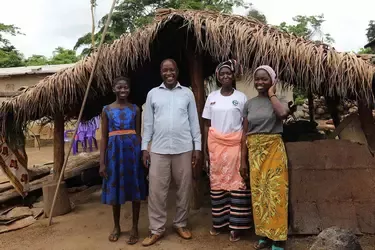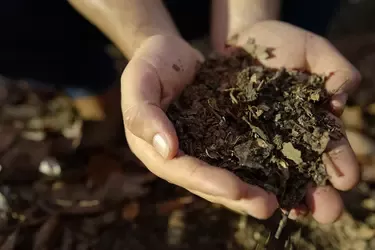


Nestlé's income accelerator program is supporting changes in cocoa farming practices.
Nestlé's income accelerator program was launched in 2020 to help address the living income gap of cocoa-farming families and help reduce child labor risks, building on a decade of learnings with the Nestlé Cocoa Plan. But it's more than just a farmer program; it's a family program. It incentivizes and enables cocoa-farming families to engage in four areas:
- Education for children and school enrollment
- Good agriculture practices designed to increase yield
- Agroforestry activities to improve farm resilience
- Diversified households' incomes and women's empowerment
So far, the program has supported more than 10 000 cocoa-farming families in Côte d'Ivoire with the aim to reach an estimated 160 000 families to create an impact at-scale. According to a report published by an independent knowledge institute (KIT), cocoa-farming families achieved a 32% increase in their yields after implementing improved practices like pruning, and their net income rose by 38% with more families now reaching a living income. The program also increased school enrollment for children by 10 percentage points.
Education has always been important to me. When I was young, I wanted to be a math teacher. Today, I work on the Nestlé Cocoa Plan and lead a team that supports farmers who help supply cocoa for Nestlé in Côte d'Ivoire. We engage with our partners on the ground and their local communities – from helping farmers manage their land and soil practices to connecting women and children with access to education. My colleagues Luc Affoli, Mathilde Sokoty, Barbara N'Dri, along with the rest of the team, are the backbone of the income accelerator program.
Implementing good agricultural practices
Luc Affoli, income accelerator project manager at Nestlé, has been driving progress with the suppliers and farmer cooperatives. While implementing the program, he has put over 300 pruning groups in place and distributed over 200 000 forest and fruit trees - all in keeping with the Rainforest Alliance standard. Through practices like pruning, farmers can achieve higher yields that translate into higher income.
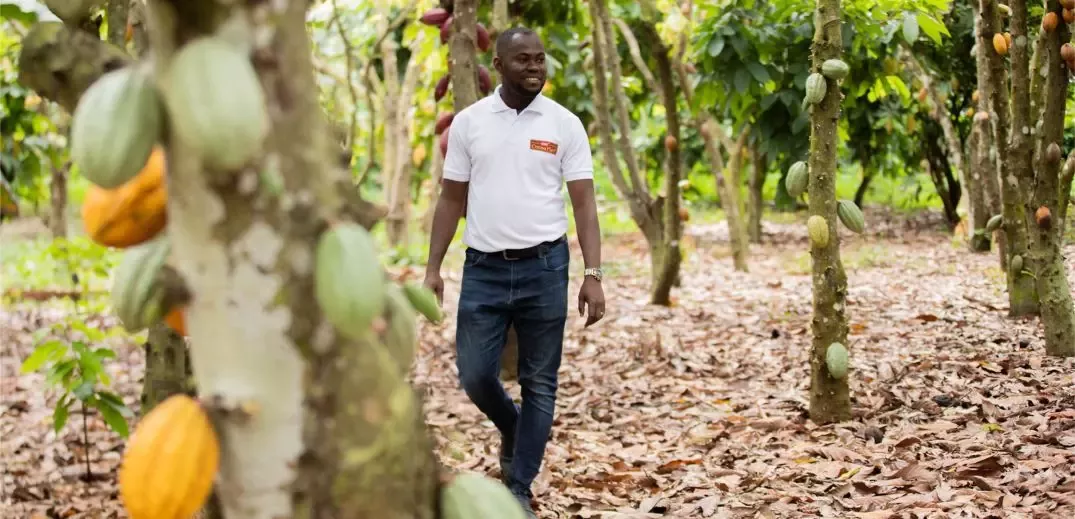
"With Nestlé's income accelerator program, we set up an accelerated support system that better equips farmers. All the certified cocoa farmers can request this service and benefit from it," Luc says. "What I'm proud of is helping farmers improve their incomes and invest in their farm for the future, for their family and their children."
Luc has dedicated over five years to cocoa farming, and his passion remains unchanged. Each day, he strives to help farmers to adopt better practices, increase their incomes, and support their families.
Helping kids into school
Mathilde Sokoty, Human Rights Specialist at Nestlé, is helping a generation of children access education and grow up in a safe and healthy environment. This is a key component of our efforts to help close the living income gap for cocoa-farming families by rewarding participating households for specified farm and household activities. Nestlé incentivizes cocoa-farming families to enroll their children in school and to help diversify household income through women's small business assistance, along with partners like the International Cocoa Initiative.
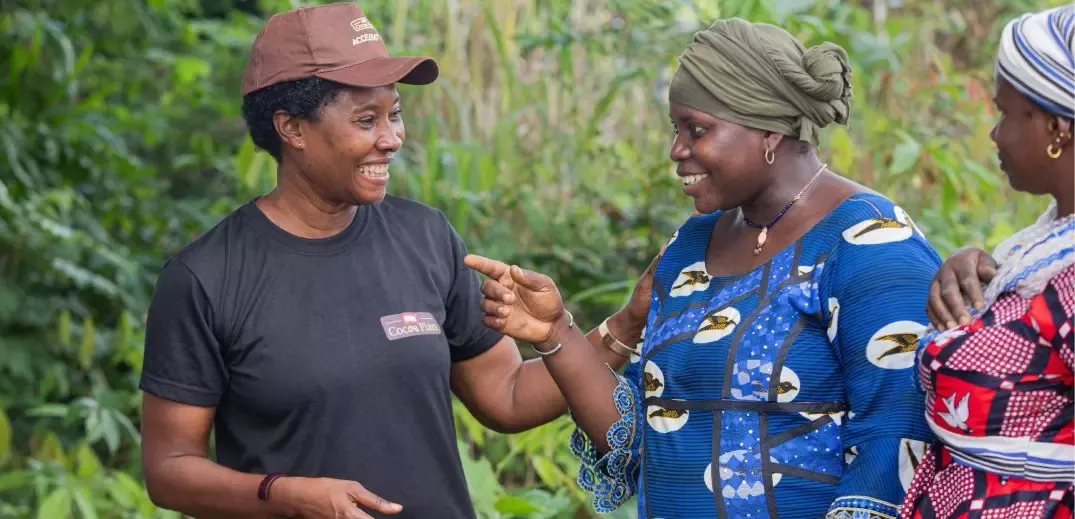
"One of the four areas of the accelerator program is school enrollment. The bonus we pay cocoa farmers helps them place their children aged 6 to 16 in school," Mathilde explains.
Our impact in recent years has rewarded thousands of families for enrolling children in school. By putting the family at the center of the program, we equip women who are pursuing opportunities to diversify their household's income while encouraging their children's education.
Driving knowledge exchange with farmers
Barbara N'Dri grew up in a cocoa-producing family in Côte d'Ivoire and wanted to use her education to improve her family's situation. Now, she's supporting farmers as an agronomist at Nestlé. She works closely with cocoa farmers on supported farm practices, with the ambition to help improve their household income and social conditions.
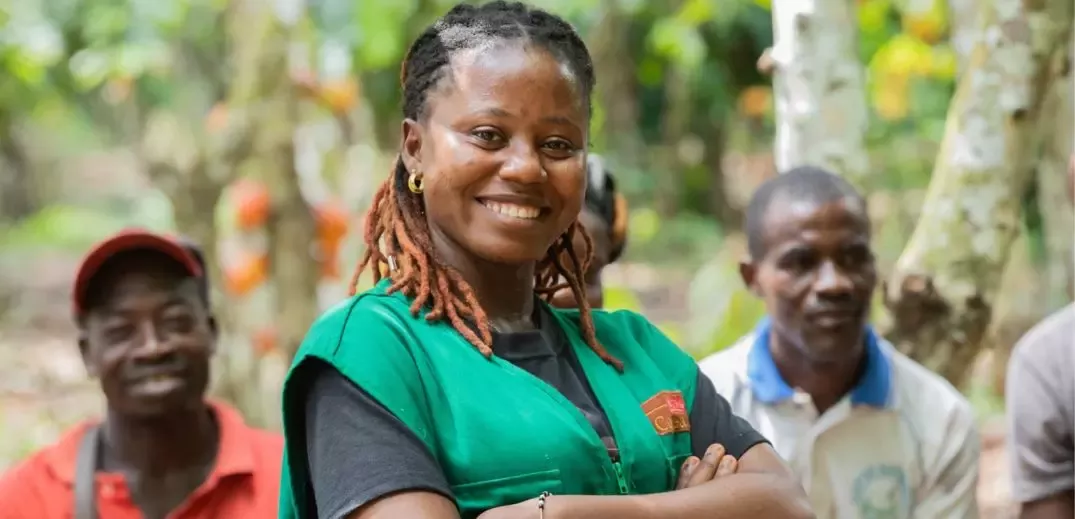
A typical day for Barbara focuses on coaching farmer groups on how to use better agricultural practices. She shares regenerative agriculture practices - such as cover cropping, reduced tillage, diversified crop rotations and optimized fertilizer use - that, depending on local conditions, are intended to support soil health, water retention and long-term farm productivity. Building know-how cannot be one-sided – Barbara and the team of agronomists come together and exchange knowledge with farmers. "When we talk about coaching, it's about good farming practices," Barbara shares. "I'm passionate about what I do when I see the joy the farmers feel and how they unlock their potential."
A journey driven by impact
I feel honored to have a job that lets me draw on my passion for education. Farmers educate us, we train farmers, and together, we work to reduce environmental impacts and support farmer livelihoods.
Farmers are at the heart of our business. The welfare of their families and the health of their farmlands are important.Nathan
As the program continues to expand, we will work together with cocoa-farming families and partners to help improve livelihoods and farming across our supply chain.
Regenerative agriculture
In line with the Sustainable Agriculture Initiative Platform, Nestlé defines regenerative agriculture as an approach to farming, which aims to conserve and restore natural resources, primarily soil, as well as water and biodiversity, while capturing carbon in soils and plant biomass and to support farmers' livelihoods. Examples of regenerative agriculture practices include reduced tillage and agroforestry. More information is available in our Nestlé Agriculture Framework (pdf, 19Mb). Read more about regenerative agriculture.
Good agricultural practices
Farm-level and post-farm practices ensuring efficient agricultural production aligned with environmental, social and economic performance objectives.
Resilience
As defined by the United Nations Food and Agriculture Organization (FAO), resilience is the ability to prevent disasters and crises as well as to anticipate, absorb, accommodate or recover from them in a timely, efficient and sustainable manner. This includes protecting, restoring and improving livelihoods in the face of threats that impact agriculture, nutrition, food security and food safety.