
In the winter of 2023, Victor Parmentier watched rain fall on a freshly tilled field on his family's farm in northern France. The ground was being prepared for sugar beet and should have absorbed the rain, but some water ran onto the road, carrying soil with it.
That muddy water was a visible reminder of what can happen when soil struggles to absorb rainfall. The Food and Agriculture Organization of the United Nations (FAO) identifies erosion as the most severe threat to soil health globally, stripping fertile topsoil and nutrients.
Why does rain soak into some soils but run off others? The answer starts beneath our feet.
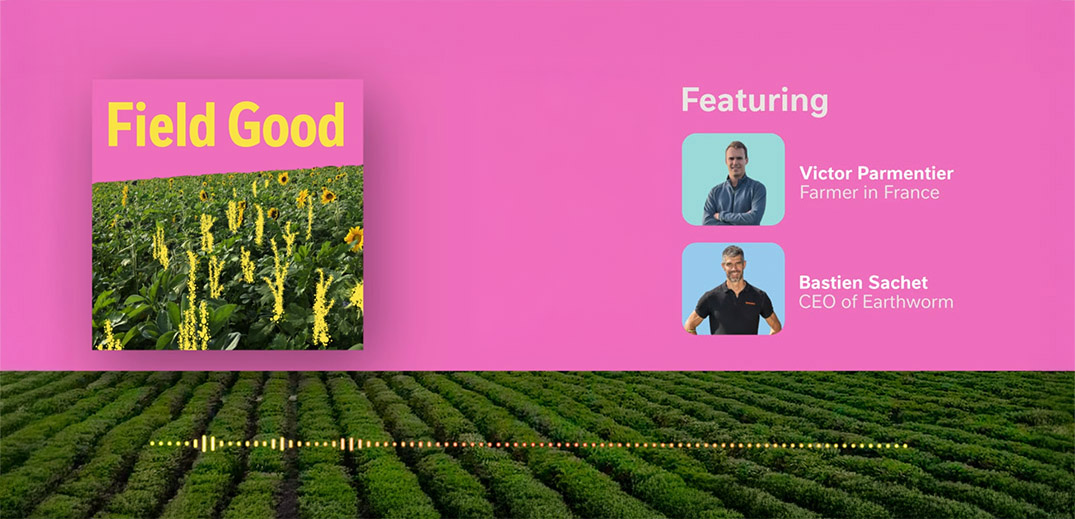
Listen to Field Good's first podcast episode with Victor Parmentier and Bastien Sachet
This transcript may have been edited for clarity
Host: You’re listening to Field Good, a podcast by Nestlé. In each episode, we dive into the world of regenerative agriculture. Farmers and experts share their stories and experiences. A change is happening, let’s talk about it.
Welcome to Field Good. In this very first episode, we start at the beginning by laying the groundwork for thinking around regenerative agriculture. How can we, as a collective, address supply chain challenges? We decided to bring together Victor Parmentier, a French farmer, and Bastien Sachet, CEO of Earthworm, an international non-profit organization that works with companies in their supply chains to regenerate soils and forests.
But before diving into the heart of the matter, follow me through the story of Victor, an ambitious farmer always on the lookout for something new.
It's winter 2023 in Vez, a commune of about 300 people in the north of France. Victor Parmentier has just returned to the family farm where he grew up to work alongside his father. He watches the rain come down on the fields they’ve recently tilled in preparation for planting sugar beets. Ideally, that rain should penetrate deep into the soil to retain moisture for the seeds that will soon be deposited.
A quick glance over to the bordering road reveals this isn't exactly the case. Part of the water has run off the surface, flowing down the concrete and carrying soil with it in the process. Victor is far from alone when it comes to facing daily challenges like this, that can be problematic both in terms of cost and environmental impact.
Victor wears two hats. He's an individual farmer whose onions are used in Nestlé's Maggi products and is part of the sustainable agriculture team at Nestlé, where he works with hundreds of farmers in the company's supply chain to deploy regenerative practices. Whether it means reducing tillage or implementing cover crops, these techniques are helping farmers today make long-term investments in the health of their soil, while also managing costs in an increasingly competitive economic environment.
Victor is making this transition alongside the farmers his work supports. Shortly after returning to the 400-hectare farm to work alongside his dad, he took over and began a transition to regenerative agriculture practices.
Thanks to his role at Nestlé, Victor was able to dive deep into regenerative agriculture by training in some new techniques, visiting different farms to see what was working or not working, and talking to neighbouring farmers who had already started transitioning to some of these practices.
Every farm is different, which almost always means some trial and error is necessary. It can take a few years before farmers see a return on their investment, but Victor's patience has slowly started to pay off. For example, a reduction in tilling has meant lower fuel costs. Keeping the fields covered by crops year-round has reduced the prevalence of weeds and improved biodiversity. Plus, the increased soil health means less of a need for synthetic fertilizers. Today, Victor says he's able to generate the same yields and margins as his neighbours using conventional methods.
Victor is using his own experience working with other farmers to exchange knowledge, turning regenerative agriculture from broad concepts into real, on-the-ground practices with genuine economic value.
Regenerative agriculture isn't just a set of practices. It's a journey. Victor has had to balance environmental ambitions with the realities of running a profitable business. But questions remain:
How can regenerative agriculture be scaled across entire supply chains? What support do farmers need to make the transition? And how can companies help create the conditions for lasting change?
To explore these questions, Victor is joined by Bastien Sachet, CEO of Earthworm Foundation. Let's join their conversation.
Bastien Sachet, СEO of the nonprofit Earthworm: Hi Victor, how are you?
Victor Parmentier, Farmer: Hi Bastien. Very well, and you?
Bastien: Yes, not too bad. Where are you at the moment?
Victor: At the Nestlé headquarters in France, next to Paris. So I just came from the farm this morning. And you?
Bastien: Okay, I'm in Switzerland where the head office of Earthworm is, in Nyon. It's raining, finally, here after months of drought.
Victor: Yeah, we had a bit of rain yesterday also.
Bastien: Okay. And you have a farm, maybe you can share a little bit about it, and where it is, and a bit the history of the farm, because I think your father was a farmer as well, right?
Victor: Yeah, I took over the farm after my father. We worked two years together as I was already at Nestlé, and so we drove this change from 100% Nestlé to now 20 or 30% Nestlé. Now I'm running the farm, we are kind of trying to change some practices. You've seen this year was really hard, we had no rain for a few months. Now we are a bit afraid of when it will start to rain, it won't stop, it's what we heard in a discussion between farmers. So we need to find ways of being ready and drive the crops the best as we can.
Bastien: I know, because I've seen some of your LinkedIn posts and knowing a bit what you do, that you've switched toward a more regenerative practice or conservation agriculture practice. Can you share a little bit about why you moved and how you moved into that? Was it a decision you made or your father made, how did that happen?
Victor: My father started with me, but at least he was open to it. So it's first thing great to support me in this journey. A few things, I think first, I've seen yields are capping or more and more unstable, so some years we had big yields, sometimes we have very poor. So we need to find a way to make this more stable. And also, in the other hand, we've seen the costs raising constantly. So the margins are very unstable and sometimes they are negative, so it's not the good way to work.
In another hand also, we understand that we have an impact on the biodiversity. We've seen the soil, or we understand more and more the soil to be a worker that we need to have on our side, and we need to work beside the soil. So I'm trying to put all these things in the same way of cropping, and so I started to work a bit on the regenerative agriculture practices. Also because I think I have a few different crops, but also industrial crops, vegetables, sugar beets, and I think we have a higher impact on the soil, so I really want to make the soil healthier and have less negative impact. So yeah, we started to work a bit on this.
Bastien: So, double motivation, huh? You're talking about reducing costs, managing costs, but also taking care of the soil and preserving the capital of the farm. So you are encouraged to continue by what you're seeing, by the results: on one side some less costs, and on the other side some interesting visual things that you can see on the soil, on the erosion, as you said, right?
Victor: Yes, and I think you also have some experiences on this, you've seen other farms or maybe companies also pushing on this way.
Bastien: Yeah, it's true. A lot of the work that we do is about supporting companies and then supporting farmers, you know, realize that transition towards regenerative agriculture, because our mission is to support the regeneration of soils and forests with and for people. And so, we're a bit like the earthworm in the soil, huh? The earthworm in the soil navigates between the surface and the depth, and we do that within the supply chain, between large companies like Nestlé and farmers like you, where we try to bring the support that is needed to succeed.
On our side, we've identified three types of support:
- One is the measurement: how do we measure, how do we characterize, you know, this regenerative agriculture? When do we say a soil is healthy?
- Two, how do we support technically?
- And three, how do we support economically, de-risk the transition, because as you said, you've had some failures and this probably led to costs.
And so the program we have tried to develop is to help farmers all along the way by getting corporates, brands like Nestlé, you know, to support and work together around the crop rotation of the farmer and to incentivize with funding but also supporting the technical support of farmers. So this gives them an environment that allows them to try and to transition.
Victor: So with your point of view, Bastien, what are the pros and the cons of transitioning into regenerative agriculture? And maybe you have seen things working and things that have failed also?
Bastien: From my point of view, a lot of the regenerative agriculture transition movement over these last years has been very much driven by a carbon imperative, a need to reduce emissions. And since companies always need to tie their financial incentives to carbon incentives, many programs have been done in the field asking farmers to reduce emissions.
But regenerative agriculture is much more about having a healthy soil than reducing emissions. Some things that I've seen failing, not in the program that we run, but some programs that I've watched, where there is a hyper focus on carbon, the money is not used to de-risk the farmer; it's used to pay for the farmer to buy fertilizer that are more expensive because they are low carbon emissions or they've been manufactured with a green energy, and therefore they are more expensive. That creates a long-term dependency, and it doesn't solve really the resilience issue of the soil. So for me, this is kind of a failure.
What I see happening very well is when there is a real dialogue between the companies, the cooperatives, and the farmers around how do we crack that together. Which means that the challenges are shared in an open way, be they financial, even in, you know, deciding where the premium should be and what is enough money to de-risk the transition, when long-term contracts are being made, and then when the farmers are really supported and active.
Victor: So thanks to your experience, you may have some cases to share with us to illustrate the urgency of the situation?
Bastien: So, I think the urgency of the situation is linked to two parameters:
One is the climate urgency, and we had very severe drought this summer, and we can see the crops that were sown in the spring have given very low yield, for example, the sunflower, sometimes -30%, -50% of yield. Even large crops, you know, like barley, spring barley or spring wheat have suffered. On the dairy side, we also have seen the effects of climate change, and the cows that were really, you know, trying to find shade and freshness, and the yield of the cows have gone down, especially when there were no trees where they could take a little bit of shade. They would go back inside and in a very overheated barn, and they would suffer a lot and the milk production collapsed.
And then the second urgency that I see is a geopolitical urgency with the Ormuz Strait being blocked, the Ukraine-Russia situation, which have contributed to make the cost of nitrogen fertilizer, who are very much used by farmers in arable crops, explode. And I have this example of farmers in the south of France that have not even put corn into the ground because the cost of fertilizer was too high and they decided that it didn't make any business sense to do that.
So the urgency to get the soil to be a sponge and resist drought and too much water, resist and adapt to climate change, the need to close the fertility loops and have more nitrogen produced on the farm so that you depend less on the one that comes from the Middle East or from Russia is key. And that is exactly what regenerative agriculture proposes.
So somehow the urgency of the situation is just, you know, accelerating the transition, or forcing to accelerate. And that's where we all are grappling with how we do this where the amounts of money to support farmers are not available in large quantities, so we have to figure out the solutions.
But I'm quite optimistic because we have some examples of farmers that are successful, that have, for example, reduced completely their insecticides, that are using less nitrogen. We have these big projects we are working on together with Nestlé, with a coop in the north of France where we've seen increasing of soil cover, like plus 20 days. We have more nitrogen autonomy, like plus 10-12% that we've seen in some cooperative that we have been working a long time with, I'm thinking about Noriap, and in the north of France, you know them well, Victor. And so this is all just very nice stories. Maybe, Victor, you know about others because you also have...
Victor: I think one thing I can share is also on the urgency of the situation is for when I see on my farm. So on my farm, for example, you spoke about the nitrogen cost, the fuel cost. For the past years, at this time where we speak in October, I'm used to be 100% covered in nitrogen for the next harvest, so for 2027, and for now I think I'm not at half of my cover. So we know that we will have to buy, but we are in a very dangerous phase of the alimentation production.
And for the fuel costs, yeah, for this year for the wheat, for example, I already sown 1/3 of my wheat without tilling the soil, so direct seeding. So it's the first time for me, but I think it was the best year to do it because I decreased the fuel consumption, I think about 50 or 70% for the seeding operation.
Bastien: So what's interesting with you, Victor, is you're also an agronomist. Where did you learn the most about these practices and how did you get to familiarize yourself? Because it's often a multifaceted journey, what was your journey to get familiar with regen ag?
Victor: I studied in Angers agronomy; I graduated in 2020. I think I went out with a lot of agronomic aspects in the head, a lot of consideration for the soil. I had already this project to work with companies to find a way of giving more value to farmers working into regenerative practices. So I think I arrived at the good step of the Nestlé thinking. When I arrived, they were starting to think the link between climate, the crop production, their own also production. So I arrived at this stage. During my internship, I learned a lot of what was the impact of the farming practices on the climate, but also what the climate has impact on the farms.
So I think both, I learned a lot of practices at school, then impacts at Nestlé, and then I had the opportunity to work with a lot of different farms and also advisors, so I learned a lot in field on the practices and how to drive change at farm level.
Bastien: All clear. It's interesting because the school can put a seed, but the seed grows in the field really, with practitioners. I feel regenerative agriculture is a lot about practitioners and experiencing things, rather than having big concepts that are being taught in the academia. Although I'm encouraged to see the schools and the academia learning from the experience and then distributing, diffusing, and amplifying everything that is being learned. But it's, I always say it's a bit the beginning of a very interesting agroecological journey that the whole humanity is relearning again or learning again, which is fascinating.
One thing that I find interesting is all the innovation that is linked to the technical innovation around the farm. So you mentioned less tillage, the cover cropping, the species you put, etc., so there's this whole technical innovation part. But there is also a way of working. Innovation is very much around the collaboration and how actors work differently together. And I remember that in many supply chains it's very transactional: you produce a crop, you sell it to a coop, and then it disappears. And then suddenly with this kind of projects which is vertical and horizontal as well between players has been quite interesting.
I wonder whether you could share a little bit about how you've done that both at Nestlé and as a farmer, because you've been involved and we've been involved together in some of those projects.
Victor: Yeah, you're right. You see, first thing, for example, when I graduated, I never thought I would work for Nestlé. As a farmer, I never imagined that they would be interested into farming practices. So first thing, and now things change and these companies are learning, relearning to work with farmers and with yearly harvest condition, yearly harvest quality, etc. So this is very important, and I think it will go until the consumer at the end.
And thanks to this collaboration, as you said, we've seen farmers saying: "Ah, okay, I am producing wheat for Friskies, for Purina." So they went to visit the factory, and they understand why we were asking for certain quality, and at the factory they understood why we had some troubles at field to get this quality. So we create exchanges and we create arrangements between jobs, and this is very rich.
And then in the supply chain, we need also to collaborate with the other companies that are buying, as you said, other crops at farm level to see the farmer interested. When you see all your clients asking for something different or supporting you for new practices, you understand that you have to go there and you are covered by your clients, and this is very powerful to drive the changes.
Bastien: This vertical collaboration is fantastic, and I've seen also something really interesting is to start from the farm again. I remember a time 10 years ago where every company was coming with their own set of criteria: the Nestlé criteria, the Danone criteria, this certification or this label, the CRC, the Label Rouge, etc. So there was a flurry of criteria, and for the farmer is like: "Ah, come on, I've got one farm, but I need to fit for this crop this request, for this for that."
And what I found really interesting is that by looking around one set of indicators, which is some of the work we've initiated together with you at Nestlé, is to say: "Okay, let's look at the whole farm with one set of indicators, and then let's make sure that everyone aligns to these indicators." And I think these projects that are now aligned in this way, it's much easier because everyone looks at the same way of measuring carbon, of measuring cover crops, etc. And so it starts from the farm and it goes into every supply chain. And that allows, having this standard allows all the companies to collaborate together and to say: "Okay, I'm going to support a bit", and everyone supports a bit the transition, and at the end it becomes significant for the farmer.
Victor: And aid farmer to go deeply into one direction, not on different ones, so I think we will drive more impactful changes by this way.
Bastien: Yeah, less bureaucracy, more impact, and more focus on what matters. Everyone says: "Oh yeah, but you know, environmental practices, regenerative agriculture, it's all nice, but we've got people to feed, right? We've got people to feed and we need to keep the production up, etc." I'm personally convinced that regenerative agriculture is key to feed 8 billion people. On your side, do you have a doubt, and what do you think about those who say that?
Victor: I think your point of view will have good value because also you have experiences all over the world, at least in France, as I know. I'll say yes, because I've seen farmers, I've seen trials, I've seen real fields having the same yields, sometimes better yields thanks to these practices. So I think, yes, we are able to feed the world population thanks to these practices. As I said, you will have more stable yields, so it's maybe better also for the people to have always the same amount of food and not having, okay, so this year we will have less potatoes, so it will be a bit more expensive on the market.
So for sure, I think we can do it, but if we go all together, supporting, thinking how to drive the change, and not asking the farmer to change from one year to the next one without support. I don't know what you've seen also on other maybe crops or countries?
Bastien: To me, opposing regenerative agriculture, which is seen as an environmental thing, to feeding people is completely wrong. Actually, regenerative agriculture is the way to continue to produce in a difficult climate. The current system is very fragile, and we see it with droughts, with pests. I have this example on cocoa in Ivory Coast, where half of the trees are sick, the farmers don't make money, it's a very fragile production in a way which is run in a conventional fashion, not with the principles of regenerative agriculture, and therefore there is not enough. And the price has rocketed up, it's very expensive now to buy chocolate, and because of that, everyone is worried about where the cocoa is going to come from since the consumption over the world keeps growing.
This is just an example, but it will happen to the other crops. Today, the price of palm has doubled because there is drought and the trees are producing less. Meanwhile, we see the farmers that are practicing regenerative agriculture managing to maintain the yield and not to go in those kinds of drops, because their soil are more like a sponge. So I really think that actually regenerative agriculture and feeding people goes hand in hand, because it's not an obstacle to production, it's an enabler of production.
Victor: So for you, it's more a way of feeding than a risk of not feeding the population?
Bastien: Yes, absolutely, because no one is coming to the farmer saying: "You can't do this, you can't do that, you should not use pesticides, you should not use fertilizer." We're more like: "How do we make the soil work better so that we face every type of geopolitical or climate change and we keep producing?" So it's really a tool for production, not a tool against production.
Victor: Agree, on the farm.
Bastien: Thanks Victor, it was great to speak with you again and I look forward to seeing you soon on the farm or in a meeting room.
Victor: Yes, thank you Bastien, my pleasure too. Please come on the farm, otherwise we'll see in a meeting room, as you said.
Bastien: Absolutely. Thank you.
Host: Thanks Victor Parmentier and Bastien Sachet for this first episode, and thanks for listening. We look forward to welcoming you back for the next Field Good conversation. To learn more about Nestlé's commitment to scale regenerative agriculture and what this means for their brands, visit nestle.com. See you soon.
END OF TRANSCRIPT
How soil can act like a sponge?
"We understand more and more that the soil is a worker that we need to have on our side," Victor says.
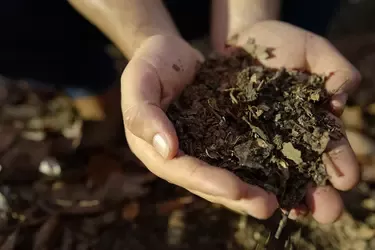
Healthy soil has a network of pores that let rain soak in and stores moisture for plants. Sand, silt and clay particles form small crumbs, or aggregates, with the help of organic matter like dead leaves and plant roots. Spaces within and between those crumbs give soil its sponge-like qualities.
Plant cover protects the soil from the impact of raindrops, while roots and soil organisms help hold it together in more stable crumbs. If those crumbs break apart, loose particles can seal the surface, leaving water with fewer routes into the ground. This increases runoff and erosion, which can make soil and communities more vulnerable to floods and droughts. Less rain entering the soil also means less moisture stored for crops to draw on later.
In the UN Food and Agriculture Organization's (FAO) 2026 global assessment, 81% of assessments across seven regions rated erosion management poor or very poor. This matters because healthy soils underpin global food security, providing the foundation for more than 95% of the food we produce.
How can regenerative agriculture help?
We define regenerative agriculture as an approach to farming that aims to conserve and restore soil, water and biodiversity while supporting farmers’ livelihoods. Practices such as cover crops and reduced tillage can protect the soil surface and limit disturbance, helping rebuild its structure while maintaining or improving productivity.
Across coffee and cocoa farms, similar principles take different forms. Through the Nescafé Plan 2030, farmers use ground cover, mulching and shade trees. Mulch helps limit evaporation, while ground cover protects against erosion. In Côte d'Ivoire, 81% of cocoa farmers in the Nestlé Cocoa Plan achieved near-total soil coverage in 2024.
What does it take to make change happen on the farm?
For Victor, rebuilding soil health has meant learning alongside other farmers. His onions are used in Maggi products, and his role in Nestlé's regenerative agriculture program gave him access to training, farm visits and neighbors' experience. He also pooled investment with other farmers to buy shared machinery.
The returns were not immediate: new practices involve trial and error, and benefits can take years.
"I've seen real fields having the same yields, sometimes better yields thanks to these practices," he says. "So, I think we can feed the world population."
Yet, as the FAO's 2026 global assessment finds that “sustainable soil management is not spreading fast enough”. For many farmers, limited access to finance and technical support, alongside upfront costs and delayed benefits, can all be barriers.
Victor’s fields now tell a different story. With cover crops helping water soak in, his father, who farmed the land before Victor, has reported seeing no runoff on the adjoining road for the first time. Every farm needs its own approach. But here, the change is visible: less water washing away, and soil staying where crops need it.
Listen to Victor and Earthworm CEO Bastien Sachet in the first episode of Field Good, Nestlé’s regenerative agriculture podcast, to explore how farmers and food businesses can work together.
Key takeaways
- Healthy soil helps rain soak in and stores moisture for crops.
- Regenerative agriculture practices, including cover crops, reduced tillage and mulching, can help improve soil structure.
- Farmer Victor Parmentier's experience shows why training, shared investment and patience matter when changing farming practices.
Key terms explained
Regenerative agriculture
In line with the Sustainable Agriculture Initiative Platform, Nestlé defines regenerative agriculture as an approach to farming, which aims to conserve and restore natural resources, primarily soil, as well as water and biodiversity, while capturing carbon in soils and plant biomass and to support farmers' livelihoods. Examples of regenerative agriculture practices include reduced tillage and agroforestry. More information is available in our Nestlé Agriculture Framework (pdf, 20Mb). Read more about regenerative agriculture.
Healthy soils
Soil health is defined as the continued capacity of soil to function as a vital living ecosystem that sustains plants, animals and humans. Healthy soils support clean air and water, bountiful crops and forests, productive grazing lands, diverse wildlife and beautiful landscapes.