

On Thursday, July 24, 2025, we announced our half-year results.
Watch the investor & analyst call:
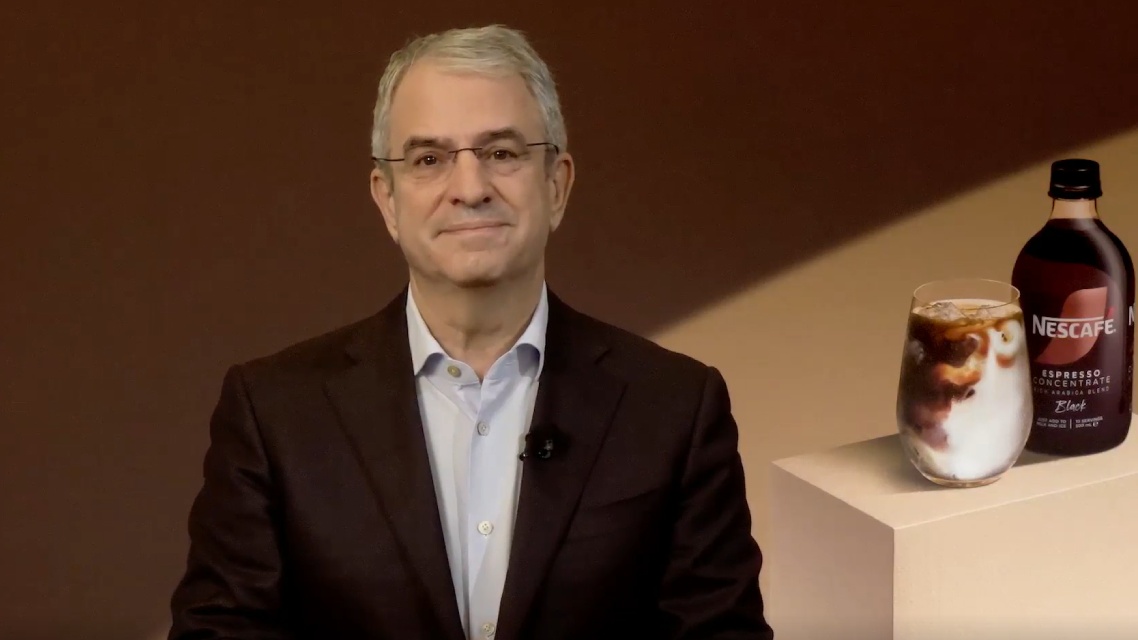
On Thursday, July 24, 2025, we announced our half-year results.
Watch the investor & analyst call:
This transcript may have been edited for clarity
David Hancock, Head of Investor Relations, Nestlé S.A.: Good morning and welcome to Nestlé’s Half-year 2025 results conference call. I’m David Hancock, Head of investor relations, and I am joined today by Laurent Freixe, CEO, and Anna Manz, CFO.
Before we begin, please take careful note of the disclaimer on page two of our presentation.
So for the agenda today after Laurent shares the key messages, Anna will take us through the results in detail then Laurent will provide an update on our strategic progress. We will then open up for Q&A. And with that I will now hand over to Laurent.
Laurent Freixe, Chief Executive Officer, Nestlé S.A.: Thank you David. Good morning to all.
We delivered a good performance in the first half of 2025, in a difficult environment. Thanks to the focus of our teams, we are continuing to execute our strategy and transform our business. Our growth foundations are improving and we are beginning to see the results. Looking ahead, we have maintained our guidance for 2025 despite increased headwinds. And we remain confident in delivering our medium-term guidance.
In the first half, organic growth reached 2.9%. This reflects broad-based sales growth across geographies and categories, with a slight improvement in Q2 compared to Q1. We delivered a solid UTOP margin, as we increased investment and faced COGS and Forex headwinds. These results demonstrate our ability to manage short-term dynamics while staying focused on long-term value creation. I will hand over to Anna to take you through the results in detail.
Anna Manz, Chief Financial Officer, Nestlé S.A.: Thanks Laurent, and good morning.
Here are the key take aways;
We delivered broad based organic growth. As expected, pricing accelerated and RIG slowed. UTOP margin was slightly better than our expectations, even though we stepped up growth investments and faced some headwinds from tariffs and FX. In the second half, our margins will be significantly lower, due to these headwinds and the delayed impact of higher input costs. For the full year, we are maintaining our guidance on organic growth and UTOP margin.
We delivered 2.9% organic sales growth in the first half, with RIG of 0.2% and pricing of 2.7%. Sales were negatively impacted by foreign exchange movements, especially in Q2, when the Swiss Franc strengthened by 10% against the dollar, and similar amounts against other currencies.
Turning to sales growth. As expected, pricing has accelerated and RIG has slowed during the half. Pricing improved across all our categories in the quarter. The largest increases were in Confectionery and Coffee in response to input cost inflation. Most of our price increases took place during Q1, so Q2 saw the full benefit. On RIG, there were two main drivers of the deceleration in Q2: Firstly Greater China, which had a positive impact of 20bps on Group RIG in the first quarter, but a negative impact of 40 bps in the second quarter. At Q1, we said our growth in China had been driven by sell-in ahead of underlying consumption, and that we expected that to reverse. In Q2, we have seen that reversal.
Secondly, we saw an impact from elasticities in response to pricing, particularly in Confectionery. In Coffee we saw a different trend with lower elasticity, and positive RIG in the first and second quarters despite more pricing. Going forward, we expect Group RIG to improve over time as consumer behavior and the competitive environment adapts to higher prices.
Turning next to profitability. We delivered 16.5% UTOP margin in the first half, down 90 basis points. Gross margin decreased by 60 basis points, and we stepped up advertising and marketing spend by 50 basis points. Distribution and admin costs were a small positive. Let me get into a bit more detail.
Generally, input cost inflation has a negative impact on our margins in the short term, as price negotiation cycles mean we can’t price immediately and we can’t always price to fully cover margins. However, over time consumer-led innovation and further pricing sees our margins recover. And you can see that on this slide. The spike in inflation in 2022 impacted all of categories. Since then, we recovered margins across our categories, illustrated here by PetCare and Food. But Coffee and Confectionery are below as we manage a new wave of input cost inflation.
The margins of Coffee and Confectionery will get worse before they get better, as commodity cost increases impact the P&L in the second half. Looking further forward, we expect gross margins in these categories to recover over time as a result of the actions we are taking. The pace of that recovery will depend on what happens with commodity prices.
Turning back to this year, gross margin declined 60 basis points in the first half, against the same period last year. Forward cover partially delayed the increase in commodity costs hitting the P&L, and the impact of tariffs was small due to short-term mitigation efforts. In the second half, we will see a larger reduction in gross margin as the impact of commodity cost and tariffs increases.
We said we would step up investment in our brands. Good progress in our brand value proposition has meant we have done this faster, and A&P reached 8.6 percent of sales in the first half. Our ‘Fuel for Growth’ program is delivering efficiencies, that’s allowing us to achieve more consumer impact from our spend. We are on track to reach our planned increase in marketing intensity, earlier than expected and at a lower cost. So given the efficiencies, we expect second half A&P as a percentage of sales to be similar to the first half.
At the full year results, we said that we had secured over CHF 300 million of ‘Fuel for Growth’ savings for the year. In the first half, 150 million of savings were recognized in the P&L. The balance, plus additional savings secured since our last update, means we now have over 350 million benefiting the P&L in the second half. So we are firmly on track to deliver our CHF 700 million target for the full year.
Putting all these pieces together, UTOP margin was 16.5%. Despite an acceleration of investment in A&P and some headwinds from FX and tariffs, this was slightly better than our expectations. We landed pricing actions early and mix effects partially delayed the impact of cost inflation into the P&L.
As we progress into H2, pricing will be more than offset by the increase in input costs, we will see an increased tariff impact, and at current exchange rates, FX will be a further headwind. So we expect the second half margin to be significantly below the first half. For the full year, we still expect our UTOP margin to be at or above 16%. And I’ll come back to this when I talk about guidance.
Now let’s look quickly at the performance of our segments in the quarter. In Zone AMS , I’ll focus on North America. Here the consumer remains weak. Despite this we delivered positive organic growth and RIG in both quarters. And we are making continued progress on market share.
Turning to AOA, growth was broad based with the exception of Greater China. In the weak economic environment in China, we need to shift our model from driving distribution to driving consumer demand. This transition will be a headwind for up to a year, but it will strengthen our business for the medium term.
And in Europe, we saw both broad based growth and market share improvement. The margin dynamic I just described, can be seen playing out within each of the Zones, with some differences due to category exposure.
Turning to the Globally managed businesses,
In Nestlé Health Science, performance was mixed. Our VMS business was impacted by the discontinuation of some private label business and weaker performance in our mainstream brands. This was a drag on organic growth, but contributed to an improvement in UTOP margin.
Nespresso delivered another quarter of solid growth led by broad based pricing, while still maintaining positive RIG. Margin development was positive in the first half, thanks to pricing ahead of commodity increases, which impact later in Nespresso due to the longer supply chain.
Turning now to our categories, Powdered & Liquid beverages, which is mainly Coffee, grew strongly led by positive price and RIG. The growth of the PetCare category growth has come down from a year ago, but is now stabilizing. A return to a more normal promotional environment contributed to the slow down despite this we have maintained or grown market share.
I have talked about Health Science already. In Nutrition performance was particularly impacted by Gerber in the US. Gerber is a brand with great heritage, but it has been losing some of its relevance with consumers. We are working to address this.
Prepared dishes and cooking aids, was impacted by challenges within the Frozen category. Despite this, we are seeing improved market share trends particularly in frozen meals. Milk products and Ice cream organic growth was positive, with price-led growth in ambient dairy and positive RIG in coffee creamers.
In Confectionery, we took double-digit pricing to offset commodity inflation. We are now seeing an elasticity impact, which appears in RIG. We expect this to settle as consumers and competitors adapt. Finally, in Waters we saw broad based growth, particularly with Maison Perrier and S.Pellegrino brands.
Now let’s look at what sits below UTOP. On most line items the change year on year is very limited, but I will call out two factors. Net financing costs were slightly higher this period, reflecting a higher level of average net debt. The underlying tax rate was slightly lower than the last year at 22.0%. This is consistent with our full year guidance.
On the drivers EPS of I have already talked to operating profit, interest and tax. On share buyback, we completed the program in December, so there is still some benefit to EPS in H1 from the lower share count versus last year. However, this was more than offset by the significant adverse FX movement.
On free cash flow, just a reminder that this is typically seasonally weaker in the first half, with much stronger cash generation in H2. On top of this normal seasonality, there were three main elements impacting cash flow this year. EBITDA was lower, reflecting the margin reduction as we invest for growth, and the FX headwind.
On working capital, we had a higher negative impact in the first half of this year mainly reflecting a higher cost of inventory. And these were partly offset by a reduction in CAPEX.
As normal, net debt increased in the first half, due to the payment of the dividend in April. Partially offsetting this, our net debt balance benefited by 2.5 billion from the strengthening of the Swiss franc.
Turning finally to guidance. We are maintaining our full year guidance, despite increased headwinds since the beginning of this year. Organic sales growth is expected to improve compared to 2024, strengthening as we continue to deliver on our growth plans.
The UTOP margin is expected to be at or above 16.0% as we invest for growth. This includes the increased negative impact from tariffs currently in place, and today’s foreign exchange rates. While we are continuing to execute with focus, there is obviously macroeconomic and consumer uncertainty. As we navigate these headwinds, I want to be clear that we won’t compromise on investing for the medium term.
And with that, I will hand back to Laurent to discuss our strategic progress.
Laurent Freixe, Chief Executive Officer, Nestlé S.A.: Thanks Anna.
We have clearly set out our strategy: to accelerate performance and to transform for the future. To drive growth, we are accelerating our categories and improving our market share. We are doing that through implementing the Nestlé Virtuous Circle – delivering efficiencies and investing to drive profitable growth. We are also simplifying our organization, and digitally transforming our end-to-end processes. In doing this, we are leveraging Nestlé’s scale, single ERP core, our enterprise data foundations, while expanding our AI platforms. This will further support us in improving execution, allowing us to run the business with greater agility and precision. As I will show on the next few slides, we are implementing this strategy, and it is bringing results.
Driving growth starts with generating the fuel for investment. We are on track for the CHF 700 million in 2025 in our ‘Fuel for Growth’ Program. I told you that procurement was the most important source of efficiencies. In the first half, we generated hard savings from rolling-out AI tools to review invoices, from increased use of e-auctions and from deploying global specifications catalogues. Looking ahead to the second half of the year and beyond, we will drive further procurement gains and start to deliver savings from operational efficiencies and improvements in commercial investments.
Investing this fuel for growth is not just about spending more on marketing. We are reinforcing our value proposition across four pillars: Unrivalled Product Superiority, Unbeatable Value, Unmissable Visibility, and Unforgettable Brand Communications.
Let me go through two examples; On Product Superiority, we are stepping up our focus on ensuring we have the best tasting products. We’re bringing back discipline in how we test them with consumers.
Across 2022 to 2024, we tested 60/40 taste preference in less than a quarter of our top-selling products that account for half of our sales. By the end of this year, we will have tested 2/3 of these products, reaching 100% by this time next year. And of course, if we find products where we do not have taste preference, we will be acting quickly to correct that.
To achieve unmissable visibility, we are enhancing product performance across online channels. The Digital Shelf Score, tracks availability, discoverability, and attractiveness - three critical dimensions of execution enabling faster interventions and more consistent retail performance. Finally, all four pillars are being enabled and scaled through the use of data and technology, ensuring we drive precision, speed, and measurable impact across the value chain.
We have talked about how we will drive growth through accelerating our categories and improving our market share, and the different ways we are doing this.
With our six global big bets, we are following a “fewer, bigger, better” approach - concentrating our resources behind a small number of innovations and rolling them out at scale much faster. In the past, we would typically take an innovation to a handful of markets over the first couple of years. This has changed. Across our six big bets we had 65 market launches in the first half of this year. This is driving impact – in the first half of 2025, we have reached CHF 200 million of sales with these six big bets. In parallel we’ve taken targeted actions to improve underperforming businesses, focused around gaps in our 4U’s value proposition. The impact can be seen in the improvement of our market share trends. The aggregate growth gap to market for the 18 key underperforming business cells has reduced by a third, with most of the business cells improving their performance vs category.
Take CoffeeMate creamers in the U.S as an example. We resolved capacity issues, adjusted pricing, increased innovation, and reset shelves. Distribution is up, consumer engagement is back, and market share is improving. This is our value proposition in action, and it’s a blueprint we are applying across our business.
Greater China is our second largest market after the US, and we have a great business there. With a strong local presence, it continues to offer significant long-term potential. In recent years, we have grown the business through expanding distribution. The model has become challenged in a weaker economic environment. To deliver sustainable growth, we need a different approach. One of the first changes I made to the organization when I took over as CEO was to bring Greater China back under Zone AOA, to drive greater alignment and strengthen governance. Following that move, we have also changed the leadership of the Greater China business. In March this year, I visited China to meet with our teams, our customers, and our partners. The visit reaffirmed my belief that speed and agility are critical to win in this market. The new team will focus on driving growth through delivering our complete value proposition. We are confident in our ability to rebuild momentum and capture the potential of the market.
Nestlé Health Sciences has built a leading position with a diverse portfolio of brands across VMS, Active Nutrition and Medical Nutrition. VMS is an attractive category with clear growth drivers. To us, the highest potential is at the premium end. Going forward, in VMS we will focus on our global premium brands such as Garden of Life, Solgar and Pure Encapsulations, where our capabilities in science, innovation and brand-building give us a distinct competitive edge. We have launched a strategic review of our mainstream and value VMS brands, including Nature’s Bounty, Osteo-Bi Flex, Puritan’s Pride and US private label, which may result in the divestment of these brands. All this is consistent with our approach across the group of focus and simplification, and it will help us to accelerate our performance in this important, high potential category.
So in summary, we delivered a good performance in the half, and our full year guidance is maintained despite increased headwinds. We have a clear strategy and we are focused on execution. We are taking the right actions today to strengthen our growth foundations for the future. And we remain confident in delivering our medium-term ambition. And now let me hand over to David for the Q&A.
David Hancock, Head of Investor Relations, Nestlé S.A.: Thank you, Laurent. So now let's move to the Q&A session.
As usual, can I please ask you to limit yourself to two questions in order that everybody gets a chance to ask their questions. We will take our first question from Guillaume Delma from UBS. Please go ahead, Guillaume.
Guillaume Delmas, UBS: Thank you very much, David, and good morning, Laurent and Anna. Firstly, some very quick housekeeping. What is your guidance for COGS inflation for this year? Is it still very high single digits and can you tell us how much it was in the first half of the year and likewise any quantification for the tariff impact for this year?
And then my two questions. So first one on pricing, are you satisfied with your current prices or is there scope, or maybe even a need, to implement additional pricing actions over the coming months? And is it only about Coffee and Confectionery or are you starting also to see some pricing opportunities in other categories. I'm thinking in particular PetCare, where we've had four consecutive quarters now of negative pricing.
And then my second question going back to Greater China. I mean, curious to hear what prompted you, Laurent, to do this, what seems at least a strategy reset, and I guess why, at least from the outside, it seemed to be quite abrupt because it's not something that was flagged the Q1 trading update stage so why acting so decisively now. And should we expect a stronger drag, at least the organic sales growth and RIG levels over the coming quarters from China, as you're in the process of fixing and adapting the business.
Thank you very much.
Laurent Freixe, Chief Executive Officer, Nestlé S.A.: Thanks Guillaume and let me start with that last question and then I will hand over to Anna for the COGS piece. China is a very important market for us, second largest, and since I took over the CEO role, I've taken action to bring back China into the broader Nestlé organization, having China as part of Zone AOA, getting the attention, the support, and the focus it requires. So that has been the first move.
The second move has been, and just happening right now, a new leadership appointed for a new phase of the development in China, and with the new leadership in place and with the oversight of Zone AOA, we realized that our model was probably too much focused on building up distribution and commercially driven. And maybe that's the way China works primarily, into a period where, and very much like the government agenda by the way, to support the consumption, to support the demand, the need to rebalance the model, it's not to shift from one side to the other, but rebalance the model and having more investment in the consumer demand in the consumer pull. So, this is what's happening, it's an adjustment, this will have an impact in the next quarters, but controlled, and I'm confident that we will see a strong performance from China once adjustment has been made. We got the right leadership, we got the right organization, we got the right structure, we got the right brands, we got the scale, and the determination to grow China, and the market share position is in the right place, so I think it's to be read more as an adjustment that we had to make, and which we are making right now.
Maybe one word on the pricing, are we satisfied with the pricing? Well, you know, we face an unprecedented scenario that two of our major commodities have reached historical highs, and we are not talking about a 10-20% increase, we are talking double, triple historical levels. So, we obviously have to take action, we had to take action, being the leaders in the industry, quickly, it's a good idea to recover the cost anyway, but also to send a signal to the markets. So, I'm happy, satisfied with the way this has been implemented, that we managed, especially in Europe, to do that without major hiccups, and the pricing is getting implemented.
We will need a bit more? We might need a little bit more, but most of it is already done, and will be seen reflected in the next quarters, and let me hand over now to Anna for the COGS part.
Anna Manz, Chief Financial Officer, Nestlé S.A.: Sure. And just before I turn to COGS, just to build a little bit on China, just a little bit of market context, maybe. The overall market is quite flat, given consumer demand is depressed, and it's a deflationary environment. So you've got a market environment before you start that is negative, and then what we've seen is some stock correction on top, and it's this underlying negative market environment that's going to take us a while to build, or up to a year, to build the consumer pull to really outperform that underlying negative environment.
Now on COGS, so we said at the full year that our COGS guidance was high-single digit, and that on top of that we had then the benefit of efficiencies that would offset that, the CHF 1 billion-plus that François has always talked about, delivering year on year, plus the benefit of ‘‘Fuel for Growth’’, and that was how we framed our COGS guidance at that time. That is actually unchanged for the full year.
In the first half we saw slightly lower COGS inflation, that's really about the timing of these commodity costs coming through. We saw a bit of a FX benefit against that; that's really a phasing issue. Full year you'll still see the underlying input cost inflation coming through, and you'll see those efficiencies that we're driving, that will offset it.
And on tariffs, there was a small impact in H1, and that's really because we worked hard to mitigate the impact. As I look at the full year, I think about tariffs as a couple of tens of basis points impact for the group.
David Hancock, Head of Investor Relations, Nestlé S.A.: Thanks Guillaume. We'll take our next question from Victoria Petrova from Bank of America. Go ahead, Victoria.
Victoria Petrova, BofA Merrill Lynch: Thank you, David. Thank you, Laurent and Anna. My first question is a continuation of Guillaume's one. On A&P, if I interpreted your comments correctly, you're talking about kind of flat A&P as percent of sales at 8.6%, and previously my understanding was that you expected to go to 9% of sales towards the end of the year, and hence A&P as percent of sales to be higher in the second half of the year. Could you comment on that? Maybe I just misinterpreted that.
And my second question, looking outside of two very inflationary categories, which are Coffee and Confectionery, and also putting aside VMS and China, in other categories, what we're seeing right now, is underlying category growth significantly below the comments you provided during your Capital Markets Day or investor seminar in November.
When do you think there is a path towards mid-single-digit 3% to 4% underlying category growth in such categories as, for example, PetCare or Prepared dishes and cooking aids? Or should we think about it differently, given the current market environment, what you are seeing on the consumer side of things? Thank you very much.
Laurent Freixe, Chief Executive Officer, Nestlé S.A.: Thank you, Victoria. On the A&P, I just would like to highlight that the strategy is at play. It works. We are achieving efficiencies, end-to-end across our ‘Fuel for Growth’ program and have started to redeploy strongly, 50 basis points more than last year, in a challenging market environment with inflationary pressures. So, we are doing what we said we would do. And we see the impact. We have Q2 at 3%. You are talking the 3 to 5, well we are at 3% in Q2, despite the hiccup in China, and while we were comparing with the strongest quarter last year. So, I think in relative terms, the momentum is there. Q2 better than Q1, better than Q4. And the strategy is at play, and the strategy works.
On the investments for H2, we are determined to keep investing. This is part of the model. We just flagged that as we are getting increasingly efficient, effective through the way we invest, the investment will be there as planned, just reflecting the percentage of sales might be more around 8.6% for the full year. Than maybe the 9%, we are flagging towards the end of the period. But in the spirit and the quality and quantity of investment, that will be very much in line with what we indicated. So, it's more a reflection of the fact that we are getting increasingly effective in the way we spend and the way we invest. Investments will be there, and they are showing impact in the way the brands are reacting and our capacity to improve our market share position.
On the underlying category growth, we see, interestingly enough, a bit of improvement in terms of the category growth on average. So, it's not that we are distant from what we indicated at the Capital Markets Day, we are pretty much in line. And the good news is that we are catching up and we are improving our market share position month after month, as the strategy works and as our investment in the core, investments in the growth platform, investment in innovation big bets, and our efforts to improve on the underperformers is paying off. So that's what I would like to highlight in broad terms and Anna can complement in more detail.
Anna Manz, Chief Financial Officer, Nestlé S.A.: Not much to add. I mean, just maybe just to clarify on the A&P point, what we'd said to you at the full year was that we would be ramping up through the year to be at 9% by the end of the year. And that meant on average, we'd be about 50 basis points more, so about 8.6 for the year.
So actually, the fact that we're already 8.6% at H1 is we're investing faster than we thought we were going to be, going into this year. And that's because we've got plans that we feel confident of. So, I think that that's really good. We're still ramping up to the 9% in intensity terms, so the activity is still ramping up. But because we're starting to see those efficiencies flow through from ‘Fuel for Growth’, the actual reported number for the second half will be similar to the first, because you've got sort of 30 basis points or so of efficiencies coming from ‘Fuel for Growth’. So good progress, actually, I think, on the A&P point. I think that's the only build I've got.
David Hancock, Head of Investor Relations, Nestlé S.A.: Great, thank you. Thanks, Victoria. The next question comes from Warren Ackerman of Barclays. Please go ahead, Warren.
Warren Ackerman, Barclays: Yes, good morning, Laurent, Anna, David. I've also got one housekeeping and two questions. The housekeeping one, there's lots of market share numbers thrown out in the deck today, but could you tell us what percentage of your portfolio globally is holding or winning share? That's a housekeeping.
And then my two questions are, firstly, for Anna, on free cash flow, Anna, it's kind of halved in the first half, so around 2 billion. We've got working capital build. I hear your point about its H2 phased, but it's hard not to conclude it's pretty poor in H1, and it's certainly not helping your deleveraging when your balance sheet is already stretched. I mean, free cash flow is not going to cover the dividend, which obviously long-term is not sustainable. So, can you maybe just dive into free cash flow a little bit? What's happening to improve the fundamental free cash flow of the company? And could you maybe give us an idea of what the free cash flow could be for this year and any kind of expectations on some of the key drivers of working capital and Capex would be useful?
And then the second question is really on the VMS strategic review mainly for Laurent. What is the revenue weight of the non-strategic brands we're talking about? And maybe could you tell us what the EBIT contribution and what the book value of the business is? I'm just trying to figure out how material is this? You've obviously spent $6 billion buying Bountiful. It looks like you're reversing pretty much all of that except for Solgar. And are you looking at a straight divestment, or would you be open to maybe a partnership or any other kind of imaginative solutions?
Laurent Freixe, Chief Executive Officer, Nestlé S.A.: Hi, Warren. Lots of questions in one or two.
On the market shares, it's great to see that we have significantly improved our position in the last one year. We covered a large part of the gap that we had to our categories. And we see that through the growth platform. We see that also in a very spectacular way on the underperformers. Out of the 18, we got already two in green territory on an MAT basis, on a moving annual basis, which are Biscuits Brazil and Soluble Coffee Europe. So those are big chunks and quite competitive businesses. And we've got also Milo in ASEAN moving to green territory. And a large part of those business cells are on an improving path.
How many of the business cells are stable or improving? That's a bit more than half. So, things are really moving in the right direction from a market share standpoint.
On the free cash flow, I will let Anna answer, but I will maybe continue with the VMS piece. So, what we will do is really focus on where we believe is the space where we can win and where we can create value. And that's essentially the premium side of it with Garden of Life, with Solgar, with Pure Encapsulations. All of this in Nestlé Health Science territory, which is critical, which is strategic for us. When you think of healthy aging, healthy longevity, when you think of weight management, affordable nutrition, women's health, there are huge opportunities going forward. Our biggest play there is Nestlé Health Science. So that remains absolutely core. We just want to make sure that we focus and the focus is the name of the game. Focus on where we can win, where we can create value.
The size of the business, which will be in the review, is a bit more than 1 billion, 1.2 billion. At low single-digit profit [margin]. And on the free cash flow?
Anna Manz, Chief Financial Officer, Nestlé S.A.: Sure. So free cash flow in H1, as you say, is lower. Now, seasonally, H1 is always a lower half for us because of the timing of both the seasonality of our business and also when our dividend payment occurs. That said, you're right, it is lower. And the drivers of that is firstly, as you know, we've got a lower margin and some FX headwinds in the first half. Secondly, working capital has been an outflow, and I'll come back to that. And then thirdly, we've had a benefit from the reduced Capex investment as we've come off of the big step-up investment that we did post-COVID. So really, the thing that has flattened our cash flow or reduced our cash flow a little bit in the first half is working capital. A couple of things going on there. Commodity costs are feeding through to working capital. And so that's why you see it a little bit higher in the first half. And also, we've taken some actions to manage tariffs. That's one of the reasons that you're seeing a small impact from tariffs in the first half. And you'll see that work through.
As you know, I'm very focused on working capital, and we are, as a group, really managing our cash flow. But working capital is one of the big levers of that. So, you'll see us working to reduce consistently the volumes of our inventory and really tackle that working capital number, although commodity prices, a little bit, will be what they will be. And in terms of the full year, you know, full year cash flow, I think we said it when we guided at the beginning of the year, that cash flow would be a little bit lower this year because we wouldn't see the levels of working capital improvement that we saw previously. But, you know, still on track to deliver good cash flow this year. And, you know, a little bit subject to commodity movements and how they move around.
David Hancock, Head of Investor Relations, Nestlé S.A.: Great, thank you, Warren. The next question comes from Callum Elliott at Bernstein. Please go ahead, Callum.
Callum Elliott, Bernstein: Perfect, thank you very much for the question. Firstly, I wanted to circle back on China, if that's okay. So really what I want to focus on is what are you actually doing? You talk a little bit about demand generation; you also talk about strengthening the value propositions. You spoke to Guillaume about strengthening the consumer pull, but you've highlighted in the press release that you expect this to hurt growth over the next 12 months. So, my question is how does strengthening the consumer pull impact growth in a negative way? What are you actually going to do? Are you talking about price cuts? Are you talking about exiting categories? Are you talking about exiting channels given all the comments about distribution? Just looking for a little bit more color on what you're actually doing in China.
And then my second question is on the really fascinating chart you've provided on gross margin by category, where I think Coffee really stands out as being quite challenging for three or four years now on that chart, which is especially interesting in the context of very good elasticity performance that we've seen in the first half of the year on Coffee. So, my question is, do you think there are lessons for you in that positive elasticity and whether you could maybe be more aggressive on pricing in Coffee going forwards? Thank you.
Laurent Freixe, Chief Executive Officer, Nestlé S.A.: Yes, on the first question on China, to give you the full picture, as we had a model more focused on building up distribution, and in the context that Anna described of the slowing down of the demand, and in a deflationary environment we ended up with, that's our assessment, as we had a new leadership that we had a bit too much talk in the trade, not massive, but a little bit too much, and that has an impact on the way we manage pricing, promotional activities, and freshness.
So hence the willingness to rebalance. Of course, distribution is very important in a China context, but we need, and again, that's a silver lining in China, we need to activate more the consumer side. We need more consumer pull. We need to strengthen our value propositions. And this is work we have started to do, normalizing also the levels of stocks in the trade, and moving from a push model to a pull model. That's to make it simple. What we'll be doing, nothing dramatic, but an adjustment that is necessary, and that will position us well to win in the China context for the long term. On the pricing….
Anna Manz, Chief Financial Officer, Nestlé S.A.: Coffee? So, we've seen really good elasticity on Coffee, because it's deeply established in consumer behavior, and you see us taking price at the moment, and you see RIG momentum continuing, and I think that is very comforting. I think a couple of things on Coffee. Looking forward, you'll see us continue to do what we've done actually across all of the other categories, which is to innovate into those right consumer price points at the right margin levels, and continue to take price appropriately, whilst maintaining medium term consumer penetration.
So, you'll see us do that. But also, if commodity, coffee commodity prices stay where they are today, we’ll of course get a bit of a benefit in margin terms, as we move through 2026. This is not a 2025 benefit associated with some of those lower input costs coming through.
David Hancock, Head of Investor Relations, Nestlé S.A.: Thank you, Callum. The next question comes from Olivier Nicolai at Goldman Sachs. Please go ahead, Olivier.
Olivier Nicolai, Goldman Sachs: Hi, good morning, Laurent, Anna and David. Just a couple of questions on my side, no housekeeping. Could you please elaborate on the pet food trend globally, and then more specifically, for the US, if you are concerned about the increased competition in US pet food, the lack of pricing in the category due to the lack of input cost inflation? That's the first question.
Laurent Freixe, Chief Executive Officer, Nestlé S.A.: Yes, we strongly believe in the fundamentals of the category. We are still in adjustment mode, after such a spike in consumption, that everyone forgets, during the COVID and post COVID period, which is in the base. This is what we compare with today.
And the category is still growing, though at a slower pace. But if you look at the long-term fundamentals, US and way beyond US, there is a massive potential to grow. Population is aging, there are less babies, unfortunately, and more pets, fortunately for pet food business. Population globally is becoming more urban, which goes also well with pet adoption. We see, by the way, pet adoption continuing, maybe it is the multi pet ownership, which is a little bit under pressure in the US.
And the opportunity to premiumize through science-based nutrition offering is there. You know that we are rolling out, for instance, our LiveClear, the cat allergy offering that we got in the Pro Plan and now Purina One. Just one example of the opportunity that we got going forward, to increase pet adoption and grow the category. And calorific coverage is a massive opportunity in Asia, in LATAM, in most markets, actually, including the US, where it's around 80%. So still some potential to grow.
So, the fundamentals, we should never forget the fundamentals. The fundamentals are extremely solid. And yes, you're right, there is little pricing because there is little input cost inflation. So, we got, interestingly enough, Coffee and Cocoa much impacted, but PetCare very little impacted, if any impact.
And as we got more capacity, like the rest of the industry, by the way, we can promote again. And that has an impact also on the pricing dynamics. But fundamentally, the category is healthy, and you will see the category returning to healthy levels of growth. If there is so much interest in the category, so many investments, it's because it's fundamentally healthy, offers tremendous potential for growth going forward.
Olivier Nicolai, Goldman Sachs: And just a quick question, slightly more personal, but you celebrated your birthday recently. What kind of reinsurance would you give to investors who want you to be CEO of Nestlé for the long term and work beyond 65?
Laurent Freixe, Chief Executive Officer, Nestlé S.A.: Look, it's a question that has been coming a few times. It's a question that I had with the board. Being a board member, there is no limit. 65 is not a limit. And provided the board wants me to stay, which seems to be the case, and if conditions permit it, I'm there for the medium and long term.
David Hancock, Head of Investor Relations, Nestlé S.A.: Thank you, Olivier. The next question comes from Jeremy Fialko from HSBC. Your line's open, Jeremy.
Jeremy Fialko, HSBC: Hi, good morning. So just a couple of questions for me. So, I think the first thing that would be very useful is just to get some clarity on the moving parts for RIG in the second half and the extent to which you could be confident that that will be positive in the second half.
And then the second thing, I know it's a little bit far out, but just to looking at 2026's margins, clearly you're 16 and half at H1. You're going to be somewhere in the fifteens or the upper part of fifteen in H2. And so that seems to be implying some sort of a drag as we get into next year. Or actually, do you think there is some scope for the margins to sort of sequentially, that would be a bit of a nadir. Then the cost and the pricing will get more relevant as we get into the early part of next year. I think it's an interesting question given the sort of dynamics that you're facing today. Thanks.
Laurent Freixe, Chief Executive Officer, Nestlé S.A.: Let me start and I will hand over to Anna. All our strategy is geared towards driving growth in all its components and RIG is part of it. Our investment in the core business, our investment in growth platforms, our drive, the six big bets that are off to a good start, is exactly geared towards that. And then we operate in the context, which is the context. But every element of our strategy is focused towards that, to gain the consumer, to drive the demand, increase penetration, increase intensity. And by the way, the categories are responding. The resiliency of Coffee is very impressive. And yes, we got some elasticity in Confectionery but as expected and as the rest of the industry. So, I think it's quite remarkable and especially if you take into account the comps on the one hand and the impact of China, to see the momentum in the organic growth in all its components.
But let me hand over to Anna for the rest of the question.
Anna Manz, Chief Financial Officer, Nestlé S.A.: Sure. So, we don't guide on our RIG. But just some moving parts as you think about H1 and H2. As we look forward to the second half, of course, we would expect some of the consumer reaction associated with the Confectionery price increases to settle down. So, in a number of our big markets, we moved ahead of our competitors. They've then followed. The consumer has to react to that new pricing. And all of that just takes some weeks and months just to play through. So, we should see that come through in the second half.
Secondly, we've just been talking about PetCare. We're now lapping the more normal promo environment. And we have the capacity online, coming online now, that allows us to bring innovation back into this category, which drives RIG growth. So that is helpful to us.
And there's also a piece around comps. We are lapping some quite high comps in Q2, less so as we move into the second half. So those are just some of the moving pieces, as well as all of those actions that Laurent has laid out, that we're really driving to focus on improving our share position, driving those big bets, and really growing our categories. So, we would be looking to drive RIG over the medium term.
In terms of 2026 margins, again, it's too early to get into 2026 margins. But there are a few moving parts that should shape how you think about it.
Firstly, as you see, we're perpetually taking action to improve our margins through innovating into the consumer need, at the right margin level and through adjusting our prices where appropriate against that consumer opportunity. And that will continue to help us from a margin perspective. Now, if you look at where commodity costs are today, particularly on green coffee, and a little bit on cocoa, they've come down. And that, if they stay at this level, will start to give us a benefit as we move through 2026. Of course, we don't know what other commodity costs will do yet. But just as I look at where we are today, that should be helpful as we move into 2026.
And of course, you see the work that we're doing on cost efficiency, and what we've laid out with ‘Fuel for Growth’, there is absolutely no let up there. And we're very focused on driving those efficiencies again, which should be helpful to margin.
David Hancock, Head of Investor Relations, Nestlé S.A.: Thank you. The next question comes from Céline Pannuti from JP Morgan. Please go ahead, Celine.
Céline Pannuti, JPMorgan: Yes. Good morning. Thank you for taking my question. So first one, you mentioned there was increasing macro headwinds you were flagging. Can you go through maybe the key regions where you are seeing this increased headwinds? That's my first question.
Laurent Freixe, Chief Executive Officer, Nestlé S.A.: Yes, so maybe talking about the consumer sentiment, because I think this is what matters the most. And it's not completely new. We come from ‘24, where we had already a subdued the consumer environment. So, it's more of the same with a bit more uncertainties in North America. We see, of course, the ripple effect on LATAM, which is much connected to it. And we see remittances that for the first time in years have declined, and this is pure consumption. And we see Europe surprisingly resilient, although we've got the consumer seeking value and looking for promotions, logically, given the context. And when it comes to Asia, to focus on the two main geographies, we see a bit better India and China, which is a bit under pressure when it comes to consumption for the reasons that Anna flagged earlier.
Céline Pannuti, JPMorgan: Thank you. And then maybe coming back to North America, can you talk about your market share position in the key categories? Obviously you are doing quite well in creamers? But can you talk about the competitive performance there?
Laurent Freixe, Chief Executive Officer, Nestlé S.A.: Yes, I think globally speaking, the momentum is back and the performance is improving. You saw the creamers. We've got solid positions in PetCare, Coffee is also in a good place. We see improvement in the Food part of the business. Where we've got some challenges is the Nutrition part with Gerber, but we are on top of it, addressing it with an end-to-end perspective. So globally speaking, I would say a much, we got a much more competitive North America in all its, in most of its components, maybe the exceptions would be the Nutrition piece.
Céline Pannutti, JPMorgan: And just to North America, are you expecting more, are you seeing big retailers, how do you feel about their stock levels? And you know, how do you think that the retail behavior is evolving?
Laurent Freixe, Chief Executive Officer, Nestlé S.A.: Stock level is ok. We would have flagged if we would have any, any issue there.
And on the retail environment, super competitive, obviously we see fragmentation of the channels. We see the dynamic behind the e-commerce and we are of course on top of it. So that drives retailers behaviors. They are demanding, they are aggressive and competitive, but we play well in that context. And from discussion, recent discussion with key ones, there is a real willingness to partner with Nestlé to accelerate growth. Those are fresh from the oven discussion that we had with some of the key ones.
So that's good news that there is the shared vision that more is possible and that working together, we can achieve more.
Anna Manz, Chief Financial Officer, Nestlé S.A.: At Q1, the only area where we flagged that we sold a little bit more, was Nespresso. And we haven't seen that in rewind because there's just so much good demand for the Nespresso brand.
So, we did, we did flag that as an area where we thought we might see some stock reduction in Q2. We didn't. And that's due to the great momentum that we've got in the brand at the moment.
David Hancock, Head of Investor Relations, Nestlé S.A.: Thank you, Céline. We have time for one last question, which we will take from David Hayes at Jefferies. Please go ahead, David.
David Hayes, Jefferies: Thanks, David. Good morning all. Two from us. Firstly, just on the margin guidance, I know before you were talking about direct impacts of tariffs, that has been dropped as wording. And so, is that just reference to FX or other indirect tariff impacts that are still not included in the guidance or is that now fully taking into account all factors as you guide today?
And then secondly, just going back to the free cash flow, from a working capital perspective, reverse factoring or vendor financing was up CHF 1.5 billion, I think, last year. Is that something that you've still got capacity to continue to increase to help working capital? Or is that actually something which maybe is slightly coming down because of the big increase that you saw during 2024 to help working capital metrics? Thank you.
Anna Manz, Chief Financial Officer, Nestlé S.A.: So, on the guidance wording. So, at Q1, we talked about the direct impact of tariffs, meaning the tariffs that were hitting us as opposed to FX and any potential consumer slowdown that could possibly come as a result of a changed economic environment because of tariffs. So, what we've guided on today, to be super clear, is, again, the FX that we see today, so current sort of spot prices, and the tariffs that are currently enacted. What we're not guiding on, because we don't know what will happen in the future, is any future change in tariffs or, frankly, any change in consumer environment. So, that's how we think about guidance.
And in terms of cash flow, the big opportunity for us is managing the group better, getting much tighter around the amount of stock that we have and where we have it, as we manage our global supply chain. And I'm very focused on that because that is not just about cash. I mean, it is about cash, but it's also about freshness, agility, and ability to deliver for the customer. So, that's my number one focus. We do, at the edge, use some factoring and vendor financing. But in the overall context of the group, it's relatively small and isn't materially changing.
David Hancock, Head of Investor Relations, Nestlé S.A.: Thank you, David. Thank you, everyone. That brings today's call to a close. Thanks for your interest and your questions.
We look forward to meeting with many of you over the coming weeks. Wish you a good summer and we'll hear you again at the Q3 call in October, if not before that. Many thanks.
END OF TRANSCRIPT
Half-year results 2025: Consistent execution, improving growth foundations
PDF press releases:
Hosted by Laurent Freixe, Nestlé Chief Executive Officer, and Anna Manz, Nestlé Chief Financial Officer.
