
Why does Nestlé work to strengthen collection, sorting and recycling systems?
Packaging circularity cannot be achieved through packaging design alone. A package can be designed for recycling, but it will only be recycled in practice if collection, sorting and recycling systems are available, accessible and functioning at scale.
In many countries, particularly where these systems are still developing, gaps in collection and recycling remain one of the main barriers to keeping packaging materials in circulation. Where these systems are missing, materials are more likely to be landfilled, burned or leaked into the environment, even when packaging design has improved.
This is why 'Better Systems' is one of the priorities under Nestlé's packaging sustainability strategy. While our strategy includes better packaging design, which helps make materials recyclable, stronger systems are needed to help ensure those materials are actually collected, sorted and recycled after use.
Through our Packaging Recovery and Recycling Plan, we work with local partners in more than 20 countries to help build collection and recycling capacity, while supporting the development of well-designed, mandatory Extended Producer Responsibility schemes that can sustain these systems over time.
How will Nestlé help develop collection, sorting and recycling schemes for plastics?
Through our Packaging Recovery and Recycling Plans (PRRP) and other collaborations, we work with governments, industry, Producer Responsibility Organizations (PROs), waste management companies and local communities to help strengthen waste management systems and improve the recovery of packaging materials.
Today, we support activities in more than 20 countries across Asia, Africa and Latin America with our PRRP program. These initiatives are tailored to local needs and focus on strengthening collection, sorting and recovery infrastructure, supporting waste workers, improving recycling capabilities and increasing consumer participation in collection systems.
We also support the development of effective policy frameworks, harmonized regulations, including well-designed Extended Producer Responsibility (EPR) schemes and advocate for an ambitious, legally binding UN treaty that tackles the full lifecycle of plastics, which can help mobilize investment, improve collection rates and accelerate the transition to a circular economy.
What is Nestlé's position on Packaging Extended Producer Responsibility?
Nestlé supports well-designed mandatory Extended Producer Responsibility for packaging. EPR is an environmental policy approach that makes producers responsible for financing and supporting the management of packaging after use, including collection, sorting, recycling and disposal.
Nestlé sees EPR as an important tool to create a more circular economy for packaging because it can provide stable funding, improve collection and recycling systems, create a level playing field across companies, and bring industry expertise into system design. Well-designed EPR can also help reward packaging that is easier to recycle and create incentives to reduce unnecessary packaging.
However, EPR needs to be designed carefully. It should be transparent, mandatory, enforceable and applied fairly to all producers placing packaging on the market. It should also be supported by functioning municipal waste management systems, clear roles and responsibilities, sound governance, reliable data, and mechanisms that take local market realities into account.
In countries where waste management systems are still developing, EPR alone may not be enough in the short term. Voluntary projects and partnerships can help build capacity, demonstrate solutions and support transition, but Nestlé’s preferred long-term direction is well-designed mandatory EPR.
How does Nestlé help consumers recycle product packaging correctly?
We work to raise awareness and inform our consumers about the appropriate way to dispose and recycle our product packaging, including by on-pack labeling. Consumers have a vital role to play in improving recycling rates and we will engage them through educational campaigns.
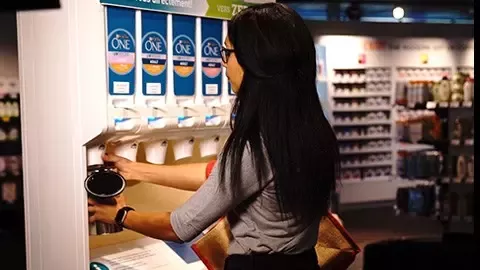
We do this through our brands and through our corporate communications channels. Beyond adding recycling information to our packaging, we create products that are designed to engage consumers in recycling and reuse. We also set up collection points and mail-in bags in several markets, such as for Nespresso.
We also try to help educate everyone about recycling. For example, we have introduced a digital platform to help consumers dispose of their packaging waste appropriately in Italy, and our Nescafé Dolce Gusto brand launched a consumer education campaign to promote recycling in Germany and in Mexico. To accelerate internal change toward our packaging sustainability objectives, we have developed and rolled out a packaging sustainability training program for all of our employees.
Design for Recycling (D4R)
Refers to packaging materials and formats which are compliant with the Negative List and aligned with the Golden Design Rules in our Rules of Packaging Sustainability (pdf, 605Kb).
Recyclable
As defined in the Ellen McArthur Foundation reporting guideline definitions, a packaging or packaging component is recyclable if it is successfully post-consumer collected, sorted and recycled with a recycling rate of 30% in multiple regions, collectively representing more than 400 million inhabitants.
Reusable
Following ISO 18603, reusable is the characteristic of a product or packaging that has been conceived and designed to accomplish within its lifecycle an expected number of trips, rotations or uses for the same purpose for which it was conceived. The weight of reusable packaging is defined by the total weight of reusable packaging, divided by the number of expected rotations over the entire life of the package.