
Why do you use plastic in your packaging?
We use a range of materials, including glass, metal, paper and plastics. Plastic represented approximately 26% of Nestlé's packaging portfolio by weight in 2025. The remaining packaging materials consisted primarily of paper and board, glass and metals. Nestlé's total plastics packaging usage in 2025 was 0.86 million metric tons, compared to 1.7 million tons in 2018.
Plastics offer a unique combination of malleability, light weight, non-breakable, hygiene and product protection, making them ideal packaging materials. We work so that the minimum adequate amount of plastic packaging is used to pack products safely and aim to support the recovery of plastic at the end of its useful life cycle.
Learn more in the Environmental Disclosures section of our 2025 Non-Financial Statement (pdf, 16Mb).
How is Nestlé reducing its plastic usage?
We want to use less packaging material, including less virgin plastic. We do this by eliminating unnecessary packaging, increasing the use of recycled plastics, supporting reuse and refill solutions to scale, and using alternative materials to plastics where appropriate.
We are also redesigning packaging to use less material while maintaining product protection, quality and functionality. In some applications, we are replacing plastic with paper-based materials where this is technically feasible and supported by local recycling systems.
At the same time, we are redesigning packaging to improve its compatibility with collection, sorting and recycling systems, and investing in packaging innovation through our Institute of Packaging Sciences. We are also working to phase out plastics that are difficult to recycle, in line with our Rules of Packaging Sustainability (pdf, 605Kb).
Through the Nestlé Institute of Packaging Sciences, researchers are developing and testing new packaging solutions that reduce reliance on virgin plastic while maintaining product protection and performance.
Creating change like this beyond our own operations requires strong collaboration, so we are working together with value chain partners, other companies, research institutes and governments around the world to identify ways to collaborate to reduce plastic waste in the environment. We are part of the Consumer Goods Forum's Plastic Waste Coalition for Action, the World Economic Forum's Global Plastic Action Partnership (GPAP) and plastic pacts around the world. In 2019, we joined the Ellen MacArthur Foundation's New Plastics Economy initiative. We pledged to work across the industry to create a circular economy for plastic.
We are continuing to support governments by actively advocating for harmonized and better regulation to accelerate infrastructure development in markets where we operate. We advocate for a legally binding UN Treaty on Plastic Pollution and are an active member of the Business Coalition for a Global Plastics Treaty.
Every year we publish examples of our most recent packaging actions and innovations to reduce plastic in our Ellen MacArthur Foundation Global Commitment reporting.
What are the specific challenges that Nestlé faces in removing virgin plastic from its packaging?
Reducing virgin plastic is an important part of Nestlé's packaging strategy, but alternatives must continue to meet strict requirements for food safety, quality and shelf life across a wide range of products and markets.
A key challenge is that only a limited amount of recycled plastic currently meets the strict safety standards required for food packaging. Increasing its use will require improvements in recycling technologies, the development of alternative packaging materials, supportive regulations and a larger supply of high-quality recycled materials.
Another challenge is that alternative packaging materials, including paper-based solutions intended to replace flexible plastics, are not yet available at scale for many applications. Current solutions may not always provide the barrier properties needed to protect products, maintain freshness and quality, and ensure food safety throughout the product's shelf life, particularly across diverse climate conditions and distribution systems around the world.
Nestlé is addressing these challenges through innovation. Through the Nestlé Institute of Packaging Sciences, researchers are developing and testing new packaging solutions that reduce reliance on virgin plastic while maintaining product protection and performance. We are also collaborating with the Ellen MacArthur Foundation and other partners across the value chain to accelerate the development, testing and scaling of next-generation packaging solutions.
How are you developing alternative materials to replace virgin plastics?
We are evaluating and developing a range of packaging materials in collaboration with industry partners. Our efforts include increasing the availability and use of food-grade recycled plastics beyond rPET and advancing paper-based packaging solutions. We also work with the Ellen MacArthur Foundation and other partners to accelerate innovation in paper-based flexible packaging, helping to develop and scale alternatives that can contribute to reducing packaging waste and advancing circularity.
We established the Nestlé Institute of Packaging Sciences, the first institute of its kind in the food industry, to accelerate the development of innovative packaging solutions, bringing together packaging experts, scientists, and external partners.
We also use digital tools and artificial intelligence to accelerate innovation and improve decision-making. Through our collaboration with IBM Research, we are applying generative AI to support the discovery of novel packaging materials with the potential to improve functionality, recyclability and sustainability, helping shorten development timelines and bring promising solutions to market faster.
What are you doing to increase your use of recycled plastics?
As part of our ambition to reduce the use of virgin plastic, we are working to increase the amount of recycled content in our packaging and to expand the availability of food-grade recycled plastics that meet the strict safety requirements for food packaging.
We recognize that increasing the use of recycled content depends on effective systems for collecting, sorting and recycling packaging after use. Through our contributions to Extended Producer Responsibility (EPR) schemes, which make producers responsible for the management of packaging waste, and through our Plastic Recovery and Recycling Plan (PRRP), we support the development of waste management systems.
These efforts help keep valuable packaging materials in circulation, increase the availability of high-quality recycled materials and support the transition to a more circular economy, where materials are reused and recycled rather than becoming waste.
What is stopping reusable and refillable packaging systems from scaling up faster?
Reusable and refillable packaging systems can help reduce the need for single-use packaging, but scaling them requires significant changes across the value chain.
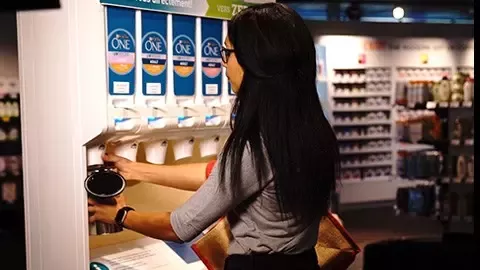
In a reuse model, packaging is returned after use, collected, cleaned, checked and used again. In a refill model, consumers reuse a container and refill it at home or at dedicated refill points. For these systems to become widely available, they must be convenient for consumers, economically viable and able to deliver environmental benefits at scale.
A key challenge is that the infrastructure needed to support reuse and refill is still developing in many markets. This includes collection and return systems, reverse logistics networks to transport empty packaging, cleaning facilities and standardized packaging formats that can be used across different businesses. No single company can create these systems alone, which makes collaboration across industry, retailers and other stakeholders essential.
Supportive public policy also plays an important role. Governments can help create the conditions needed for reuse and refill systems to grow by establishing clear and consistent regulatory frameworks, supporting investment in the required infrastructure and developing common standards for hygiene, safety and quality.
Consumer participation is equally important. Reuse and refill systems are most effective when they are easy to use and fit seamlessly into everyday routines. Increasing convenience, encouraging packaging returns and building consumer confidence are therefore key to long-term success. Product safety remains paramount for us.
Design for Recycling (D4R)
Refers to packaging materials and formats which are compliant with the Negative List and aligned with the Golden Design Rules in our Rules of Packaging Sustainability (pdf, 605Kb).
Recyclable
As defined in the Ellen McArthur Foundation reporting guideline definitions, a packaging or packaging component is recyclable if it is successfully post-consumer collected, sorted and recycled with a recycling rate of 30% in multiple regions, collectively representing more than 400 million inhabitants.
Reusable
Following ISO 18603, reusable is the characteristic of a product or packaging that has been conceived and designed to accomplish within its lifecycle an expected number of trips, rotations or uses for the same purpose for which it was conceived. The weight of reusable packaging is defined by the total weight of reusable packaging, divided by the number of expected rotations over the entire life of the package.