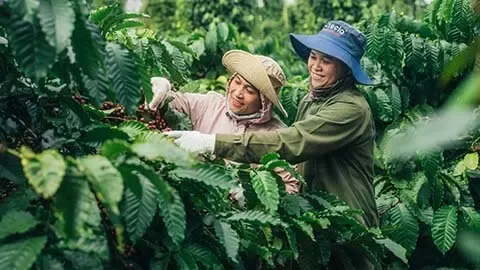
The Coffee Barometer 2026 report highlights challenges that we are actively working to address. Through our Nescafé Plan and Nespresso Sustainable Quality Plan, we are working to help improve farmers' livelihoods, including by building climate resilience in the coffee supply chain.
Collective and coordinated action with governments, industry, and civil society is essential for driving change and we are proactively contributing to this.
The report mentions that the coffee you buy in Brazil involves forced labor. Is this true?
Forced labor is unacceptable. We take action against any violations of human rights in our operations and value chain, with zero tolerance to forced labor and modern slavery. We do not source coffee from the farms stated in the report, and they are not part of our Nescafé Plan and Nespresso Sustainable Quality Plan.
Does Nestlé keep most of the money from coffee instead of farmers?
No. We believe farmers should earn enough to support a decent standard of living for themselves and their families.
We pay competitive prices and premiums for the quality specifications we require and we pay a premium price for coffee that is responsibly sourced. Farmers participating in the Nescafé Plan and Nespresso Sustainable Quality Plan field programs have no obligation to sell their coffee to our suppliers, so we and our suppliers need to offer attractive prices and premiums to remain a preferred buyer.
What is Nestlé doing to ensure coffee farmers earn a living income?
We support farmers through programs like the Nescafé Plan (since 2010) and Nespresso Sustainable Quality Plan Program (launched in 2003 as the AAA Program).
These programs provide training on agricultural practices and business skills, distributing high-yielding and disease-resistant coffee plantlets to farmers, encouraging diversification of crops to gain alternative income, and by paying premiums for responsibly sourced coffee. We continue to assess the impact of our activities on farmers’ income through the independent Monitoring & Evaluation frameworks implemented with the Rainforest Alliance (Nescafé) and Enveritas (Nespresso).
Since 2022, we have integrated living income benchmarks into our framework, helping us develop more tailored strategies going forward. This allows us to better assess the impact of our activities on farmers income and to take measures to address gaps where they exist. Nespresso has also partnered with Fairtrade International to define the mechanism for paying a Living Income Reference Price to smallholder farmers.