Climate action in operations and logistics
While most of our emissions come from our agriculture supply chain, through our efforts in our operations and our partnerships with logistics suppliers, we are continuing on the road to net zero.
In our operations - across our manufacturing sites, owned R&D centers and owned distribution centers - we are working to increase the sourcing of renewable electricity. We are also seeking partnership with logistics suppliers to develop a leaner network intended to support emissions reductions, while pursuing Scope 1 emissions reductions in our direct operations and efficiencies throughout our value chain.
Key terms explained
Net zero
In 2019, we announced our ambition to reach net zero GHG emissions by 2050 at the latest. In 2026, we updated our timebound plan, the Nestlé Roots of Net Zero (pdf, 14Mb), which underpins our Group’s climate strategy and acts as our transition plan aligned with a 1.5°C pathway as validated by the Science Based Targets initiative (SBTi). We will balance any remaining emissions through high-quality nature-based solutions, such as agroforestry, silvopasture and the restoration of forests and peatland. Read more about net zero.
Net zero
In 2019, we announced our ambition to reach net zero GHG emissions by 2050 at the latest. In 2026, we updated our timebound plan, the Nestlé Roots of Net Zero (pdf, 14Mb), which underpins our Group’s climate strategy and acts as our transition plan aligned with a 1.5°C pathway as validated by the Science Based Targets initiative (SBTi). We will balance any remaining emissions through high-quality nature-based solutions, such as agroforestry, silvopasture and the restoration of forests and peatland. Read more about net zero.
Our progress
Renewable electricity sourced in Nestlé's manufacturing sites, owned R&D centers and owned distribution centers at 2025 year end*
98.6
%
Learn more in the Environmental Disclosures section of our 2025 Non-Financial Statement (pdf, 16Mb).
Increasing the sourcing of renewable electricity in our operations
As part of our commitment to the energy transition, we continue to work toward sourcing renewable electricity across Nestlé’s manufacturing sites, owned R&D centers and owned distribution centers, at year end. By the end of 2025, we reached 98.6%. Learn more in the Environmental Disclosures section of our 2025 Non-Financial Statement (pdf, 16Mb).
Our progress reflects sourcing challenges, including in countries where renewable electricity is not available to purchase, as well as lack of systemic progress that goes beyond our individual efforts. This has prevented us from achieving our objective initially set at 100%.
From 2026 onwards, each year, we aim to maintain 98-100% renewable electricity sourced in Nestlé’s manufacturing sites, owned R&D centers and owned distribution centers at year end.
We will keep relying on robust sourcing mechanisms to secure our renewable electricity supply and adapt to local market dynamics and cost structures through specific tools, including Energy Attribute Certificates (including Renewable Energy Certificates (RECS), Guarantee of Origin (GoOs) and International RECs (IRECS), depending on location), green tariffs and Power Purchase Agreements (both on-site and off-site).
Key terms explained
Energy attribute certificates (EACs)
Contractual instruments that convey information (attributes) about a unit of energy, including the resource used to create the energy and the GHG emissions associated with its production and use. EAC is a generic term that includes all types of contractual instruments that convey rights to attributes from various types of energy (e.g., gas, electrical, thermal). Renewable energy certificate (REC) is an example of EAC, used for electricity suppliers and consumers, that conveys one megawatt-hour of electricity generated from renewable sources.
Energy attribute certificates (EACs)
Contractual instruments that convey information (attributes) about a unit of energy, including the resource used to create the energy and the GHG emissions associated with its production and use. EAC is a generic term that includes all types of contractual instruments that convey rights to attributes from various types of energy (e.g., gas, electrical, thermal). Renewable energy certificate (REC) is an example of EAC, used for electricity suppliers and consumers, that conveys one megawatt-hour of electricity generated from renewable sources.
Green tariffs
A green tariff is an electricity pricing structure where the supplier commits to matching electricity usage with energy generated from renewable sources.
A green tariff is an electricity pricing structure where the supplier commits to matching electricity usage with energy generated from renewable sources.
Power purchase agreements (PPAs)
Long-term contracts in which a buyer agrees to purchase electricity from a generator at a pre-agreed price and volume over a defined period, often to secure renewable energy supply.
Long-term contracts in which a buyer agrees to purchase electricity from a generator at a pre-agreed price and volume over a defined period, often to secure renewable energy supply.
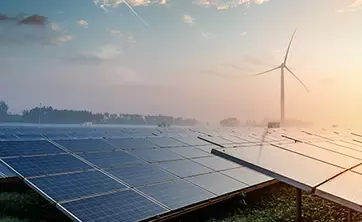
In addition to sourcing renewable electricity, we also generate a proportion of the electricity we use on site at some of our factories via photovoltaic (PV) or wind. For example, we have a wind turbine at our Princess Gate factory in the UK., and in Italy, Pakistan, Turkey and the United States, among other countries, part of our consumption comes from self-generation through PV panels.
Emissions reductions in logistics
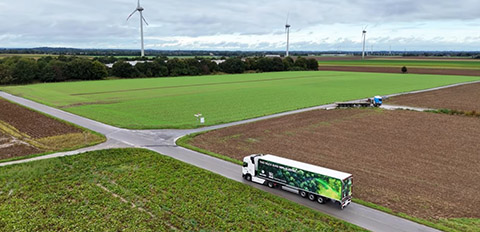
Over the last five years, we have been working closely with our logistics partners on how to maximize opportunities in emission reductions, as we continue to build a leaner logistics network for Nestlé.
By optimizing logistics, maximizing the use of space in our vehicles, electrifying our fleet and increasing the use of lower-emission fuels, we have been taking action across our global supply chains. For example:
- Nestlé Italy is partnering with farmers to make use of their manure and agricultural waste to produce biogas, which we use for our heavy-duty vehicles.
- Nestlé India has joined 14 other companies in the Zero Emission Vehicles Emerging Markets Initiative to advance the electrification of the truck market in India.
- Nestlé UK and Ireland have deployed double-stacked rail for a trial with a retailer which has the potential to take up to 76 heavy goods vehicles off the roads.
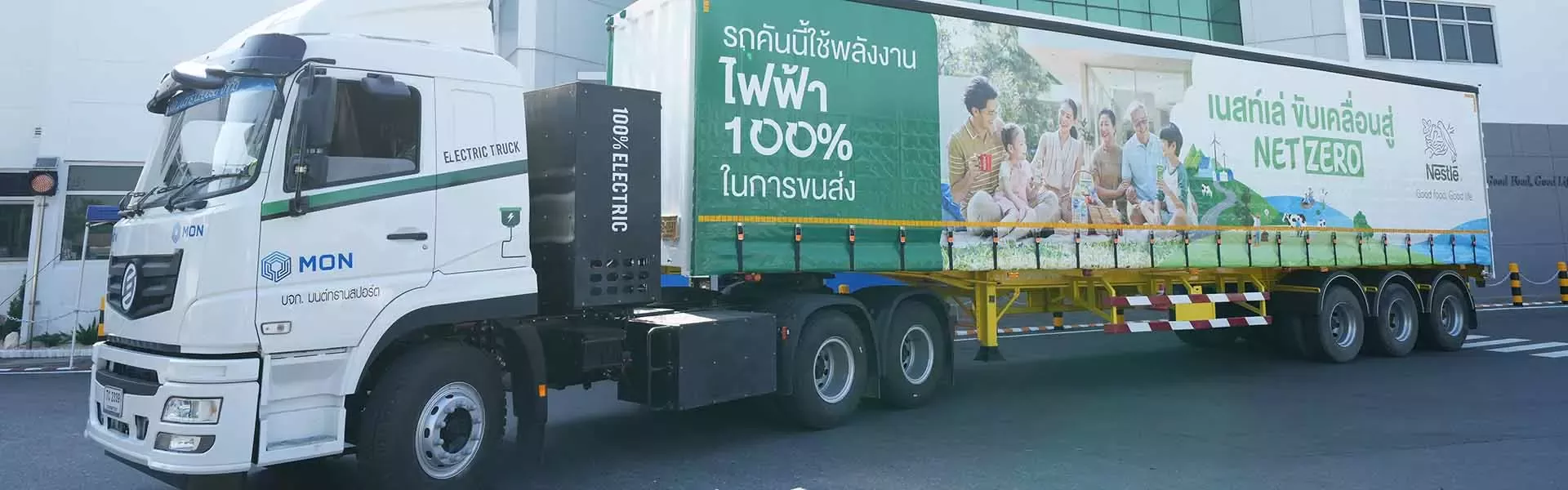
- Nestlé Thailand piloted 100% electric-powered freight trucks in 2023 to deliver products from the company’s factories to its distribution centers and retail stores.
- Nestlé Germany has partnered with sennder since 2021. Over the past three years, the collaboration completed more than 3 000 loads using HVO100 biofuel and electric trucks, with a reported reduction of over 2000 tonnes of CO2e.