Working toward reducing food loss and waste
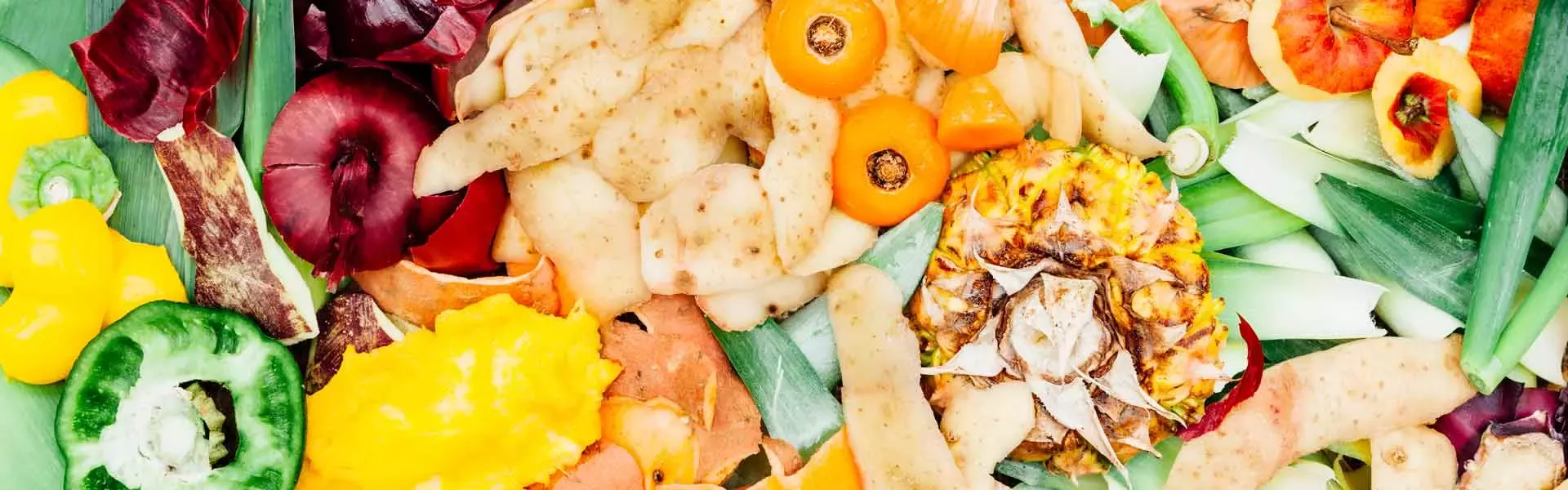
Around one-third of food produced globally is either lost or wasted on the journey from farmers' fields to consumers' plates. We are working to reduce food loss and waste in our operations.
A significant amount of global resources are devoted to food production and distribution from land, water, fertilizer and fuel costs, as well as in the greenhouse gases produced. This inefficiency has profound implications for the environment and the ability of the food sector to operate sustainably.
Key terms explained
Food loss
Is the decrease in the quantity or quality of food resulting from decisions and actions by food suppliers in the chain, excluding retailers, food service providers and consumers. Empirically, it refers to any food that is discarded, incinerated or otherwise disposed of along the food supply chain from harvest/slaughter/catch up to, but excluding, the retail level, and does not re-enter in any other productive utilization, such as feed or seed.1
Food waste
The decrease in the quantity or quality of food resulting from decisions and actions by retailers, food service providers and consumers.2
Food Surplus
Surplus food refers to edible food products, ingredients, or partly processed items that remain unsold or unused due to factors like specification mismatches, production or labeling errors, supply-demand imbalances, or date-marking restrictions. Surplus food may be redistributed if it is safe for human consumption and complies with local safety and information rules.3
Food loss
Is the decrease in the quantity or quality of food resulting from decisions and actions by food suppliers in the chain, excluding retailers, food service providers and consumers. Empirically, it refers to any food that is discarded, incinerated or otherwise disposed of along the food supply chain from harvest/slaughter/catch up to, but excluding, the retail level, and does not re-enter in any other productive utilization, such as feed or seed.1
Food waste
The decrease in the quantity or quality of food resulting from decisions and actions by retailers, food service providers and consumers.2
Food Surplus
Surplus food refers to edible food products, ingredients, or partly processed items that remain unsold or unused due to factors like specification mismatches, production or labeling errors, supply-demand imbalances, or date-marking restrictions. Surplus food may be redistributed if it is safe for human consumption and complies with local safety and information rules.3
1 FAO, Value chain and food loss and waste | Water efficiency, productivity and sustainability in the NENA regions (WEPS-NENA) | Food and Agriculture Organization of the United Nations
2 FAO, Value chain and food loss and waste | Water efficiency, productivity and sustainability in the NENA regions (WEPS-NENA) | Food and Agriculture Organization of the United Nations
3 Cf. European Commission Notice - EU Guidelines on Food Donation C/2017/6872
Taking innovative but practical steps to reduce food waste
Food loss and waste can occur at any point between production and consumption. To help prevent this, we have implemented several practical, technological and educational initiatives designed to help reduce food loss and waste.
We are working alongside farmers, agricultural scientists, researchers and non-profit organizations internationally to reduce food loss and waste and recover food surplus. And we are helping people understand how they can prevent food waste at home.
Where possible, we partner with organizations to reduce food loss and waste, and to valorize food surplus.
In 2025, we created the Nestlé Food Bank Alliance to find ways for others to use the edible food that we cannot sell. The Alliance is a collaboration with three long-time food bank partners covering over 80 countries worldwide. This Alliance will both reduce food loss from our operations, where there is surplus, and help our food bank partners reach people where there is a critical need for food.
In the UK, we partner with WRAP to reduce food loss in our own operations. This is part of an industry-wide program to help achieve the UK Food and Drink Pact (formerly the Courtauld Commitment 2030) 2025 targets, and the UN's Sustainable Development Goal 12.3 to halve food waste by 2030.
Extending shelf-life and innovative upcycling
Nestlé is helping farmers in Kenya access food preservation systems that allow them to turn surplus fruit and vegetables that would otherwise spoil into less perishable products.
In West Africa, our R&D eexperts have tested a sorghum-based porridge that upcycles what had been an unused by-product from the production of malt for our Milo powdered beverage. The sorghum is blended with other cereals and fortified with micronutrients to create a nutritious breakfast option under the Golden Morn brand. By innovating in this way, we are helping maximize the value we extract from our raw materials and enhancing affordable nutrition.
Reducing crop loss
Nestlé's agricultural scientists recommended the introduction of drying technologies to help maize farmers in Nigeria reduce loss.
Maize farming is plagued by pests and crop molds, so the use of dome-shaped solar dryers, which can be easily and cost-effectively built using local materials, helps avoid loss.
Clearer labelling for less wastage
Poor understanding of use-by or best-before dates is thought to be responsible for food waste.
In the United Kingdom, France and Switzerland, we partnered with Too Good to Go, the food waste fighting initiative, which supports the “Look, Smell, Taste, Don’t Waste” campaign to tackle date label confusion. In Poland and Portugal, we have been actively selling surplus food via the Too Good To Go app.
Key terms explained
Use-by Date
Means the date which signifies the end of the estimated period under any stated storage conditions, after which the product probably will not have the quality attributes normally expected by the consumers. After this date, the food should not be regarded as marketable.4
Best-before (or date of minimum durability)
Means the date which signifies the end of the period under any stated storage conditions during which the product will remain fully marketable and will retain any specific qualities for which tacit or express claims have been made. However, beyond the date the food may still be perfectly satisfactory.5
Use-by Date
Means the date which signifies the end of the estimated period under any stated storage conditions, after which the product probably will not have the quality attributes normally expected by the consumers. After this date, the food should not be regarded as marketable.4
Best-before (or date of minimum durability)
Means the date which signifies the end of the period under any stated storage conditions during which the product will remain fully marketable and will retain any specific qualities for which tacit or express claims have been made. However, beyond the date the food may still be perfectly satisfactory.5
4Codex Alimentarius Commission. General Standard for the Labelling of Prepackaged Foods (CODEX STAN 1-1985, Rev. 1-1991). Available at Codex Alimentarius
5Codex Alimentarius Commission. General Standard for the Labelling of Prepackaged Foods (CODEX STAN 1-1985, Rev. 1-1991). Available at Codex Alimentarius