
Landscapes
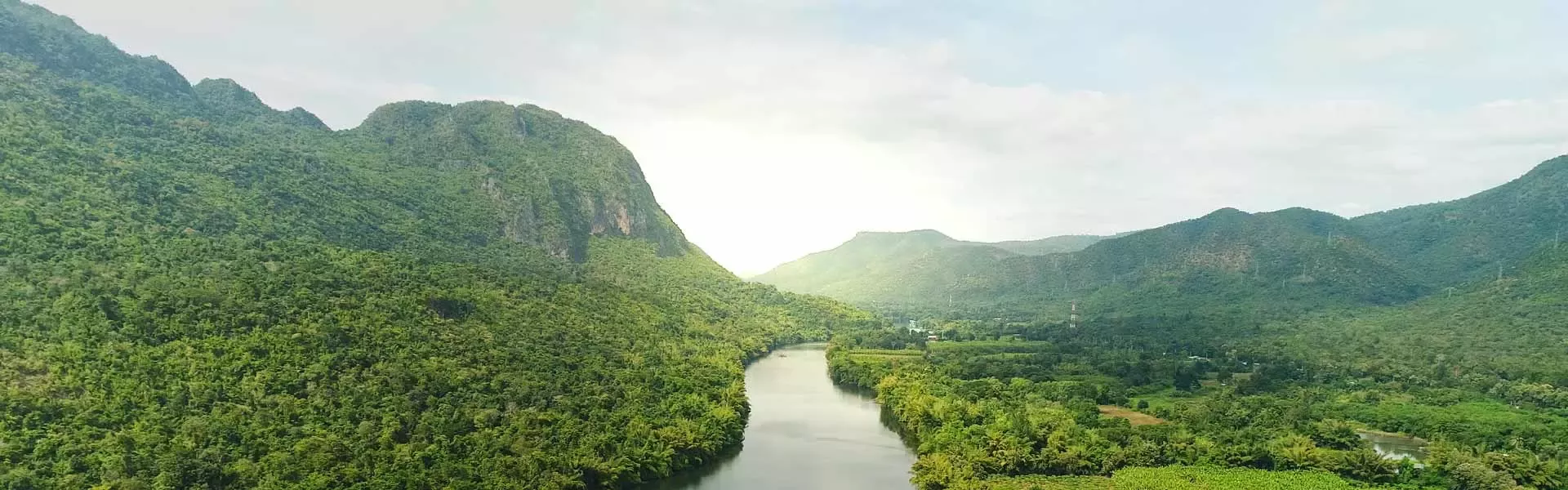
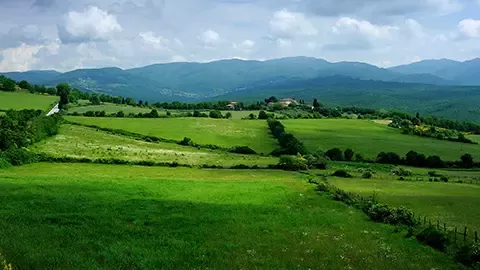
There is a greater understanding today of the need to go beyond farm boundaries and to work at a landscape level to help conserve and restore natural environments.
The farms in our supply chains are not isolated - they are part of broader local economies with multiple industries and land uses. This is why we need to take action and apply integrated strategies that help address the many deforestation drivers in the key landscapes we source from.
Currently, we support multiple different landscape initiatives covering palm oil, pulp and paper, soy, cocoa and wheat. These collaborative efforts are designed to help address the drivers of deforestation and support reforestation across landscapes, rather than focusing on individual sites.
By joining together with the private sector, governments, smallholder farmers, and Indigenous Peoples and local communities (IP&LCs), we can support a just transition to a regenerative food system.
Reaching beyond our supply chains
Working at a landscape level is complex, but we believe it is necessary to have a significant impact. This is where our work on biodiversity, water stewardship, human rights, climate change and livelihoods intersect.
We need to work very closely with other stakeholders to achieve our goals. Here are some of the actions we are taking:
- Supporting landscape initiatives in our strategic procurement origins
- Focusing sourcing on landscapes that engage with our regenerative agriculture practices
- Supporting active conservation and restoration initiatives in priority landscapes
- Supporting smallholder livelihood initiatives in priority landscapes
- Participating in the development financing mechanisms
Key terms explained
Landscape initiatives
On-the-ground multi-stakeholder programs to set common goals, take collective action while reconciling different interests, and monitor progress towards improving social, environmental and economic outcomes at a landscape scale, within the wider geographical area surrounding the farmland used to produce our agricultural raw materials.
Just transition
Just transition refers to a framework aimed at making the shift towards regenerative food systems at scale as fair and inclusive as possible, creating decent work opportunities, and minimizing negative impacts on farmers, workers and communities. It encompasses a range of actions aimed at mitigating the negative social and economic impact of climate and agriculture action, while maximizing the benefits for all stakeholders, especially those most vulnerable (e.g., farmers, women, migrant workers), for example through building resilience, improving livelihoods and promoting human rights. It requires anticipating, preventing, and addressing the social and economic risks associated with climate and agricultural transitions, while supporting the fair sharing of benefits; such as, improved resilience, productivity and income opportunities, particularly with smallholder farmers, workers, women and migrant workers who may be disproportionately affected. Read more about just transition.
Nature- based solutions
Nature-based solutions (NbS) are strategies that use natural processes and ecosystems to address societal challenges, benefiting people, climate and nature at the same time. Nature-based solutions are actions aiming to conserve, manage, and restore natural and modified ecosystems, such as agroforestry, soil management, and peatland and forest restoration.
Regenerative agriculture
In line with the Sustainable Agriculture Initiative Platform, Nestlé defines regenerative agriculture as an approach to farming which aims to conserve and restore natural resources, primarily soil, as well as water and biodiversity, while capturing carbon in soils and plant biomass, and to support farmers’ livelihoods. Examples of regenerative agriculture practices include reduced tillage and agroforestry. More information is available in our Nestlé Agriculture Framework (pdf, 19Mb). Read more about regenerative agriculture.
Regenerative food system
A regenerative food system is one that goes beyond reducing harm to actively restoring ecological systems, while at the same time strengthening the social, economic and human rights foundations that food production depends on - so that food systems can sustain nature, people and livelihoods over the long term.
Responsible sourcing
For Nestlé, responsible sourcing means improving the traceability of our ingredients and monitoring how they are produced. This involves applying our environmental and human rights requirements - detailed in our Responsible Sourcing Core Requirements (pdf, 2Mb) - at the different stages of our supply chain. Examples of these requirements include that land and resources of Indigenous Peoples and local communities are respected, and that no deforestation and no conversion of forests and other ecosystems occur in our supply chain. Read more about responsible sourcing.
Social safeguarding
Social safeguarding is a process for protecting people from being harmed by interventions - such as those put in place by a landscape initiative - intended to do good. It includes understanding how people might be at risk, what could be done to mitigate that, and how to check that this is happening in practice.
Healthy soils
Soil health is defined as the continued capacity of soil to function as a vital living ecosystem that sustains plants, animals and humans. Healthy soils support clean air and water, bountiful crops and forests, productive grazing lands, diverse wildlife, and beautiful landscapes.
Water stewardship
Water stewardship for Nestlé means taking a holistic approach to water use across our operations and supply chains, including:
- Managing water resources in and around our sites, with actions tailored to local watershed needs and risks.
- Supporting the right to water, including access to safe water, sanitation, and hygiene (WASH) for workers and communities surrounding our factories.
- Supporting environmental outcomes through projects designed to help improve water quality, strengthen local water resilience, and support biodiversity.
- Delivering transparent, third-party verified results through certification (e.g. AWS), public reporting, and independent performance measurement (such as the Volumetric Water Benefit Accounting methodology).
- Engaging in collaborative action with stakeholders, including local communities, farmers, NGOs, and public authorities, to address shared water challenges and drive systemic change.
Landscape initiative in the soy supply chain
As part of our responsible soy sourcing efforts, we are partnering with others at a landscape level to address deforestation pressures in Brazil's Western Mato Grosso.
The region encompasses more than five million hectares in the Cerrado, an important area of tropical savannah. We are working closely with farmers, local government, peer companies and NGOs to:
- Expand regenerative agriculture practices
- Seek other ways to promote biodiversity
- Plan conservation and restoration activities
This includes offering incentives to preserve land from legal conversion, to align local communities' priorities with conservation efforts.
The Western Mato Grosso landscape contains approximately 3 million hectares (ha) of remaining native vegetation, including an estimated 300 000 ha of forest assets that may be legally convertible. Through the current initiative, 5 029 hectares have so far been enrolled in the program for voluntary protection beyond legal requirements, with further scale up planned. Farmers are adopting regenerative agriculture practices that help lower emissions, improve soil health and reduce the need for expansion into natural ecosystems. We plan to scale these regenerative agriculture practices, embed social safeguarding for all individuals and communities within the landscape scope, including for IP&LCs, and deepen collaboration with peers and public authorities to help secure responsible sourcing of soy.
Getting ahead of deforestation risk
In Indonesia, while the deforestation rate has decreased overall, it still persists in some crucial ecosystems that are carbon sinks, and home to unique flora and fauna. We are working with local groups to support the protection and restoration of forests, helping to increase smallholders' livelihoods, increase their yields and provide alternative income sources. Alongside partners, Earthworm Foundation, AAK and Proforest, we have implemented projects throughout Indonesia. We are also supporting landscape initiatives in Mexico and Malaysia. Read more about our palm oil approach.

Building a legacy for coffee
The Nespresso Sustainable Quality Plan supports farmers in adopting nature-based solutions such as intercropping, intended to contribute to soil health, biodiversity and the productivity of farming landscapes. Partnerships with non-profit Rainforest Alliance and PUR have help with implementing projects and monitoring progress.
Nature-based solutions and finance
The Rimba Collective was developed by Lestari Capital in collaboration with founding partners. The program complements the palm oil industry’s efforts to end deforestation by funding conservation and restoration projects across the supply chain.
One example in the Rimba Collective portfolio is The Tropenbos Project, which aims to better understand biodiversity impacts and dependencies, as the basis for planning and demonstrating good biodiversity performance using the Species Threat Abatement and Restoration (STAR) metric.
The assessment revealed that these four village forests hold immense global biodiversity value, providing a habitat for 97 endangered and near-threatened bird and mammal species across the sites. These include the Bornean Orangutan, Helmeted Hornbill and Proboscis monkey.
Key actions are being implemented to address challenges, such as artisanal mining, logging by communities, hunting, fires and land clearance. These include crafting a wildlife conservation plan and sharing biodiversity and wildlife conservation management knowledge to the people living in the area.
Partnerships for greater impact
Nestlé works with partners throughout our supply chains and with industry-wide coalitions, such as the Consumer Goods Forum (CGF) Forest Positive Coalition to help conserve high-value ecosystems.
As part of our involvement in the CGF Forest Positive Coalition, we are involved in several palm oil, pulp and paper, and soy landscape initiatives.

Ultimately, the most important thing is the actual forests that remain. If we don't have deforestation in our supply chain but someone else cuts down all the forests, it's a pretty empty victory. That's why the wider landscape is important.