
Child labor and access to education
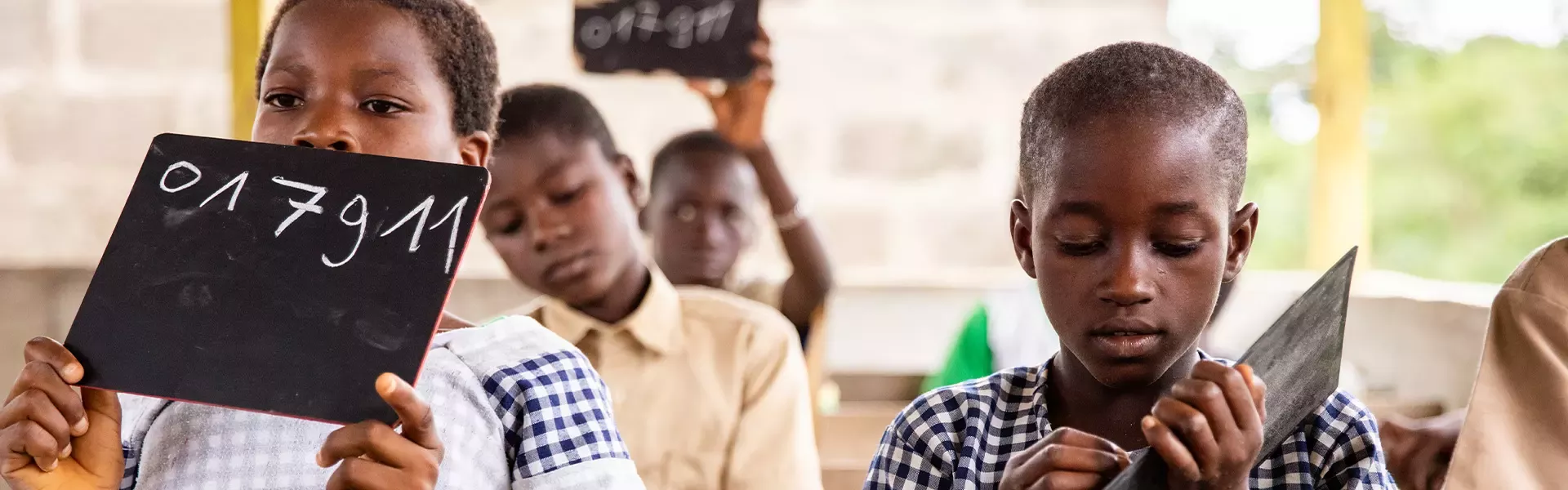
Tackling child labor risks is a critical part of our efforts to support a just transition We are driven by the fundamental principle that all children deserve the chance to learn and grow in a safe and healthy environment, without having to undertake work that is dangerous in any way or that interferes with education.
Our innovative income accelerator program was established to tackle child labor risk in cocoa farming households by helping to improve the livelihoods of cocoa-farming families. In 2024, the program continued to encourage school enrolment (88% of children in school), uptake of good agricultural practices (GAPs) (70% adoption of high-quality pruning) and agroforestry (71% number of farms with shade trees), and substantially improved the resilience and the well-being of cocoa farming households in areas like financial inclusion through Village Savings and Loan Associations (VSLA) (+105% amount saved through VSLA), food security and women's empowerment (+18% women empowered index). Read more in the Progress Report Summary, June 2025 (pdf, 800Kb).
Key terms explained
Just transition
Just transition refers to a framework aimed at making the shift towards regenerative food systems at scale as fair and inclusive as possible, creating decent work opportunities and minimizing negative impacts on farmers, workers and communities. It encompasses a range of actions aimed at mitigating the negative social and economic impact of climate and agriculture action, while maximizing the benefits for all stakeholders, especially those most vulnerable (e.g. farmers, women, migrant workers), for example, through building resilience, improving livelihoods and promoting human rights. It requires anticipating, preventing and addressing the social and economic risks associated with climate and agricultural transitions, while supporting the fair sharing of benefits, such as improved resilience, productivity and income opportunities, particularly with smallholder farmers, workers, women and migrant workers who may be disproportionately affected. Read more about just transition.
Good agricultural practices
Farm-level and post-farm practices ensuring efficient agricultural production aligned with environmental, social and economic performance objectives.
Living income
'Living income' defines the net income a household needs to earn in order to enable all members of the household to afford a dignified and decent standard of living, including basic needs (food, water, housing, education, health care, transportation, clothing, other essential needs and a provision for unexpected events). Read more about living income.
Just transition
Just transition refers to a framework aimed at making the shift towards regenerative food systems at scale as fair and inclusive as possible, creating decent work opportunities and minimizing negative impacts on farmers, workers and communities. It encompasses a range of actions aimed at mitigating the negative social and economic impact of climate and agriculture action, while maximizing the benefits for all stakeholders, especially those most vulnerable (e.g. farmers, women, migrant workers), for example, through building resilience, improving livelihoods and promoting human rights. It requires anticipating, preventing and addressing the social and economic risks associated with climate and agricultural transitions, while supporting the fair sharing of benefits, such as improved resilience, productivity and income opportunities, particularly with smallholder farmers, workers, women and migrant workers who may be disproportionately affected. Read more about just transition.
Good agricultural practices
Farm-level and post-farm practices ensuring efficient agricultural production aligned with environmental, social and economic performance objectives.
Living income
'Living income' defines the net income a household needs to earn in order to enable all members of the household to afford a dignified and decent standard of living, including basic needs (food, water, housing, education, health care, transportation, clothing, other essential needs and a provision for unexpected events). Read more about living income.
Our progress
96.2
%
1 For Côte d’Ivoire and Ghana only. Includes mass balance.
Learn more in the Social Disclosures section of our 2025 Non-Financial Statement (pdf, 16Mb).
Setting standards across our supply chains
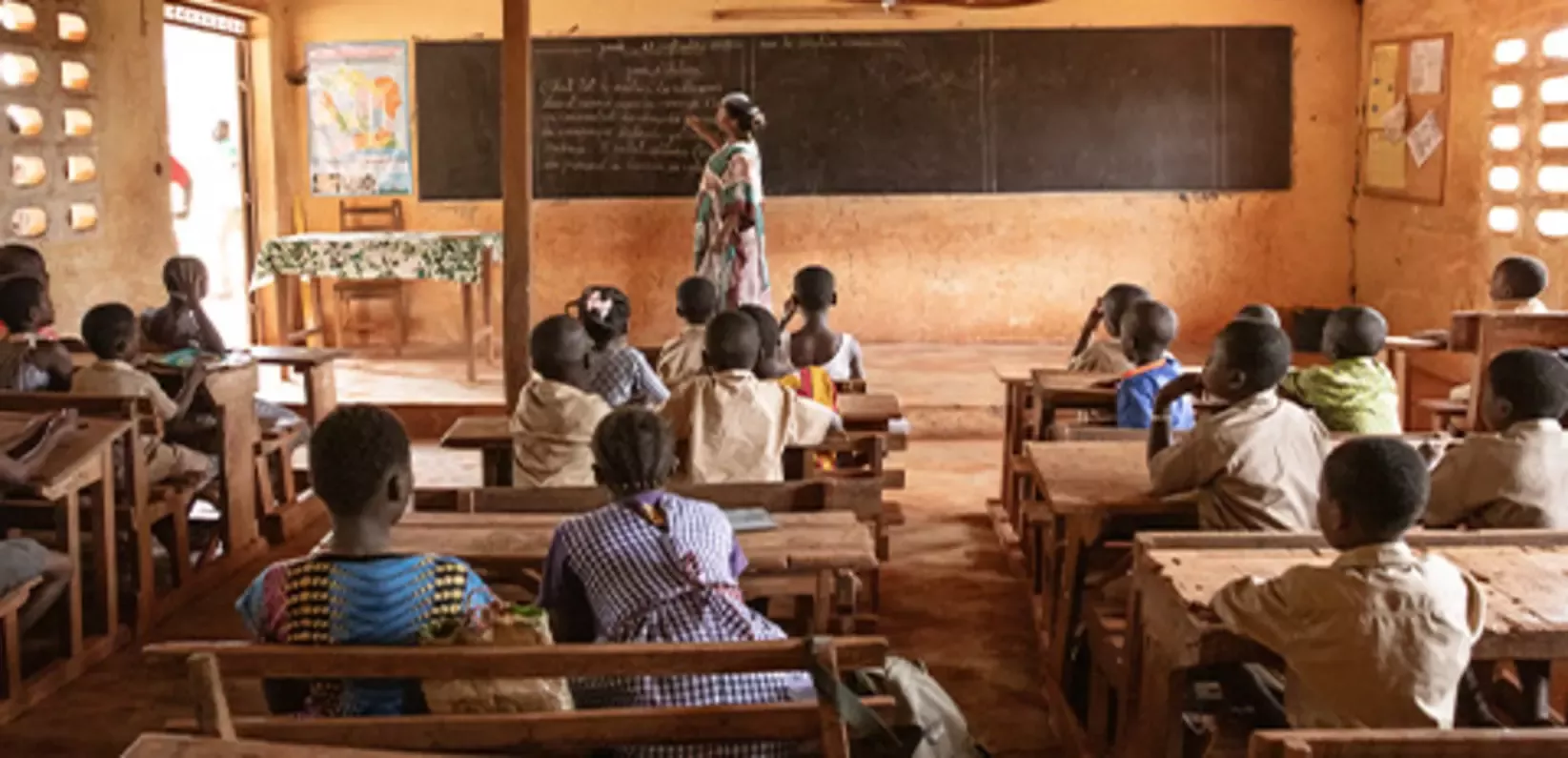
Nestlé was the first company to set up a Child Labor Monitoring and Remediation System (CLMRS) in the cocoa sector in Côte d'Ivoire. This system identifies at-risk children within cocoa and farming communities, provides remediation and monitors their situation to help reduce the risk of their involvement in child labor. Community liaisons - who come from the local communities themselves - identify practical ways we can help. For instance, we build and renovate schools and have partnered with the Jacobs Foundation to provide special classes that help children catch up on missed schooling. We also help parents secure birth certificates to register their children at school.
This system operates in our cocoa supply chain in Côte d'Ivoire and Ghana. We extended to our Ivorian coffee supply chain in 2023.
Our key achievements
- In 2022, we launched our income accelerator program aiming to help cocoa-farming families close the living income gap, one of the root causes of child labor risks.
- In 2023, we developed our Nescafé Plan 2030 (pdf, 125 Kb) strategy which incorporates close work with farmers to improve livelihoods in communities through income diversification, human rights and child protection. Read our latest progress report (pdf, 7Mb).
- By the end of 2025, 96.2% of the volume of cocoa was covered by a Child Labor Monitoring and Remediation System (CLMRS) or other dedicated due diligence systems, with mass balance included. For more details on our progress via CLMRS, including for cocoa in Côte d'Ivoire and Ghana, read our Non-Financial Statement 2025 (pdf, 16Mb).
- We have reviewed our Sedex Members Ethical Trade Audit (SMETA) audit protocols to address child labor risks in the United States, which is a widely recognized ethical audit methodology that assesses an organization's labor standards, health and safety, environmental practices, and business ethics within its supply chain.
- As of 2025, we rolled out our 'Train the Trainer' program for child labor risk awareness, training our priority markets as identified in our action plan on child labor and access to education.
Addressing the root causes of child labor
Nestlé uses its resources and influence to help address factors contributing to rural poverty and support the livelihoods of cocoa-farming families as a further means of reducing child labor risks. We do this by supporting living incomes, empowering women and encouraging farmers to diversify and create additional income streams, for example by cultivating other crops. These moves aim to support livelihoods and reduce the risk that farmers and their families resort to child labor to supplement household income. Read more on our efforts in living incomes.
Since launching the Nestlé income accelerator in 2022, we have been extending our reach, with an initial ambition of supporting approximately 160 000 cocoa-farming families by 2030. The program rewards families with cash incentives for keeping their children in school and adopting good agricultural practices, planting forest and fruit trees and diversifying incomes. To date, about 45 000 families are participating. We will continue to expand our engagement while adapting our approach, including revisiting this initial ambition, as the TogetherCocoa Foundation scales. Going forward, we expect to broaden our reach both through our direct supply chain and the development of the Foundation. Read more about our income accelerator program.
Nestlé's monitoring and remediation system is helping to address child labor risks
We rely on hundreds of community liaisons who regularly meet tens of thousands of families within cocoa-growing communities. These liaisons - who all come from cocoa-growing communities themselves - understand the issues farmers and their families face. They counsel families on the dangers of child labor and monitor children through repeat visits, observing activity in communities and visiting farms. They also advise Nestlé on what measures are best suited to their community to help address factors linked to rural poverty and support access to education.
Investing in strategic partnerships
Given the scale and complexity of human rights challenges, including child labor risks, we believe in collaboration and partnerships to advance and promote children's rights. Nestlé has invested in relationships with various organizations to share learnings and cultivate common approaches. Organizations we work with on child labor include the International Cocoa Initiative and the International Labour Organization's Child Labour Platform.
Catching up on missed classes
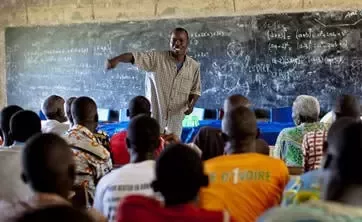
We know that there is a direct correlation between better education and lower levels of child labor risk, so Nestlé prioritizes access to school as the key way to address this risk. We have partnered with the Jacobs Foundation to create over a hundred 'bridging' classes that help children who have missed school due to work. These special classes deliver two years' worth of the national curriculum in small classes in just nine months.
Empowering young coffee growers
In Honduras, Nescafé has launched a training program to strengthen the skills and leadership of young coffee farmers. Working with Swisscontact and the CoHonducafé Foundation, local teams on the ground have reached 5 000 'Jóvenes Caficultores' (young coffee growers). The program also includes leadership development for agroforestry students.