
Vegetables and spices sourcing

Vegetables and spices are increasingly important raw materials used in many products - particularly, our Maggi, Thomy and Winiary brands - as we continue to expand our portfolio of nutritious and plant-based products.
Through our Responsible Sourcing Program for Vegetables and Spices - which covers key ingredients in the vegetables and spices supply chain, see below for a detailed list - we provide support for suppliers, their farmers and communities through tailored approaches aligned with our Nestlé Responsible Sourcing Core Requirements.
Key terms explained
Responsible sourcing
For Nestlé, responsible sourcing means improving the traceability of our ingredients and monitoring how they are produced. This involves applying our environmental and human rights requirements - detailed in our Responsible Sourcing Core Requirements (pdf, 2Mb) - at the different stages of our supply chain. Examples of these requirements include that land and resources of Indigenous peoples and local communities are respected and that no deforestation and no conversion of forests and other ecosystems occur in our supply chain. Read more about responsible sourcing.
Responsible sourcing
For Nestlé, responsible sourcing means improving the traceability of our ingredients and monitoring how they are produced. This involves applying our environmental and human rights requirements - detailed in our Responsible Sourcing Core Requirements (pdf, 2Mb) - at the different stages of our supply chain. Examples of these requirements include that land and resources of Indigenous peoples and local communities are respected and that no deforestation and no conversion of forests and other ecosystems occur in our supply chain. Read more about responsible sourcing.
Our tailored approach to responsibly sourced vegetables and spices
Our Responsible Sourcing Program (RSP) for Vegetables and Spices and our Responsible Sourcing Core Requirements (pdf, 2Mb) provide a clear framework for implementing tailored, localized programs for Nestlé.
We source vegetables from a diverse range of locations and landscapes, including Belgium, France, Germany, India, Italy, Poland, Serbia, Spain, the United Kingdom and the United States. Our main crops include onion, parsnip, carrot, pea, potato, coriander, tomato, bell pepper, parsley, beetroot, celery, green bean, leek, garlic, asparagus, broccoli, spinach, cabbage, cauliflower, zucchini, and dill. We publish the list of our vegetables suppliers (pdf, 200Kb) and corresponding primary processing sites, along with the countries of origin, in an effort to help drive industry-wide transparency.
For spices, Nestlé is a relatively small purchaser. The spices we need must be processed before they are suitable for use in our products, so we buy them from processors instead of farmers. We focus on six key spices - chili, coriander, cumin, turmeric, black pepper and mustard seeds. We source most of our spices from countries in Asia, including India, Vietnam and Malaysia. Again, in an effort to drive industry-wide transparency, we publish the list of our suppliers of spices (pdf, 100Kb) and the list of corresponding primary processing sites in our supply chain, along with the countries of origin.

Enabling transparency by supporting suppliers and farmers
Greater transparency helps us strengthen the links in our supply chains and gain a better understanding of our ingredients and how they’re produced.
We have been working with more than 25 processors across 10 countries within Europe within the past four years supporting the implementation of field level interventions such as planting hedgerows, switching to non-chemical fertilizers and planting cover crops, the purchase of precision agriculture tools, and many others.
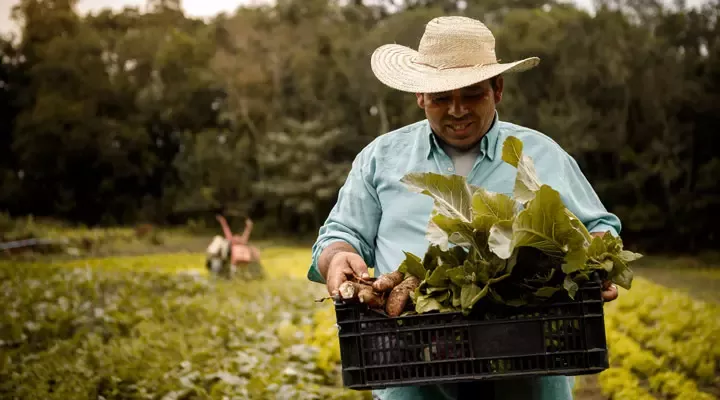
We mainly purchase processed vegetables from our suppliers. Behind these suppliers are large-scale farming operations as well as smallholder farmers growing vegetables on only a few hectares. We provide a toolbox that can be used to support all kinds of farmers to improve their practices and sustain their operations. Nestlé provides an operational framework and supports suppliers embarking on this journey with technical and material assistance.
In the spices supply chain, buyers and suppliers are starting to move toward an approach that improves transparency. Nestlé funds farm and community interventions which are delivered via suppliers’ networks (agronomist teams and third-party partners) which help to develop solutions by engaging directly with farmers through training, education, community support and collaborative initiatives.
Scaling up through key partnerships
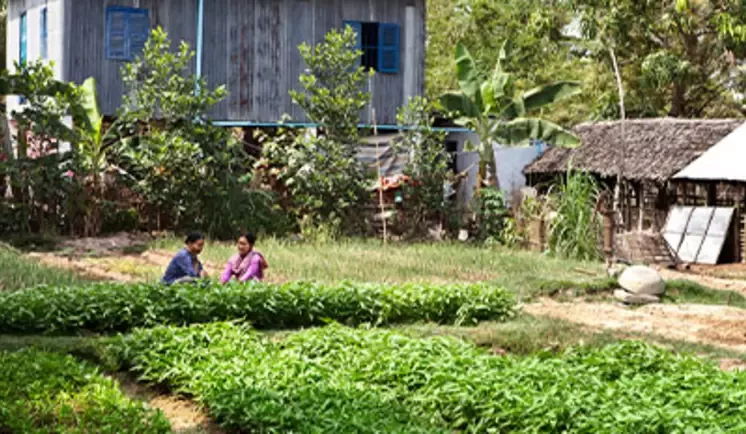
Nestlé, Fundación Global Nature, and the Sustainable Agriculture Network work closely together in a collaborative, innovative partnership model that enables us to develop, implement and scale-up responsible sourcing actions for vegetables and spices.
Coordinated by a global team, the operationalization of the RSP with agri-food companies is led by the Sustainable Agriculture Network’s local partners, who speak the native language and know the local context.
These local partners are positioned to provide contextually appropriate coaching and technical assistance to both companies and their farmers on regenerative agriculture practices, including enhanced biodiversity practices.
Key terms explained
Regenerative agriculture
In line with the Sustainable Agriculture Initiative Platform, Nestlé defines regenerative agriculture as an approach to farming which aims to conserve and restore natural resources, primarily soil, as well as water and biodiversity, while capturing carbon in soils and plant biomass, and to support farmers’ livelihoods. Examples of regenerative agriculture practices include reduced tillage and agroforestry. More information is available in our Nestlé Agriculture Framework (pdf, 19Mb). Read more about regenerative agriculture.
Regenerative agriculture
In line with the Sustainable Agriculture Initiative Platform, Nestlé defines regenerative agriculture as an approach to farming which aims to conserve and restore natural resources, primarily soil, as well as water and biodiversity, while capturing carbon in soils and plant biomass, and to support farmers’ livelihoods. Examples of regenerative agriculture practices include reduced tillage and agroforestry. More information is available in our Nestlé Agriculture Framework (pdf, 19Mb). Read more about regenerative agriculture.
Supporting farmers and suppliers
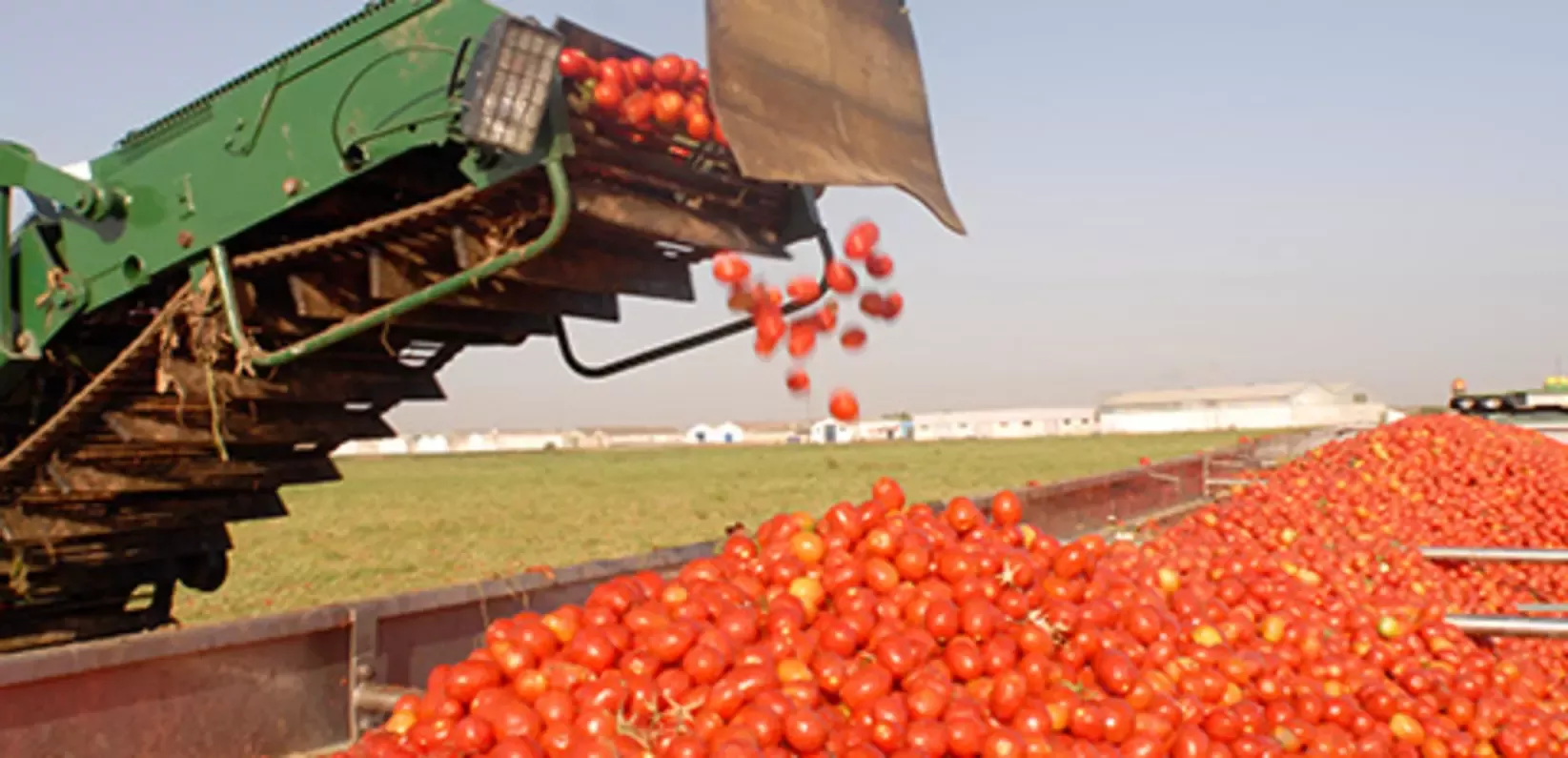
Through farm assessments conducted within our tomato supply chain, we identified some labor and environmental aspects to work on. Since identifying these risks, we have worked with our direct suppliers to map our supply chain all the way to the primary processors that receive vegetables directly from farmers.
We ask these processors to organize farm assessments that provide a baseline for each sourcing location, leveraging the Farm Sustainability Assessment ethical standard from the Sustainable Agriculture Initiative Platform. By using the shared standard, other industry players do not need to request additional assessments from the same farmers. Each processor is then asked to develop and implement an improvement plan covering all farms that supply them.
To make sure our efforts are driven toward the right locations, processors located in low-risk countries (as per Maplecroft risk indices) are not requested to organize farm assessments, and the associated volumes are considered responsibly sourced.
With the support of our non-governmental organization partner, the Sustainable Agriculture Network (SAN), we aim to source our spices from farm groups that have been assessed against our responsible sourcing requirements. The partnership focuses on finding opportunities to close existing gaps and on identifying field interventions that will have the biggest impact.
Approximately 98% of India’s spice output is produced by smallholder farmers, who typically work on farms smaller than two hectares, and often on land plots spanning less than half a hectare. Many of these farmers seasonally rotate other crops along with spices.
The current production context in India faces several challenges, including: soil and nutrient degradation, market price fluctuations for spices and other crops, pest infestations and changing climatic patterns, reductions in groundwater availability, scarcity of labor, and labor rights issues.
Accordingly, we engage with local stakeholders to tailor our approach and implement appropriate initiatives. This includes developing action plans to effectively implement our Responsible Sourcing Core Requirements, and training farmers and suppliers.
Nestlé sources coffee and black pepper from Vietnam. For over a decade, the Nescafé Plan’s Vietnam Farmer Connect team has been working closely with coffee-farming communities to promote intercropping - the agricultural practice of cultivating multiple crops on coffee farms to help boost incomes and enhance biodiversity. This climate-smart model inspired Nestlé to incentivize our suppliers in Vietnam to source black pepper from farmers involved with intercropping.