
Teaming up for climate advocacy

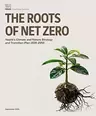
There’s strength in numbers. Published in 2026, our Roots of Net Zero integrated climate and nature strategy and transition plan (pdf, 14Mb) sets out high-level advocacy positions on climate and nature matters. We continue to support efforts to create an enabling environment for the objectives of the Paris Climate Agreement and the Kunming-Montreal Global Biodiversity Framework.
We support progressive climate action across economic sectors and to align our direct and indirect climate policy engagement with the Paris Agreement’s 1.5°C goal.
Key terms explained
Net zero
In 2019, we announced our ambition to reach net zero GHG emissions by 2050 at the latest. In 2026, we updated our timebound plan, the Nestlé Roots of Net Zero (pdf, 14Mb) which underpins our Group’s climate strategy and acts as our transition plan aligned with a 1.5°C pathway as validated by the Science Based Targets initiative (SBTi). We will balance any remaining emissions through high-quality nature-based solutions, such as agroforestry, silvopasture and the restoration of forests and peatland. Read more about net zero.
Net zero
In 2019, we announced our ambition to reach net zero GHG emissions by 2050 at the latest. In 2026, we updated our timebound plan, the Nestlé Roots of Net Zero (pdf, 14Mb) which underpins our Group’s climate strategy and acts as our transition plan aligned with a 1.5°C pathway as validated by the Science Based Targets initiative (SBTi). We will balance any remaining emissions through high-quality nature-based solutions, such as agroforestry, silvopasture and the restoration of forests and peatland. Read more about net zero.
We also support government actions on policies, incentives and legislation intended to encourage business action towards halting and reversing nature loss by 2030, in line with the Kunming-Montreal Global Biodiversity Framework.
We recognize climate change and biodiversity loss as interconnected challenges and support coordinated global efforts to address them. Current priorities include advocating for greater private-sector ambition and robust public policy support for regenerative agriculture practices across the food industry.
Key terms explained
Regenerative agriculture
In line with the Sustainable Agriculture Initiative Platform, Nestlé defines regenerative agriculture as an approach to farming which aims to conserve and restore natural resources, primarily soil, as well as water and biodiversity, while capturing carbon in soils and plant biomass, and to support farmers’ livelihoods. Examples of regenerative agriculture practices include reduced tillage and agroforestry. More information is available in our Nestlé Agriculture Framework (pdf, 19Mb). Read more about regenerative agriculture.
Just transition
Just transition refers to a framework aimed at making the shift towards regenerative food systems at scale as fair and inclusive as possible, creating decent work opportunities, and minimizing negative impacts on farmers, workers and communities. It encompasses a range of actions aimed at mitigating the negative social and economic impact of climate and agriculture action, while maximizing the benefits for all stakeholders, especially those most vulnerable (e.g., farmers, women, migrant workers), for example through building resilience, improving livelihoods and promoting human rights. It requires anticipating, preventing, and addressing the social and economic risks associated with climate and agricultural transitions, while supporting the fair sharing of benefits; such as, improved resilience, productivity and income opportunities, particularly with smallholder farmers, workers, women and migrant workers who may be disproportionately affected. Read more about just transition.
Regenerative agriculture
In line with the Sustainable Agriculture Initiative Platform, Nestlé defines regenerative agriculture as an approach to farming which aims to conserve and restore natural resources, primarily soil, as well as water and biodiversity, while capturing carbon in soils and plant biomass, and to support farmers’ livelihoods. Examples of regenerative agriculture practices include reduced tillage and agroforestry. More information is available in our Nestlé Agriculture Framework (pdf, 19Mb). Read more about regenerative agriculture.
Just transition
Just transition refers to a framework aimed at making the shift towards regenerative food systems at scale as fair and inclusive as possible, creating decent work opportunities, and minimizing negative impacts on farmers, workers and communities. It encompasses a range of actions aimed at mitigating the negative social and economic impact of climate and agriculture action, while maximizing the benefits for all stakeholders, especially those most vulnerable (e.g., farmers, women, migrant workers), for example through building resilience, improving livelihoods and promoting human rights. It requires anticipating, preventing, and addressing the social and economic risks associated with climate and agricultural transitions, while supporting the fair sharing of benefits; such as, improved resilience, productivity and income opportunities, particularly with smallholder farmers, workers, women and migrant workers who may be disproportionately affected. Read more about just transition.
Our advocacy related actions
We continue to actively engage with stakeholders, including governments and industries, to encourage fair and ambitious policies that support a just transition to a lower-carbon economy. This engagement is critical to aligning our business strategy with global efforts to combat climate change.
We provide specific guidance to our local market teams on aligning advocacy and external engagement activities with the goals of the Paris Agreement, applying our Policy on Transparent Interactions with Public Authorities (pdf, 2Mb).
Disclosure of our advocacy practices is important to enhance transparency and trust. That is why we welcome the development of the Global Standard on Climate Responsible Lobbying and use it to guide our annual Nestlé Climate Advocacy Industry Associations Review disclosure. This includes:
- Our advocacy priorities on climate
- Nestlé’s main industry association memberships and an assessment of how far their positions are aligned with the objectives of the Paris Agreement
- Our process for addressing misalignments
- Nestlé’s climate legislative advocacy guidance that helps equip our teams
- Our governance structure for climate advocacy activities
- Links to other public disclosures of Nestlé’s climate advocacy activities
- Examples of Nestlé’s global and regional climate advocacy activities
In 2025, Nestlé was again recognized as a leading company meeting all relevant criteria as part of the Corporate Climate Policy Engagement Leader assessment carried out by InfluenceMap and is ranked #5 out of 177 companies in the Corporate Policy Engagement Disclosure Scorecards ranking.
Setting a clear agenda on climate
As set out in our Roots of Net Zero integrated climate and nature strategy and transition plan, we will continue to advocate for government policies and private-sector leadership with the aim that all sectors move more quickly towards rapid and sustained reductions in carbon emissions.
• Advocating for higher ambitions from countries and companies
• Encouraging the adoption of regenerative agriculture practices
• Promoting landscape-level biodiversity action and monitoring
• Supporting Scope 3 carbon removals through natural climate solutions,
including forest protection and restoration
• Supporting the transition towards renewable electricity and energy
• Enabling lower-impact logistics
• Improving corporate accountability
• Advancing alignment on nature-related indicators, metrics and standards
• Supporting credible, science-based nature credit markets
• Improving consumer communications and claims
• Encouraging the adoption of regenerative agriculture practices
• Promoting landscape-level biodiversity action and monitoring
• Supporting Scope 3 carbon removals through natural climate solutions,
including forest protection and restoration
• Supporting the transition towards renewable electricity and energy
• Enabling lower-impact logistics
• Improving corporate accountability
• Advancing alignment on nature-related indicators, metrics and standards
• Supporting credible, science-based nature credit markets
• Improving consumer communications and claims
In addition, Nestlé engages in various multi-sector efforts such as those driven by the World Business Council for Sustainable Development (WBCSD) to support collaboration on climate action at a multi-lateral and national level.
Collaboration for climate action
-
WBCSD (World Business Council For Sustainable Development) Nestlé participates in several working groups, including those dedicated to climate change. -
Business and Industry NGOs (BINGO) Nestlé is an active member of this UNFCCC constituency and participates via our membership of the International Chamber of Commerce.
-
COP30, Belem, Brazil At COP30 Presidency Action Agenda of Transforming Agriculture and Food Systems Nestlé participated in discussions on policies and supported climate- resilient food systems. -
World Farmers Organization (WFO) Nestlé and the World Farmers' Organisation are partnering to support progress toward more resilient food systems.Read more
Examples of our advocacy activities
On a global level, to advance our advocacy on climate and nature related matters, we participated in the following events in 2025:
- London Climate Action Week
- New York Climate Action Week
- UNFCCC COP30 in Belem, Brazil