Performance and reporting
Transparent, public reporting on our activities, commitments and performance is embedded in how we do business at Nestlé.
We include a summary of our approach and performance on important topics in our annual review and publish more details in our Non-Financial Statement (pdf, 16Mb).
Our 2025 performance summary
Climate
We aimed to reduce our greenhouse gas (GHG) emissions by 20% by 2025 and we aim to further reduce such emissions by 50% by 2030, on the road to net zero (pdf, 14Mb) by 2050 at the latest.
24.5
%
Nature
By 2025, we aimed to achieve and maintain 100% assessed deforestation-free primary supply chains (for meat, palm oil, pulp and paper, soy, sugar, cocoa and coffee).
97.0
%
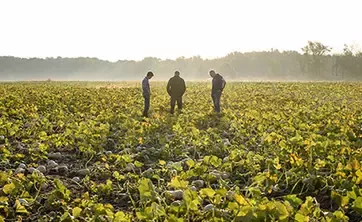
Regenerative agriculture
By 2025, we aimed for 20% of volumes of key ingredients to be sourced from farmers adopting regenerative agriculture practices.
20.7
%
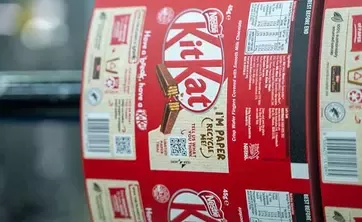
Packaging
By 2025, we aimed to reduce virgin plastics by one third versus our 2018 baseline.
28
%
Diversity, equity and inclusion
48.2
%
Health and nutrition
135.4
billion
1 Net reductions (%) of GHG emissions versus 2018 baseline includes removals from inside Nestlé’s value chains and sourcing landscapes (pending the publication of the SBTi guidance on neutralization).
2 This performance number differs from the one available in our Non-Financial Statement 2025 due to a change in the methodology during the first half of 2026. Now we consider ingredients volumes converted back to their original fresh state, instead of their processed form.
3 This performance number differs from the one available in our Non-Financial Statement 2025 due to a change in the methodology during the first half of 2026. Now we consider ingredients volumes converted back to their original fresh state, instead of their processed form. There has been a change in the key ingredients scope from 2026 onwards. The new scope is: cereals and grains; cocoa; coconut; dairy (derivatives and fresh milk); green coffee; hazelnuts; meat, poultry and eggs; soy; spices; sugar; vegetables; and vegetable fat oils (including palm oil).
Our Non-Financial Statement 2025 was independently assured by Ernst & Young Ltd (EY). They have provided limited assurance on select environmental, social and governance KPIs, which can be found in Independent assurance (pdf, 16Mb)
Our Reporting Scope and Methodology for ESG KPIs (pdf, 16Mb) document provides details and definitions.
Nestlé’s Non-Financial Statement 2025 has been produced with reference to the Global Reporting Initiative (GRI) and the Sustainability Accounting Standards Board (SASB) Standard for the Processed Foods sector which can be found here: GRI and SASB Index (pdf, 16Mb)
Key terms explained
Regenerative agriculture
In line with the Sustainable Agriculture Initiative Platform, Nestlé defines regenerative agriculture as an approach to farming which aims to conserve and restore natural resources, primarily soil, as well as water and biodiversity, while capturing carbon in soils and plant biomass, and to support farmers’ livelihoods. Examples of regenerative agriculture practices include reduced tillage and agroforestry. More information is available in our Nestlé Agriculture Framework (pdf, 19Mb). Read more about regenerative agriculture.
Deforestation-free
Deforestation-free means that commodities in scope were assessed as produced on land that has not been subject to deforestation or conversion after a specific cut-off date that varies by commodity, but no later than December 31, 2020. Commodities accounted as deforestation-free include in part commodities subject to the requirements of the EU Deforestation Regulation. However, the scope of the disclosed metric goes beyond these jurisdiction-specific mandatory requirements as part of Nestlé's global approach on deforestation. Read more about deforestation.
Regenerative agriculture
In line with the Sustainable Agriculture Initiative Platform, Nestlé defines regenerative agriculture as an approach to farming which aims to conserve and restore natural resources, primarily soil, as well as water and biodiversity, while capturing carbon in soils and plant biomass, and to support farmers’ livelihoods. Examples of regenerative agriculture practices include reduced tillage and agroforestry. More information is available in our Nestlé Agriculture Framework (pdf, 19Mb). Read more about regenerative agriculture.
Deforestation-free
Deforestation-free means that commodities in scope were assessed as produced on land that has not been subject to deforestation or conversion after a specific cut-off date that varies by commodity, but no later than December 31, 2020. Commodities accounted as deforestation-free include in part commodities subject to the requirements of the EU Deforestation Regulation. However, the scope of the disclosed metric goes beyond these jurisdiction-specific mandatory requirements as part of Nestlé's global approach on deforestation. Read more about deforestation.
Virgin Plastic
Plastic that has not been previously used or subjected to processing other than for its original production. It includes fossil and bio-based plastics.
Plastic that has not been previously used or subjected to processing other than for its original production. It includes fossil and bio-based plastics.
Net zero
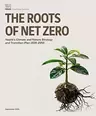
In 2019, we announced our ambition to reach net zero GHG emissions by 2050 at the latest. In 2026, we updated our timebound plan, the Nestlé Roots of Net Zero (pdf, 14Mb), which underpins our Group's climate and nature strategy and acts as our transition plan aligned with a 1.5°C pathway as validated by the Science Based Targets initiative (SBTi). We will balance any remaining emissions through high-quality nature-based solutions, such as agroforestry, silvopasture and the restoration of forests and peatland. Read more about net zero
In 2019, we announced our ambition to reach net zero GHG emissions by 2050 at the latest. In 2026, we updated our timebound plan, the Nestlé Roots of Net Zero (pdf, 14Mb), which underpins our Group's climate and nature strategy and acts as our transition plan aligned with a 1.5°C pathway as validated by the Science Based Targets initiative (SBTi). We will balance any remaining emissions through high-quality nature-based solutions, such as agroforestry, silvopasture and the restoration of forests and peatland. Read more about net zero
-
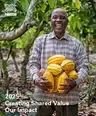
Creating Shared Value at Nestlé Read Creating Shared Value at Nestlé 2025: Our impact – our approach for creating value both for society and for our business.DOWNLOAD (PDF, 17Mb) -
Human rights action plans Read our dedicated action plans that sit at the heart of our approach to human rights and put our Human Rights Framework and Roadmap into practice.DOWNLOAD (PDF, 5Mb)
We hope you find these documents interesting and informative. If you have any feedback that you'd like to share with us, you can contact our Public Affairs team via email.
-
Ratings and recognition We are not driven by awards and recognition. Nonetheless, we are proud to have our efforts and achievements in sustainability acknowledged by world-leading ratings and rankings agencies.Read more
-
BMS compliance record We have a strong governance in place for monitoring and reporting compliance to the Nestlé Policy for Implementing the WHO Code.Read more
-
Independent assurance Our Non-Financial Statement 2025 was independently assured by Ernst & Young Ltd (EY). They have provided limited assurance on select environmental, social and governance KPIs .Read more
-
Downloads archive Find all our policies and sustainability performance information in our regularly updated downloads archive.Read more